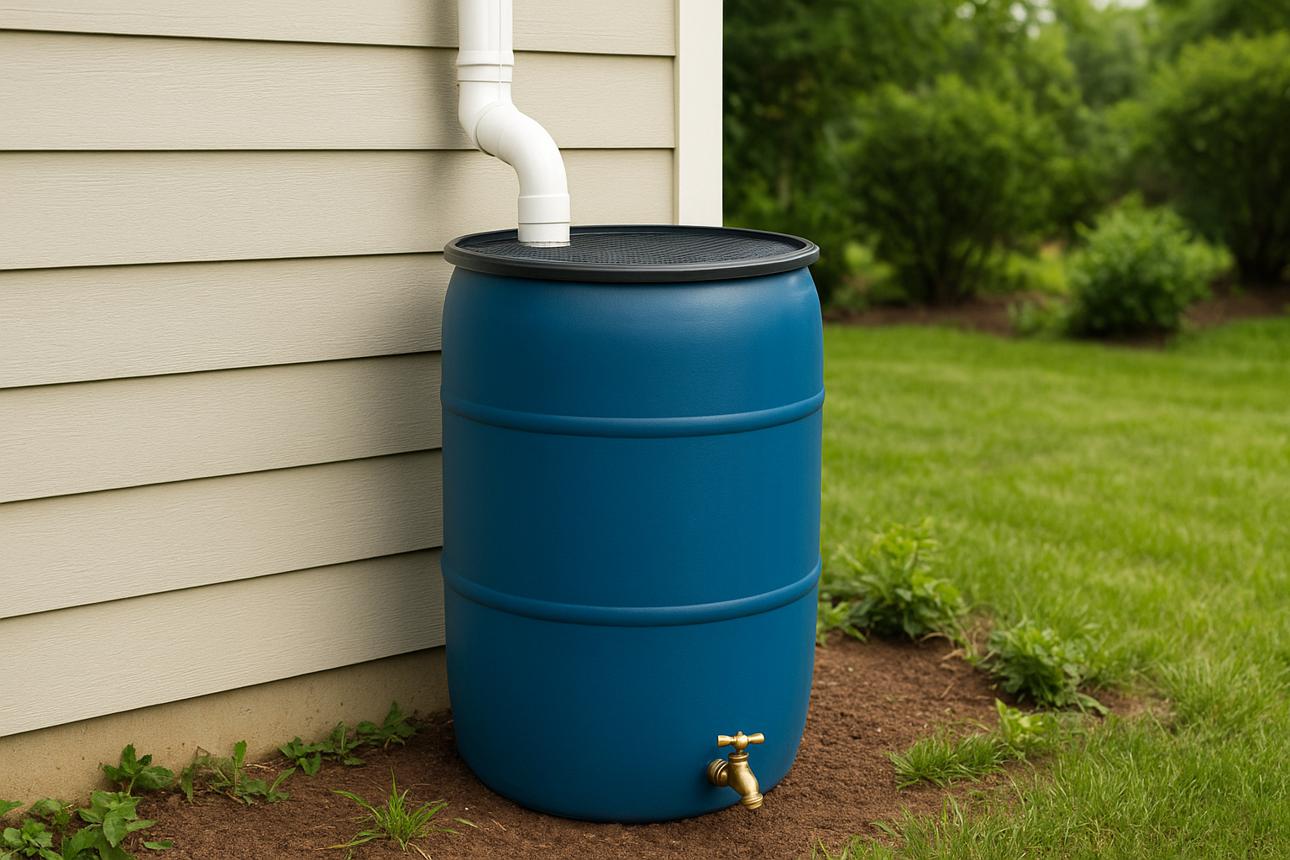
Imagine placing a barrel beneath your roof to collect rainwater for your garden, only to hear that someone in the United States was sentenced to jail for doing something similar.
It sounds difficult to believe.
After all, rain falls naturally from the sky. Homeowners use it to water flowers, maintain gardens, and reduce their dependence on municipal water supplies.
So how could collecting something as ordinary as rainwater become a legal problem?
The question gained national attention after a man in Oregon received a 30-day jail sentence and a $1,500 fine in 2012.
His name was Gary Harrington.
And while the punishment was real, the circumstances were very different from what many alarming headlines suggested.
Understanding that difference could save homeowners from making costly mistakes.
Is It Illegal to Collect Rainwater in the United States?
The short answer is no. Collecting rainwater is not generally illegal in the United States.
However, there is no single nationwide rule that covers every collection system.
States have different laws governing water rights, storage, drainage, and water use.
In many places, homeowners can collect rainwater from their roofs using barrels or storage tanks.
The collected water may be used for activities such as watering gardens or cleaning outdoor areas, subject to applicable local requirements.
But the legal situation can change when someone builds a dam, creates a large reservoir, or diverts water that would otherwise flow into a natural waterway.
These activities can affect neighboring properties, streams, and existing water rights.
That’s where the Oregon case becomes important.
The Oregon Man Who Received a 30-Day Jail Sentence
In July 2012, Gary Harrington of Eagle Point, Oregon, was sentenced to 30 days in jail and fined $1,500.
The case involved three reservoirs constructed on his property.
Harrington maintained that he was storing rainwater and runoff, including for fire protection.
State officials, however, argued that his reservoirs were capturing water that would otherwise flow into the local watershed.
The structures included substantial earthen dams.
This was not a situation involving a homeowner placing a small plastic barrel beneath a gutter.
It involved the construction and operation of reservoirs without the necessary water rights.
According to contemporary reporting, Oregon officials had raised concerns about the reservoirs for years before the 2012 sentencing.
The case became a widely shared example in online discussions about government regulation and property rights.
But a crucial detail was often missing from those discussions.
Oregon allowed qualifying rooftop rainwater collection. The dispute concerned the unauthorized reservoirs and the water they intercepted.
Why Did Oregon Authorities Object?
Water laws in many western states operate differently from what homeowners might expect.
In Oregon, water rights are regulated to protect existing legal uses and manage limited water resources.
The state’s system generally requires authorization for certain uses of water from rivers, streams, lakes, and reservoirs.
This matters because water moving across one property may eventually supply a creek, river, farm, or community.
A landowner who blocks that flow can potentially affect other users.
In Harrington’s case, officials maintained that the reservoirs interfered with water that would otherwise enter a nearby creek.
The legal dispute was therefore about more than the fact that rain had fallen on private property.
It involved how the water was collected, stored, and diverted.
That distinction is essential.
Collecting Water From Your Roof Is Different
Consider two homeowners.
The first installs a rain barrel beneath a gutter.
When rain falls on the roof, the water flows through the gutter and into the barrel.
The homeowner later uses it to water plants.
The second homeowner builds a large earthen dam across a natural drainage area.
