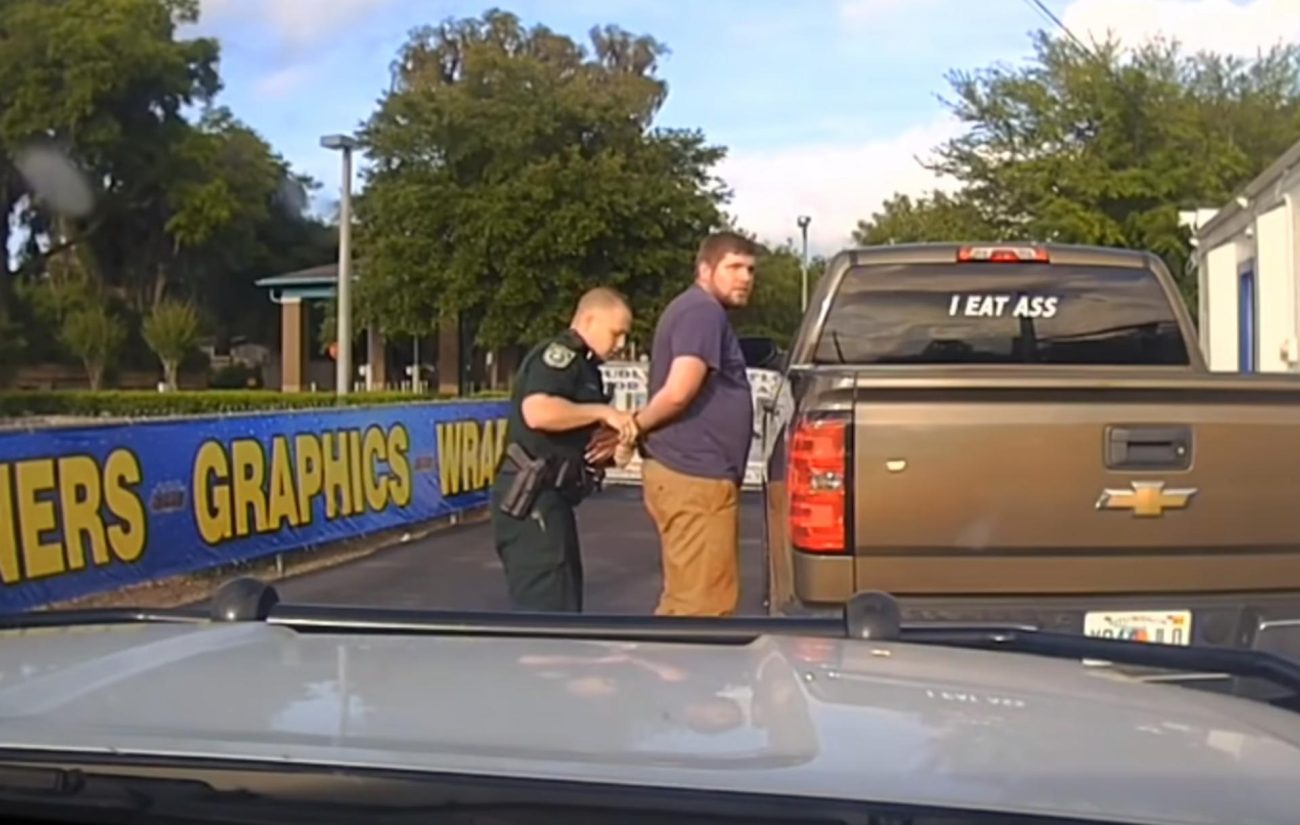
The lawsuit named law enforcement defendants connected to the incident, including Deputy Travis English.
Webb’s claims raised First Amendment and Fourth Amendment issues.
The First Amendment questions concerned freedom of expression.
The Fourth Amendment questions concerned the legality of the stop, arrest, and related police actions.
The case became known as Webb v. English.
What had begun as a local traffic stop was now being examined in federal court.
And the legal issues were more complicated than the early headlines suggested.
What the Federal Court Considered
In September 2021, the United States District Court for the Middle District of Florida issued an order addressing motions in the civil case.
The court reviewed the events surrounding the stop, including the deputy’s observations, the sticker’s wording, video evidence, and the legal standards governing obscenity.
An important part of the analysis concerned what reasonable officers could have believed at the time.
The court examined whether the officers could reasonably have interpreted the decal as describing sexual conduct and whether their actions were protected by qualified immunity.
Qualified immunity is a legal doctrine that can shield government officials from certain civil damages claims unless their conduct violates clearly established law.
That analysis is different from deciding whether prosecutors should bring criminal charges.
A prosecutor may conclude that a jury is unlikely to convict, while a civil court separately examines whether an officer’s conduct violated clearly established constitutional rights.
The distinction helps explain why the criminal and civil proceedings did not necessarily produce identical conclusions.
Did the Court Declare the Sticker Protected Speech?
The case is sometimes summarized online as though a federal judge issued a sweeping final ruling that the sticker was unquestionably protected and the arrest was unlawful.
That description goes beyond what the available court record establishes.
The prosecutors’ decision to dismiss the criminal case relied on Webb’s First Amendment defense.
But the federal civil court examined whether the officers’ actions could be legally justified or protected under the standards applicable to civil liability.
The court’s September 2021 order addressed those legal issues in detail.
The litigation later ended without a publicly established final trial verdict declaring the officers liable for violating Webb’s constitutional rights.
That distinction is important when discussing the case accurately.
Webb challenged the arrest.
Prosecutors dropped the charges.
The federal lawsuit proceeded through substantial litigation.
But the record should not be presented as though a jury ultimately awarded damages after finding that the officers had acted unlawfully.
How the Lawsuit Ended
The civil case ended in November 2021 when the parties agreed to dismiss the remaining claims.
The publicly available information does not establish a confirmed settlement payment.
Nor does it disclose specific financial terms of any private resolution.
That means claims circulating online about Webb receiving a particular amount of money should be treated cautiously unless supported by reliable documentation.
The end of the lawsuit brought the formal legal dispute to a close.
But the broader constitutional questions continued to interest people.
The arrest had already become a widely discussed example of how a confrontation over offensive language can escalate into a criminal case.
Why People Disagreed About the Sticker
Not everyone who heard about Webb’s arrest supported the message on his truck.
Some considered it crude and inappropriate for public roads.
Parents expressed concern about children encountering sexually suggestive language.
Others argued that the sticker was juvenile but harmless.
Still others focused on the government’s response rather than the words themselves.
They believed the important question wasn’t whether the message was tasteful.
It was whether police should have the authority to arrest someone for displaying it.
