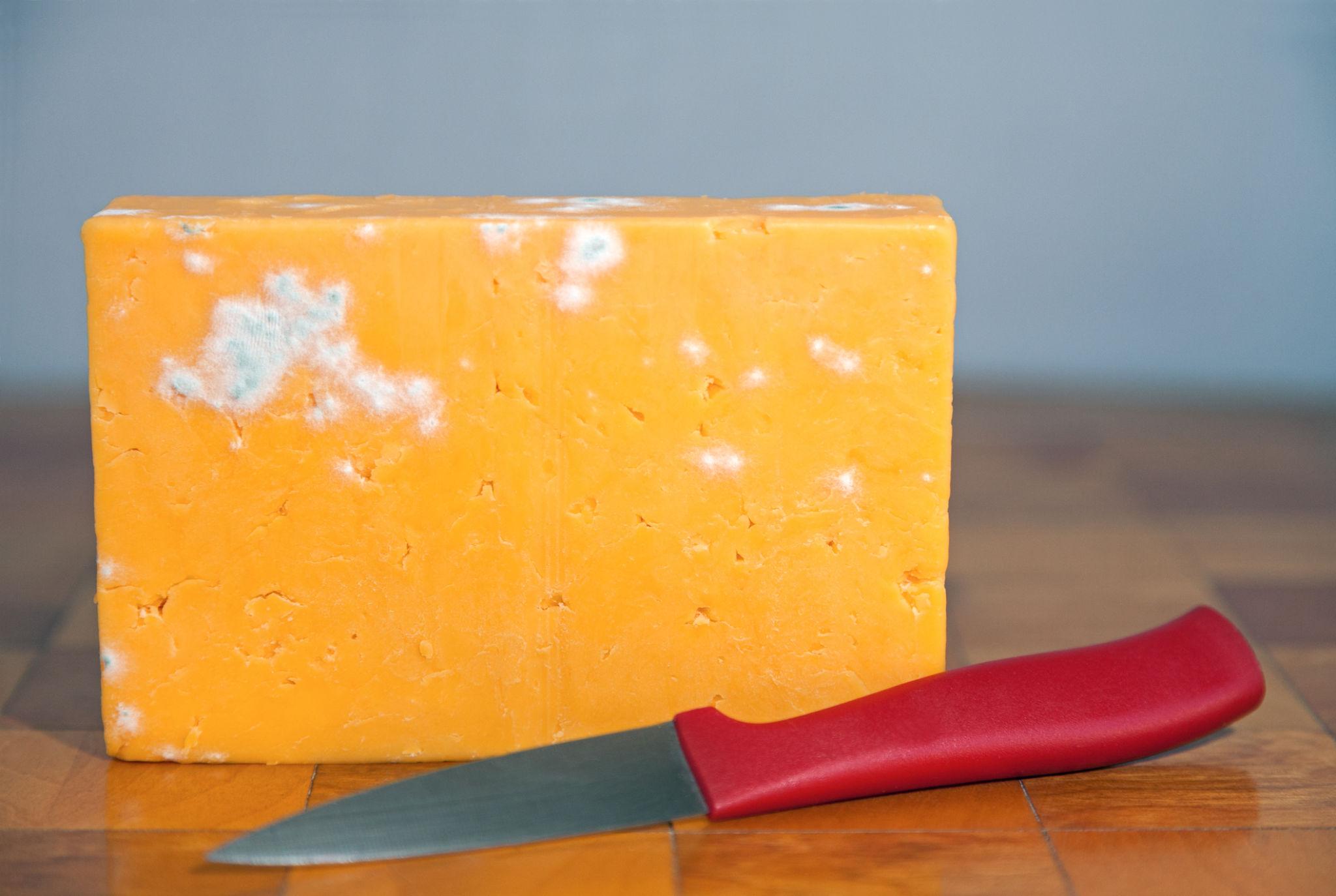
If the cheese smells normal, they assume it must be safe.
Unfortunately, that isn’t a reliable test.
Some spoiled foods develop strong odors.
Others may not.
A product can contain unwanted microorganisms without producing an obvious smell.
Similarly, cheese may have a naturally strong aroma without being spoiled.
The absence of a bad odor doesn’t override food-safety guidance.
And tasting a suspicious piece of cheese to determine whether it has gone bad is not recommended.
If you’re uncertain about its safety, don’t use taste as an experiment.
Does Cooking Moldy Cheese Make It Safe?
Another common question is whether heating moldy cheese will solve the problem.
For example, someone might think:
“I’m going to melt it into a grilled cheese sandwich anyway. Won’t the heat take care of it?”
The answer is that cooking should not be relied upon to make improperly salvaged moldy cheese safe.
Although sufficient heating can destroy many microorganisms, it may not eliminate all potentially harmful substances that could be present.
Some mycotoxins can resist ordinary cooking temperatures.
That means heating isn’t a substitute for proper mold-removal or disposal guidance.
If the cheese should be discarded, melting it doesn’t change that recommendation.
How to Store Cheddar Cheese Properly
Proper storage can help preserve cheese quality and reduce the likelihood of unwanted mold growth.
The first step is keeping cheese refrigerated.
A refrigerator temperature of 40°F (4°C) or below is generally recommended for food safety.
Cheese should also be protected from unnecessary exposure to moisture and contamination.
Follow the manufacturer’s packaging and storage instructions.
For a block of cheddar that has been opened, suitable food-grade wrapping or a clean container can help protect it.
Avoid handling the cheese repeatedly with unwashed hands.
Use clean knives and cutting boards.
And return it to the refrigerator promptly after serving.
These habits won’t prevent spoilage forever, but they can help reduce avoidable contamination.
Should You Keep Cheese in Its Original Packaging?
That depends on the type of cheese and the manufacturer’s instructions.
Unopened cheese should generally be stored according to the package directions.
Once opened, the packaging may no longer provide the same protection.
For many firm cheeses, clean food-grade wrapping or an appropriate container can help maintain quality.
The goal is to limit contamination while preventing the cheese from drying out excessively or becoming trapped in unnecessary moisture.
There is no single wrapping method that is ideal for every variety.
If the manufacturer provides specific storage instructions, follow them.
How Long Can Cheddar Stay in the Refrigerator?
The answer depends on several factors.
These include whether the package is opened, how the cheese was processed, its moisture content, and how it has been handled.
A firm block of cheddar generally keeps longer than many soft cheeses.
But that doesn’t mean it lasts indefinitely.
The date on the package, storage conditions, and signs of spoilage all matter.
A package that has been repeatedly left at room temperature or handled with contaminated utensils may deteriorate sooner.
If the cheese develops unexpected changes in texture, odor, or appearance, evaluate it using appropriate food-safety guidance rather than relying only on the printed date.
When You Should Throw the Entire Cheese Away
Even with firm cheese, there are situations where discarding the whole product is the safer choice.
Consider throwing it away when:
- Mold growth is widespread rather than confined to a small area.
- The cheese is shredded, sliced, or crumbled.
- It is a soft cheese with unexpected mold.
- The product has developed unusual slime or other signs of deterioration.
- You cannot identify the cheese or assess its condition confidently.
- Storage conditions have been unsafe or are unknown.
People with weakened immune systems or other medical vulnerabilities may also need to take additional precautions with questionable foods.
