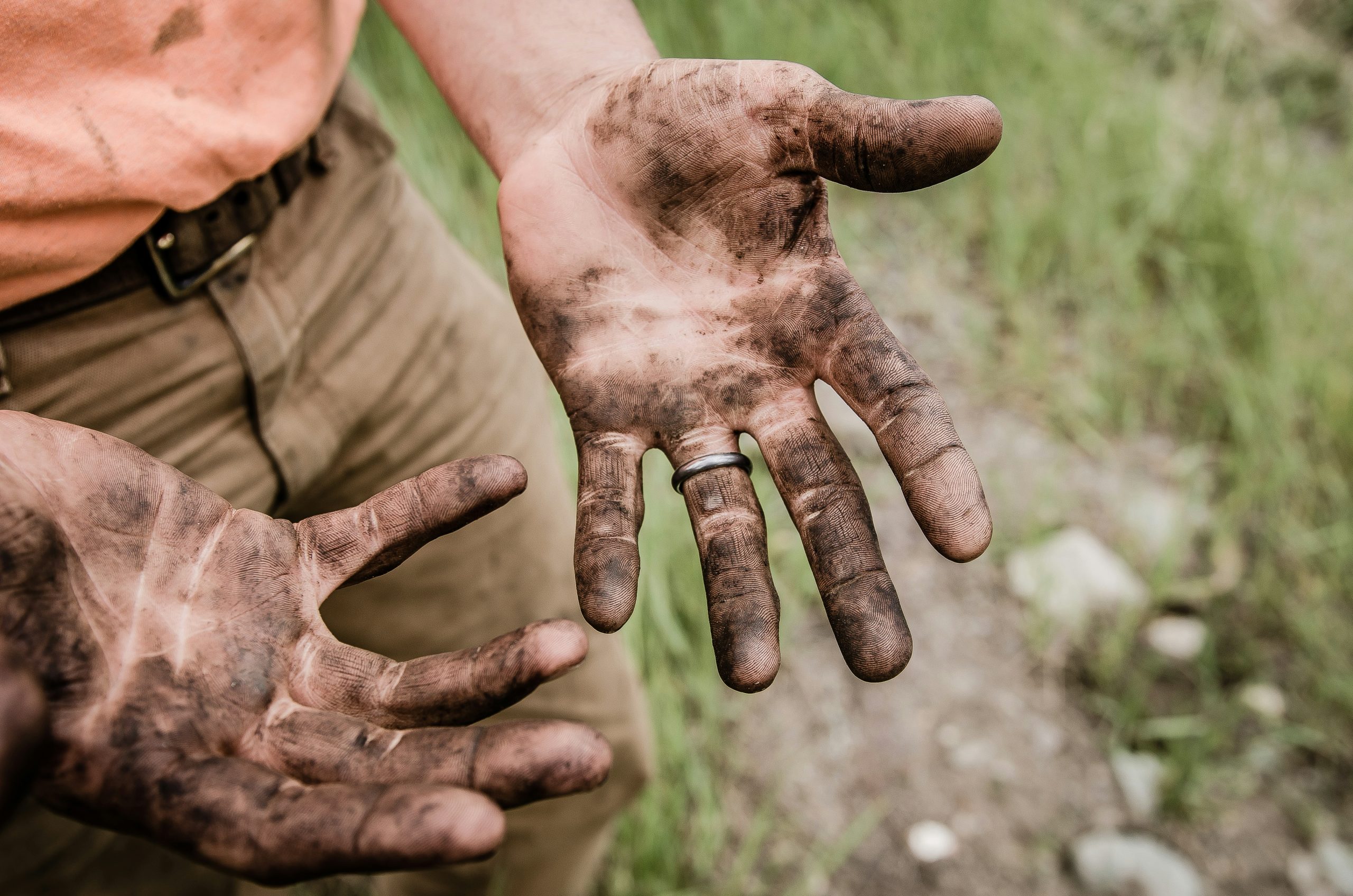
You’ve probably seen hands like these before.
Darkened fingernails.
Rough skin.
Small cuts around the fingers.
Grease that seems permanently trapped in the lines of the palms.
Maybe your first reaction was:
Why doesn’t that person wash their hands?
But before judging someone by what you see beneath their fingernails, there’s something worth remembering.
Those hands may be cleaner than they look.
And the dirt you’re noticing may tell a completely different story than the one you’re imagining.
Sometimes, dirty fingernails aren’t a sign of neglect.
Sometimes they’re evidence of a long day’s work.
Think About the Hands of a Mechanic
Imagine spending ten hours working underneath cars.
You’re reaching around engines.
Handling oily tools.
Removing bolts coated in grease.
Touching parts covered with years of accumulated grime.
You wash your hands at the end of the day.
Then you wash them again.
Most of the surface dirt disappears.
But look closely around the fingernails.
Some dark residue may remain.
Grease and oil can be remarkably stubborn, particularly when someone works around them day after day.
Tomorrow morning, that mechanic will put those same hands back inside another engine.
By lunchtime, they’ll be dirty again.
That doesn’t necessarily mean the person doesn’t care about hygiene.
It may simply mean you’re looking at the hands of someone who works for a living.
Construction Workers Know the Same Feeling
Now think about someone who spends the day on a construction site.
Wood.
Concrete.
Dust.
Paint.
Adhesives.
Metal.
Tools.
The hands are constantly working.
By the end of a shift, dirt may be embedded around the nails and in every small crease of the skin.
The hands that looked relatively clean early in the morning may look completely different ten hours later.
But look around the construction site.
Perhaps those hands helped build a wall that didn’t exist yesterday.
Maybe they installed a door.
Repaired a roof.
Built a staircase.
Or helped create the home another family will eventually live in.
Suddenly, those dirty fingernails look a little different.
A Farmer’s Hands Tell Their Own Story
There are few jobs more directly connected with dirt than farming.
Soil naturally gets beneath fingernails.
Farmers may also work with machinery, animals, plants, feed and equipment throughout the day.
Gardeners and landscapers experience something similar.
You can wear gloves.
You can wash your hands.
You can scrub your fingernails.
And still, after enough hours working with soil, your hands may show exactly what you’ve been doing.
For generations, people have grown food with hands like these.
The same hands that might look “dirty” to a stranger could have spent the morning planting, harvesting or caring for animals.
Some Stains Don’t Disappear With One Handwashing
There’s an important distinction between poor hygiene and hands that are stained by work.
Certain substances are difficult to remove immediately.
Grease is one example.
Paint can be another.
So can dyes, charcoal, oils and soil.
People who repeatedly handle these materials may develop stains around their fingers and nails that remain visible even after washing.
If you’ve ever painted a room, worked on a car or spent an afternoon gardening, you’ve probably experienced a smaller version of this yourself.
You finish.
Wash your hands.
Look down.
And somehow there’s still paint, grease or soil in places you didn’t know it could reach.
Now imagine doing that five or six days every week.
Look at a Carpenter’s Hands
A carpenter’s hands may be rough.
There may be calluses.
Small scratches.
Dry skin.
Dust around the nails.
But those marks don’t tell you whether that person cares about themselves.
They tell you something about what their hands regularly do.
