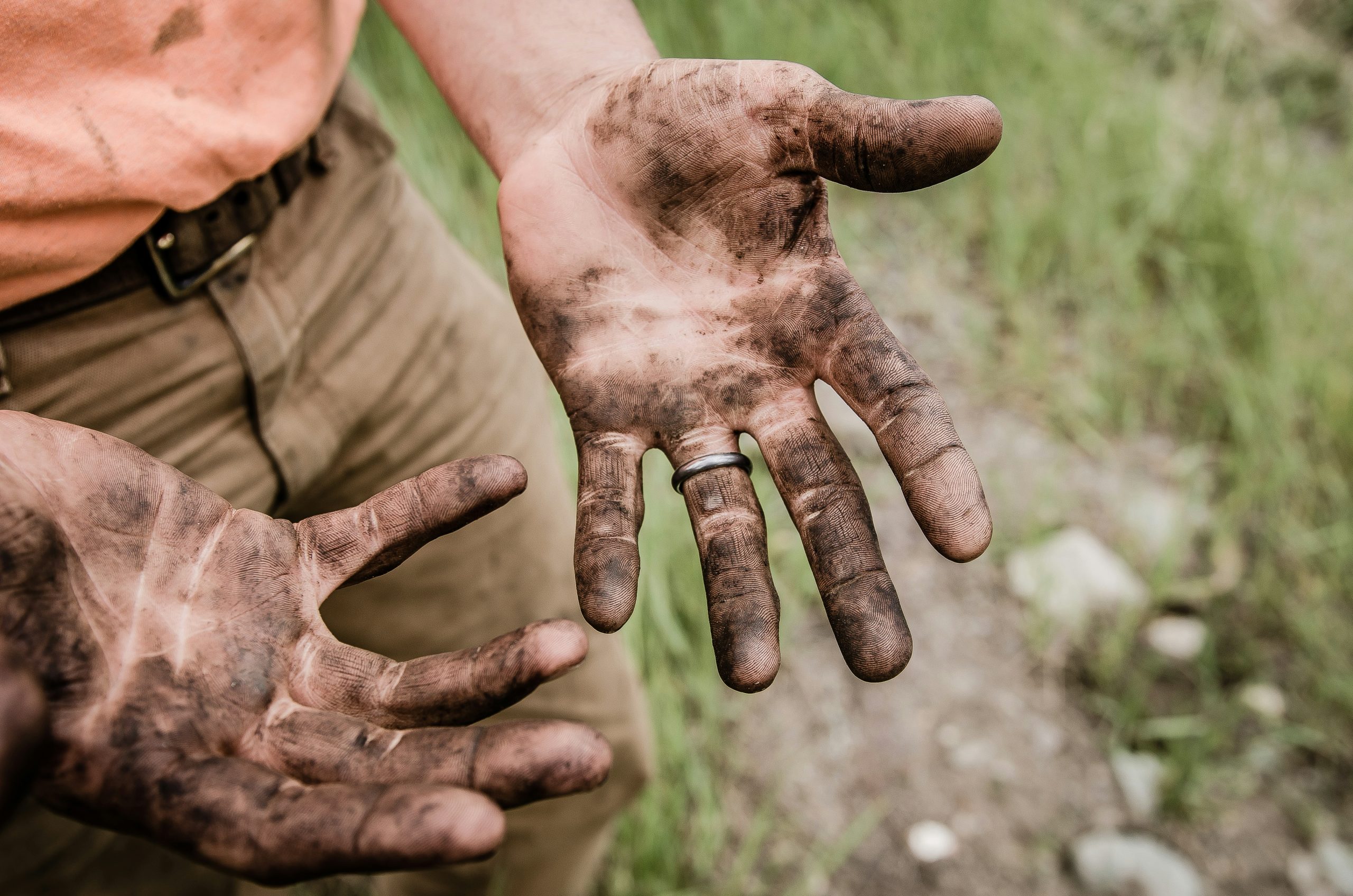
Perhaps those hands spent the day measuring wood down to a fraction of an inch.
Perhaps they built a table that will remain in someone’s family for decades.
Perhaps they repaired a damaged staircase so children could use it safely again.
Hands can become a record of a person’s work.
Artists Can Carry Their Work Home Too
It’s not only traditional manual labor.
Artists know this problem.
Paint finds its way onto fingers.
Charcoal leaves dark marks.
Ink stains skin.
Clay gets beneath fingernails.
Someone can spend the day creating something beautiful and leave the studio with hands that look anything but polished.
The appearance of those hands tells you what materials they touched.
It tells you very little about their character.
Then There Are People Working Two Jobs
There’s another reality we don’t always consider.
Not everyone finishes work at 5 p.m. and has the rest of the evening available for themselves.
Some people work extremely long shifts.
Others have a second job.
Then they go home.
Children may need dinner.
Laundry may need washing.
Someone may need help with homework.
The next day’s food has to be prepared.
Bills need attention.
And somewhere in that routine, the person also needs to sleep before doing everything again tomorrow.
Personal hygiene remains important.
But expecting every person who performs physical work to maintain perfectly polished hands at every moment ignores the reality of many people’s lives.
Sometimes Appearance Reflects Circumstances
There’s another reason to avoid quick judgment.
Not everyone has the same resources.
A person’s appearance can sometimes reflect difficult circumstances rather than personal preference.
Someone experiencing homelessness may not have consistent access to showers, sinks or laundry facilities.
Someone living in poverty may have very different daily priorities from someone with greater financial security.
Illness or disability can also make ordinary grooming tasks more difficult.
You may see someone’s hands for five seconds.
You don’t see the other 24 hours of their life.
That’s the problem with judging people from appearances.
We’re drawing conclusions from information we don’t have.
Clean Fingernails Don’t Automatically Mean Good Character
Turn the assumption around.
Imagine two people standing next to each other.
One has perfectly clean hands.
The other has grease beneath his fingernails.
Which person is kinder?
You don’t know.
Which one is more honest?
You don’t know.
Which one works harder?
You don’t know.
Which one treats their family better?
Again, you don’t know.
Fingernails cannot answer those questions.
Someone’s grooming may tell you something about what they’ve been doing recently.
It doesn’t give you a reliable measurement of integrity.
The Hands We Sometimes Judge Are Often the Hands We Depend On
Consider how many essential parts of everyday life require someone to get their hands dirty.
Your car stops working.
A mechanic repairs it.
Your electricity fails.
A tradesperson comes to fix the problem.
Your roof leaks.
Someone climbs up there and repairs it.
Food reaches your table because people planted, maintained and harvested crops.
Roads require construction and maintenance.
Homes have to be built.
Plumbing needs repair.
Machinery needs servicing.
Animals need care.
Land needs maintaining.
Much of modern life depends on people performing physical jobs that leave visible marks.
Yet those same marks can sometimes become a reason for others to judge them.
There’s something contradictory about that.
Imagine What Those Hands Did Before You Saw Them
The next time you notice someone’s rough hands, try asking a different question.
Instead of:
“Why are their fingernails so dirty?”
consider:
“What have those hands been doing today?”
Maybe they were underneath a car engine.
Maybe they were planting vegetables.
