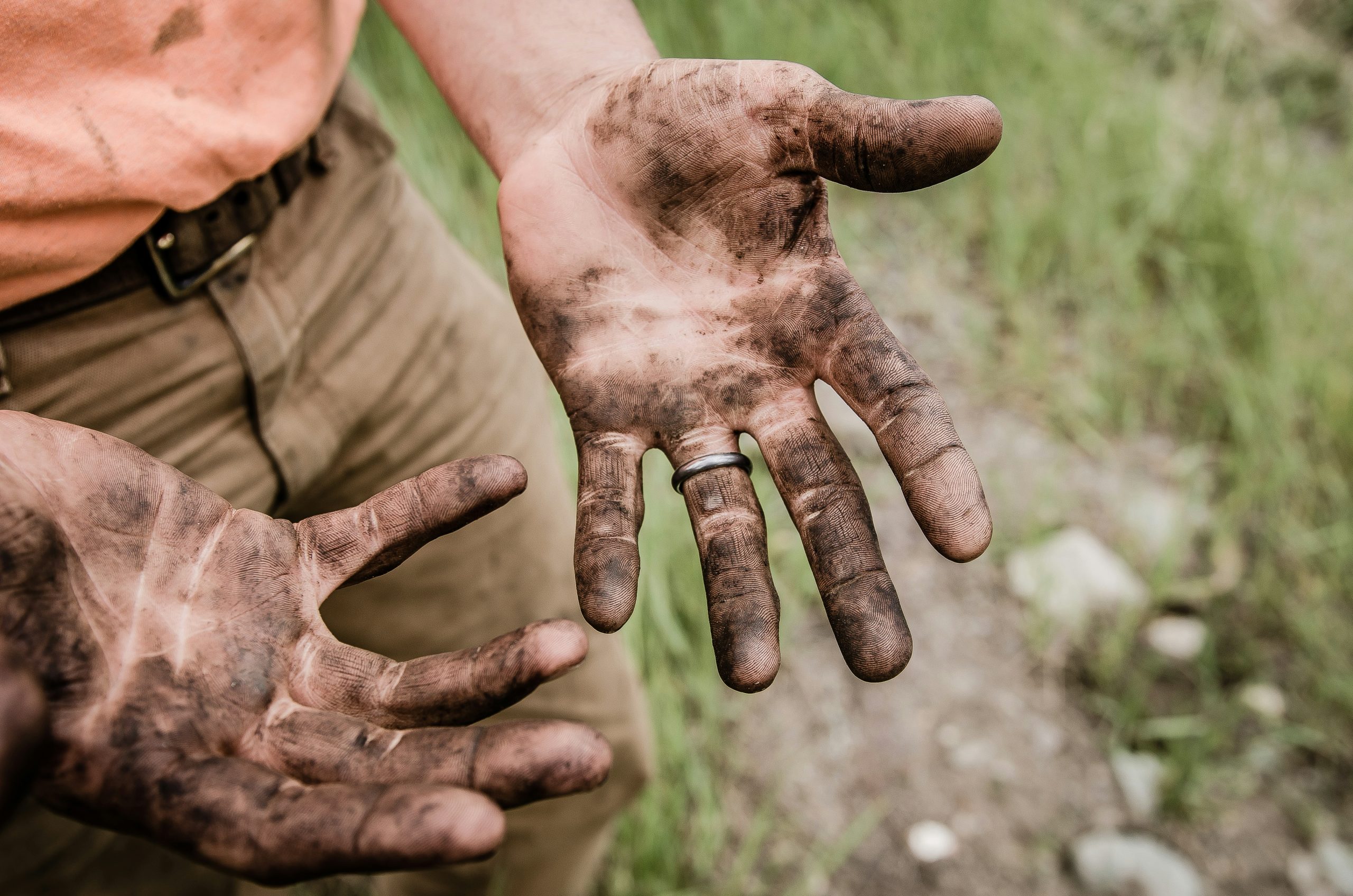
Maybe they spent eight hours laying bricks.
Maybe they were repairing heavy machinery.
Maybe they were sanding wood.
Maybe they were painting.
Maybe they were fixing someone’s broken heating system.
Maybe they were working outside in the rain.
Maybe they were building something.
You simply don’t know.
Rough Hands Can Represent Years of Experience
There’s another side to this.
For many tradespeople, their hands aren’t merely tools.
They’re part of their expertise.
An experienced mechanic can sometimes feel whether something is properly fitted.
A carpenter develops precision through years of handling tools and materials.
A farmer learns how plants, soil and equipment behave.
A craftsperson may spend decades developing movements that appear effortless to someone watching.
Calluses and rough skin can accumulate alongside that experience.
Those hands may not look perfect.
But they may be extraordinarily skilled.
There Was a Time When Rough Hands Were a Source of Pride
Many people who grew up in working families will recognize this.
A father came home from a factory with dirty hands.
A grandfather’s fingers were permanently rough from decades of manual work.
A farmer’s nails never seemed completely free of soil.
A mechanic had grease in the creases of his hands no matter how much he scrubbed.
Children sometimes remember those details decades later.
Not because the hands were beautiful.
Because those were the hands that worked to provide for the family.
They repaired bicycles.
Built furniture.
Fixed things around the house.
Planted gardens.
Carried groceries.
Held children’s hands while crossing the street.
Appearance tells one part of the story.
Memory tells another.
This Doesn’t Mean Hygiene Doesn’t Matter
Of course, basic hand hygiene matters.
There are situations—particularly when preparing food, providing care or performing tasks requiring sanitation—where clean hands are especially important.
The point isn’t that cleanliness should be ignored.
The point is simpler:
A quick glance at someone’s stained fingernails isn’t enough information to determine why they look that way.
There’s a difference between acknowledging hygiene and assuming someone’s character based on appearance.
First Impressions Are Powerful—and Often Incomplete
Human beings make quick judgments.
Clothes.
Hair.
Shoes.
Cars.
Jobs.
Accents.
Homes.
And yes, hands.
We see one visible detail and unconsciously start constructing the rest of the person’s story.
Sometimes we’re right.
Sometimes we’re completely wrong.
The problem is that we rarely know which one it is.
That’s where empathy becomes useful.
You don’t need to know someone’s entire life story to give them the benefit of the doubt.
Maybe Those Hands Built Something Today
Perhaps that’s the easiest way to remember it.
Look at the dirt.
Then imagine what may have produced it.
Were those hands repairing a vehicle that a family depends on?
Were they building someone’s home?
Planting food?
Caring for animals?
Repairing a road?
Creating a piece of furniture?
Working a second shift because there are bills waiting at home?
You may never know.
But asking the question changes the way you see the person.
Hands Can Tell a Story—Just Not the Whole Story
Rough hands can tell you that someone works with them.
Stains can suggest what materials they recently touched.
Calluses can hint at repetition and physical effort.
But hands cannot tell you whether someone is kind.
They cannot tell you whether someone is a good parent.
They cannot tell you whether someone is honest.
They cannot tell you how hard their life has been.
And they certainly cannot tell you whether someone deserves respect.
Those things require knowing the person.
So the next time you notice someone with dirt beneath their fingernails, don’t be too quick to decide what it means.
Sometimes those hands tell a story of hard work.
Sometimes they tell a story of difficult circumstances.
Sometimes they represent decades of skill.
And sometimes they’re simply the hands of someone who hasn’t finished the workday yet.
Before judging the dirt beneath someone’s fingernails, ask yourself one question: What might those hands have accomplished today?
