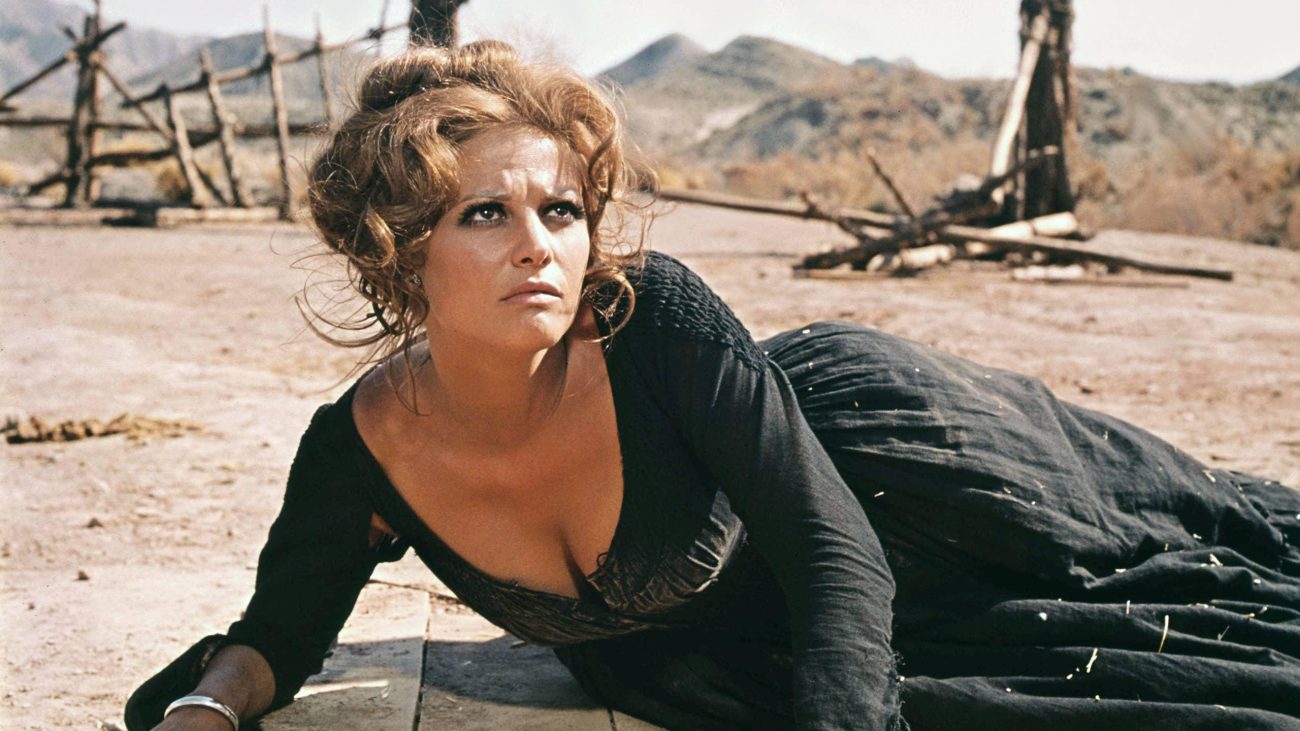
During the early years of her career, her motherhood was concealed from the public, and Patrick was presented as her younger brother.
The secrecy reflected the intense social expectations and professional pressures surrounding young actresses at the time.
Cardinale’s relationship with producer Franco Cristaldi also became an important part of her personal and professional story.
She later described the controlling nature of that relationship and the restrictions placed on her independence.
These experiences reveal a complicated reality behind the carefully managed public image of a movie star.
Her fame brought opportunities, but it also came with significant personal costs.
As her career continued, Cardinale sought greater freedom in both her work and private life.
Choosing Independence in a Demanding Industry
Cardinale’s career developed during a period when actresses often faced strong pressure to conform to expectations established by producers, studios, and publicists.
Their appearance and personal lives could become part of a commercial image.
Cardinale experienced those pressures firsthand.
But she also became known for her independent spirit.
She continued pursuing roles in different countries and working with directors whose artistic interests appealed to her.
Her professional journey demonstrated that a successful actress did not have to remain confined to one image.
She could play glamorous women, vulnerable characters, determined survivors, and complicated personalities.
That versatility allowed her to remain active long after the period in which she first became famous.
A Career That Extended Beyond the 1960s
Although the 1960s produced many of Cardinale’s best-known performances, her career continued for decades.
She appeared in Franco Zeffirelli’s television production Jesus of Nazareth in 1977.
She also worked with Werner Herzog in Fitzcarraldo (1982).
That ambitious film, set in South America, became famous for its demanding production and unusual story.
Cardinale’s role introduced her to another generation of film enthusiasts.
She continued working in European cinema and theater, taking on characters that reflected different stages of her life.
Her willingness to remain active demonstrated a commitment to acting that extended beyond early stardom.
Rather than allowing her reputation to rest entirely on a handful of famous films, she continued participating in new creative projects.
Recognition From the International Film Community
Cardinale received numerous honors during her career.
Her contributions were celebrated at major international film festivals, including Venice and Berlin.
She received a lifetime achievement Golden Lion at the Venice Film Festival in 1993.
In 2002, she was honored with a lifetime achievement award at the Berlin International Film Festival.
These distinctions recognized both her individual performances and her broader contribution to international filmmaking.
Her career connected several important cinematic traditions.
She worked in Italian films, French productions, Hollywood movies, historical dramas, comedies, and westerns.
That range made her a distinctive figure in film history.
Her Advocacy Beyond the Screen
Cardinale also used her public profile to support social and cultural causes.
She became associated with advocacy for women’s rights and worked with initiatives concerned with cultural and humanitarian issues.
Her experiences in the entertainment industry informed her understanding of the challenges women could face when seeking independence.
She also supported efforts to preserve cultural heritage and promote artistic expression.
For an actress whose career began in an era of tightly controlled public images, these activities reflected a broader commitment to personal freedom and social awareness.
Why Her Films Still Matter
Classic cinema continues to attract new audiences through restoration projects, film festivals, streaming platforms, and retrospective screenings.
Cardinale’s work offers a window into a particularly influential period.
Her collaborations with Fellini and Visconti reflect the artistic ambitions of European filmmaking in the early 1960s.
Her role in The Pink Panther demonstrates her ability to participate in internationally popular entertainment.
