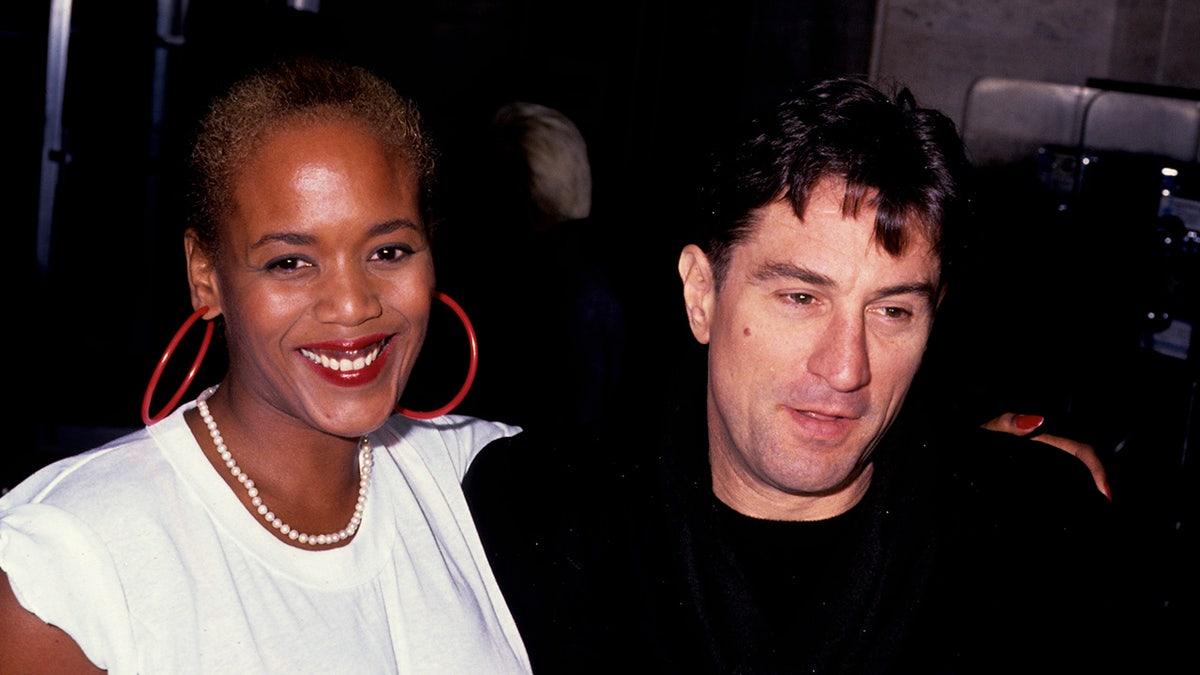
By 1978, Smith had achieved an important professional milestone.
Bloomingdale’s named her its Model of the Year.
The recognition reflected the growing prominence of her career.
For Smith, however, fashion was not simply a route to fame.
It was also connected to her family’s creative identity.
Her older brother, Willi Smith, was becoming one of the most influential American fashion designers of his generation.
The Brother Who Helped Shape Her Career
Willi Smith was known for his innovative approach to accessible fashion.
His designs brought creativity, individuality, and contemporary street influences into clothing intended for everyday life.
Through his label WilliWear, he helped change ideas about who fashion was for and how it could be worn.
Toukie was closely connected to his work.
She modeled for her brother and became part of the creative world surrounding his designs.
Their relationship represented more than a professional collaboration.
It connected two siblings whose talents contributed to a larger cultural movement.
Willi died in 1987 at the age of 39 from complications associated with AIDS.
His death was a profound loss for his family and for the fashion community.
Toukie continued to honor his legacy in the years that followed.
Her later business activities included efforts connected to charitable causes and the memory of her brother.
The family connection remained an important part of how her children described her legacy after her death.
Why Toukie Smith Mattered in Fashion
During the 1970s and 1980s, fashion was changing.
Designers were experimenting with new silhouettes, different cultural influences, and a broader understanding of personal style.
Models were becoming increasingly recognizable personalities rather than anonymous figures presenting clothing.
Smith belonged to that generation.
Her work helped establish her as a prominent Black model in an industry that had historically limited representation.
She brought individuality and confidence to her assignments.
Her career also showed how a model could move between commercial work, high fashion, and other creative opportunities.
In remembering her, Airyn and Julian emphasized that her influence extended to future generations of Black models and designers.
That recognition reflects an important part of her professional identity.
Smith was not simply a celebrity’s former partner.
She had built a successful career of her own.
And when she later moved into acting, she carried that experience with her.
Her Transition From Modeling to Acting
By the late 1980s, Smith had begun exploring television and film.
The transition was not necessarily easy.
Modeling success did not guarantee acting opportunities.
Performers moving from fashion into entertainment often had to prove that they could do more than look comfortable in front of a camera.
Smith approached acting as a serious profession.
One of her early television appearances came on the popular NBC crime drama Miami Vice.
The series, known for its distinctive visual style and memorable guest appearances, gave her exposure to a new audience.
But her most recognizable television role was still ahead.
In 1989, she appeared on the NBC sitcom 227.
The role would become one of the defining credits of her acting career.
The Role That Made Her Familiar to Television Viewers
For viewers who watched American television during the late 1980s, 227 was a familiar part of NBC’s comedy lineup.
The sitcom starred Marla Gibbs as Mary Jenkins and followed the lives of residents in a Washington, D.C., apartment building.
The show explored family relationships, neighborhood friendships, and the everyday challenges of its characters.
Smith joined the series as Eva Rawley, an artist who became involved in the life of the building.
Her character later worked as the building’s manager and pursued opportunities connected to the art world.
