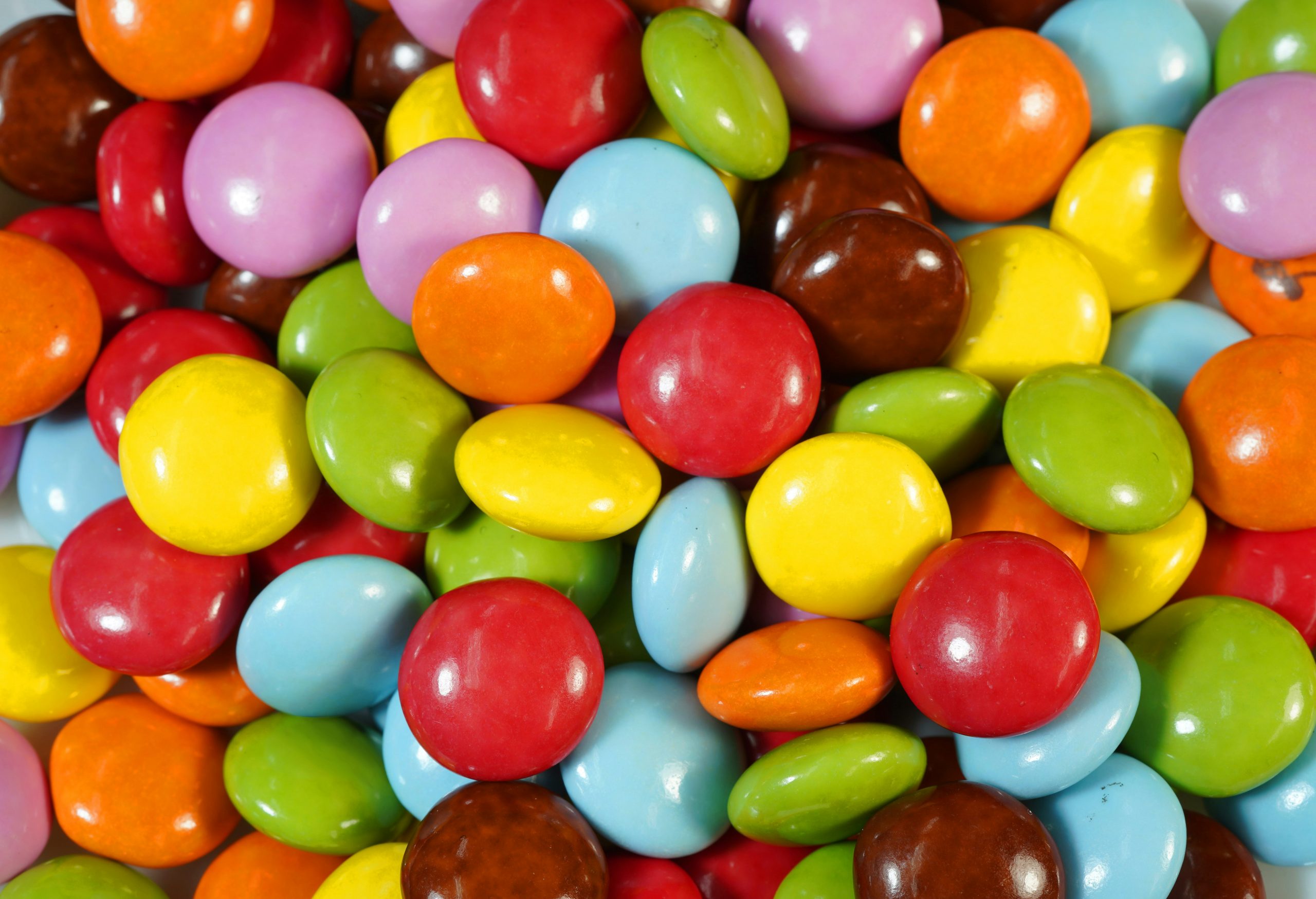
You’ve probably eaten M&M’s countless times without giving their name much thought.
The colorful chocolate candies are everywhere—movie theaters, Halloween bowls, birthday parties, cookies, vending machines and grocery store checkout aisles.
But what exactly do those two M’s stand for?
They aren’t random letters.
They represent two surnames:
Mars and Murrie.
More specifically, the name traces back to Forrest Mars Sr. and R. Bruce Murrie, two men whose business partnership helped launch one of America’s most recognizable candies during the World War II era.
And the history behind that partnership is considerably more interesting than the tiny letters printed on each piece might suggest.
The First “M” Stands for Mars
Forrest Mars Sr. was the son of Frank Mars, whose confectionery business became the foundation of Mars, Incorporated.
Forrest had already gained considerable experience in the candy industry before M&M’s appeared.
After spending time in Europe, he returned to the United States around the beginning of the 1940s.
According to Mars’ corporate history, Forrest established M&M Limited in Newark, New Jersey, in 1940.
But he needed a partner.
That’s where the second M entered the story.
The Second “M” Stands for Murrie
R. Bruce Murrie was the son of William Murrie, an executive associated with Hershey.
That connection was especially valuable at the time.
World War II was already underway in Europe, and shortages and rationing were serious business concerns.
A partnership involving Murrie helped provide access to chocolate through Hershey.
The Smithsonian’s National Museum of American History notes that Forrest Mars brought Bruce Murrie into the company as a partner as wartime rationing of commodities such as chocolate and sugar was anticipated.
So:
M = Mars
M = Murrie
Put them together and you get:
M&M’s.
But Where Did the Candy Idea Come From?
This part of the story goes back even further.
A widely reported account says Forrest Mars encountered soldiers during the Spanish Civil War eating small pieces of chocolate protected by a hard sugar shell.
The concept had an obvious advantage.
Chocolate is delicious, but heat creates a problem.
It melts.
A protective candy shell could make small pieces of chocolate easier to transport and handle in warm conditions.
According to HISTORY’s account of M&M’s origins, Mars reportedly encountered British volunteers during the Spanish Civil War eating chocolate beads surrounded by hard sugar shells. He recognized the commercial possibilities of creating a similar product.
That basic concept would become central to M&M’s.
M&M’s Arrived in 1941
Production began in 1941.
But M&M’s didn’t initially become famous because children were buying colorful bags at grocery stores.
The U.S. military played a major role in the candy’s early history.
Mars’ own historical timeline says the first M&M’s Plain Chocolate Candies were made for the U.S. military in 1941.
The Smithsonian likewise notes that M&M production during that period was almost exclusively for members of the armed forces.
It isn’t difficult to understand the appeal.
Small pieces were easy to carry.
They could be divided into portions.
Most importantly, their hard candy shells helped protect the chocolate inside.
World War II Helped Introduce M&M’s to American Soldiers
The candy’s durability made it particularly useful during wartime.
The Smithsonian has preserved packaging connected to M&M’s sent to military personnel and notes that the hard shell helped prevent the chocolate from melting, making the candy suitable for soldiers’ rations during World War II.
This early military connection helped introduce large numbers of Americans to the product.
Then came the transition from military ration to household candy.
According to Mars, M&M’s were launched to the general public in 1945.
That opened the door to what the brand would eventually become.
Here’s Something Many People Get Wrong About the Famous “M”
Today, seeing an M printed on every candy seems inseparable from M&M’s.
