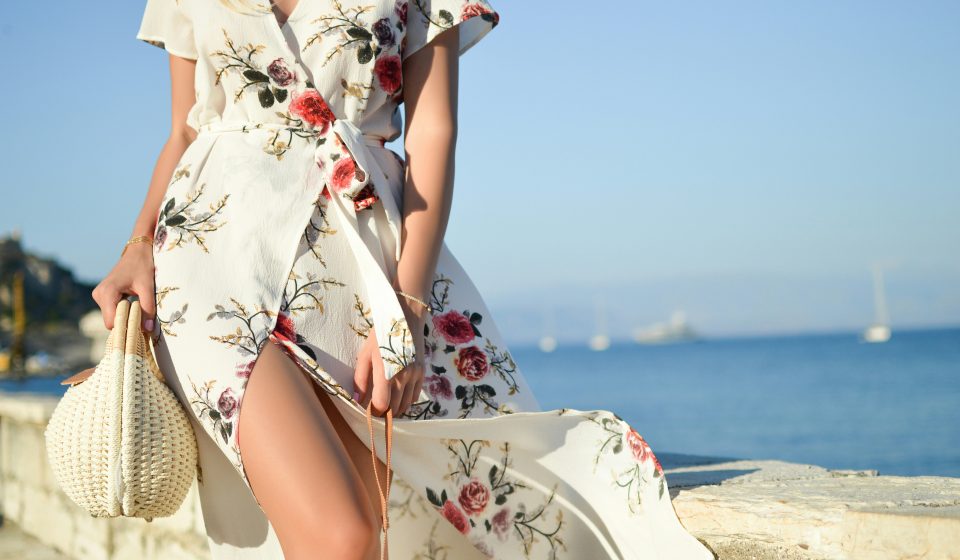

Summer fashion has a way of making even simple outfits feel more noticeable.
The clothes become lighter.
Colors change.
Vacation wardrobes come out.
People trade layers and jackets for dresses, shorts, sandals and relaxed pieces designed for warmer weather.
And when the person wearing those clothes is already familiar to television audiences, an otherwise ordinary outfit can attract considerably more attention.
For Brandi Passante, best known to many viewers from Storage Wars, style has become another part of how fans see her away from the storage-unit auctions that helped make her recognizable.
But there’s a more interesting conversation here than simply deciding whether someone likes a particular outfit.
It’s about something almost everyone encounters eventually:
How much should other people’s opinions influence the way we dress?
Brandi Passante Has Been in the Public Eye for Years
Passante became widely known through A&E’s Storage Wars, where viewers followed professional buyers competing for abandoned storage units.
That visibility inevitably extended beyond television.
Like many reality-TV personalities, Passante became someone whose photographs, social-media appearances and personal style could attract attention independent of the program itself.
That’s one of the strange realities of celebrity.
Once millions of people recognize someone, even normal choices can become public material.
A haircut becomes a story.
A vacation photograph becomes a discussion.
An outfit becomes something strangers feel invited to evaluate.
Summer Style Is Usually About Simplicity
Warm-weather clothing often has a straightforward purpose.
It’s hot.
People want to be comfortable.
That usually means lighter fabrics, fewer layers and silhouettes that allow easier movement.
A casual summer outfit doesn’t necessarily need a complicated explanation.
Sometimes a dress is simply comfortable.
Shorts make sense because of the temperature.
Sandals are practical.
A vacation outfit looks different from something someone would wear to a formal dinner or business meeting.
Context matters.
Celebrity Fashion Often Loses That Context
Take an ordinary vacation photograph.
If the person in it isn’t famous, friends might notice the scenery, ask about the trip or compliment the clothes.
Put a celebrity in exactly the same photograph and the conversation can change.
Suddenly people analyze everything.
The fit.
The length.
The neckline.
The person’s body.
Their age.
Whether the outfit is supposedly “appropriate.”
Whether they should dress differently.
The clothing hasn’t necessarily changed.
The size of the audience has.
Personal Style Isn’t a Public Vote
Fashion is inherently subjective.
One person loves bright colors.
Another wears black almost every day.
Someone prefers loose clothing.
Someone else likes fitted silhouettes.
Some people follow seasonal trends closely.
Others have worn essentially the same style for decades.
There isn’t a universal committee deciding which preference is correct.
That’s part of what makes clothing interesting.
It’s functional, but it’s also personal.
Confidence Changes How Clothes Are Perceived
An expensive outfit doesn’t automatically make someone stylish.
Likewise, a simple outfit doesn’t automatically make someone forgettable.
Often, what people respond to is how comfortable someone appears in what they’re wearing.
When a person constantly adjusts an outfit or appears uncomfortable, viewers notice.
When someone appears relaxed, the clothing can seem natural.
That’s one reason confidence plays such a large role in style.
It isn’t necessarily about believing you look better than everyone else.
It’s about feeling that you don’t need everyone else’s approval.
That Becomes More Important With Age
Fashion discussions frequently become strangely restrictive when women get older.
People start introducing invisible rules.
Don’t wear this after 40.
That skirt is too short after 50.
That color is too young.
That neckline belongs to another age group.
But clothing doesn’t suddenly acquire an expiration date because the person wearing it celebrates a birthday.
Personal taste can evolve.
Bodies change.
Comfort changes.
Lifestyle changes.
But those changes don’t require someone to surrender their personality.
“Age-Appropriate” Can Mean Different Things
There are situations where context obviously affects clothing choices.
A workplace may have a dress code.
A formal ceremony may call for particular attire.
Certain activities require protective clothing.
Weather matters.
Cultural expectations can matter.
But those practical considerations are different from telling an adult that they have reached an arbitrary age at which certain colors, cuts or styles are forbidden.
Someone can dress differently at 50 than they did at 25 without becoming invisible.
Style Can Evolve Without Disappearing
People often assume there are only two possibilities.
Either someone dresses exactly as they did when they were younger, or they abandon everything they once enjoyed.
Real life is usually somewhere between those extremes.
Someone may keep wearing denim but choose a different fit.
They may still love dresses but prefer different silhouettes.
They may become more adventurous with color.
Or less adventurous.
They may prioritize comfort more than trends.
They may rediscover something they stopped wearing years earlier.
Personal style isn’t a contract.
It can change whenever the person does.
Comfort Is Underrated
Fashion coverage tends to focus on appearance.
But the person wearing the clothes has to actually live in them.
Can you walk comfortably?
Sit comfortably?
Handle the temperature?
Spend several hours wearing the outfit without constantly thinking about it?
Those questions matter.