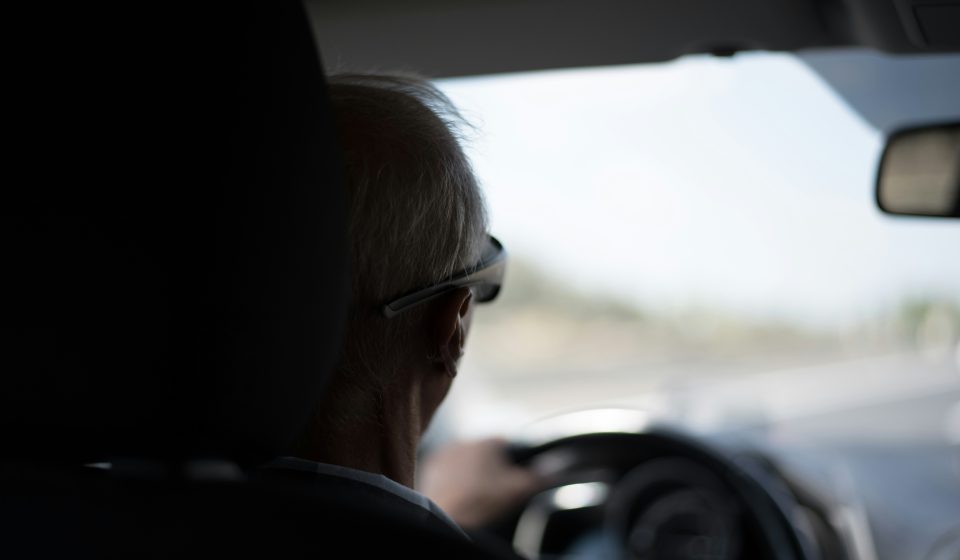
I Got My Driver’s License at 62 After My Husband Died—Then His GPS Led Me to a Home I Never Expected

At 62 years old, just weeks after burying my husband, I finally did something I’d been told for four decades I couldn’t do.
I learned to drive.
For most people, earning a driver’s license is something that happens in the teenage years.
For me, it represented something much larger.
Freedom.
Independence.
The ability to go to the grocery store without asking someone for a ride.
The ability to visit my husband’s grave when I wanted.
The ability to leave my house simply because I chose to.
Richard had always handled the driving.
He told me my reflexes weren’t good enough.
He said driving wasn’t something I needed to worry about.
Eventually, I stopped questioning him.
Then he died.
And two months later, I found myself sitting behind the wheel of his beloved pickup truck with a brand-new driver’s license in my wallet.
I thought I was about to take my first drive alone.
Instead, I touched one button on his GPS.
What happened next forced me to question 40 years of my marriage.
The House Felt Different After Richard Was Gone
Two months had passed since the funeral, but my habits hadn’t caught up with reality.
I still reached for Richard’s coffee mug in the morning.
I still noticed the appointments he’d written on the calendar.
His handwriting was everywhere.
His routines were everywhere.
But grief wasn’t the only thing his absence exposed.
Without Richard, I suddenly realized how dependent I’d become.
I couldn’t drive myself to buy groceries.
I couldn’t get myself to the pharmacy.
I couldn’t visit his grave unless someone took me.
For 40 years, Richard had been the driver.
And I had been the passenger.
My Daughter Became My Chauffeur
My adult daughter tried to help.
She drove me where I needed to go, but she had her own responsibilities.
One afternoon after taking me to the pharmacy, she finally said what both of us already knew.
I couldn’t depend on her for every errand.
She was right.
Still, I fell back on the explanation I’d repeated for years.
Richard had always handled those things.
Then she mentioned another woman.
Her grandmother.
My mother-in-law, Eleanor.
I Hadn’t Spoken to Eleanor in Nearly 40 Years
My relationship with Eleanor had collapsed when my marriage was still relatively new.
At least, that’s how I understood it.
Richard had spent years telling me that his mother didn’t approve of me.
According to him, Eleanor believed I wasn’t good enough for their family.
She supposedly looked down on me.
She supposedly said hurtful things.
Eventually, avoiding her became easier than continuing to feel rejected.
Richard would take our children to visit his mother.
I stayed home.
Decades passed.
My daughter never fully understood the estrangement.
She suggested that perhaps, now that Richard was gone, I could repair the relationship.
I refused.
Some things, I told her, couldn’t be fixed.
I had no idea how wrong I might be.
That Night, Something Changed
I sat alone in the kitchen looking at Richard’s calendar.
Every appointment was in his handwriting.
Every plan seemed to have belonged to him.
And suddenly a thought became impossible to ignore.
I was 62 years old.
I had never driven a car.
Not once had I been able to decide where I wanted to go, pick up the keys and take myself there.
“Enough,” I whispered.
The next morning, I put on comfortable shoes and walked two miles to a local driving school.
“I’d Like to Learn to Drive”
The instructor asked whether I’d ever driven before.
I told him the truth.
Never.
My husband had always said I couldn’t.
The instructor didn’t laugh.
He didn’t treat my age as an obstacle.
He simply suggested we find out for ourselves.
So we did.
At First, I Was Terrified
I made mistakes.
I gripped the steering wheel so tightly that my hands hurt.
Every turn seemed complicated.
Every other vehicle felt too close.
But lesson after lesson, the fear began to loosen.
The car started feeling less like a machine I had no business controlling and more like something I could understand.
Eventually, my instructor told me I had a natural feel for driving.
I joked that Richard would have been shocked.
The instructor responded with an observation I didn’t fully appreciate at the time.
Sometimes the people closest to us can be wrong about what we’re capable of.
I Passed on My First Try
At 62, I took my road test.
And passed.
The examiner shook my hand.
I cried in the parking lot.
The little card represented something I should have had decades earlier:
Choice.
I could go somewhere without waiting.
Without asking.
Without explaining.
For the first time in my adult life, the road belonged to me too.
I Wanted My First Solo Drive to Be in Richard’s Truck
His pickup had been sitting untouched in the garage since his death.
Richard loved that truck.
He polished it constantly.
And throughout our marriage, he’d made one rule very clear:
Nobody drove it but him.
Now the keys were hanging there.
And I could legally drive.
So I took them.
I climbed into the driver’s seat.
Started the engine.
And sat for a moment listening to it rumble.
I felt something I hadn’t expected.
Powerful.
Then I Started Touching the Buttons
Richard had never liked me interfering with anything in the truck.
Now I was curious.
I ran my hands over the dashboard.
Then I touched the navigation screen.
A small house icon appeared.
Home.
Naturally, I pressed it.
I expected our address.
Instead, the screen displayed somewhere else.
A town about 20 minutes away.
I tried again.
Same result.
That wasn’t our home.
So why had Richard saved another address as “Home”?
My Mind Immediately Went Somewhere Dark
Another woman?
Another family?
Some hidden part of his life?
Grief does strange things to the imagination.
So does suspicion.
I could have turned the GPS off.
I could have driven around for an hour and gone home.
Instead, I made a decision that the woman I’d been a few weeks earlier probably wouldn’t have made.
I followed the directions.
The GPS Led Me Into an Unfamiliar Neighborhood
I drove slowly.
Every mile seemed to create another possibility in my mind.
Then the GPS announced that I had arrived.
I pulled over.
And looked toward the house.
Blue shutters.
Rose bushes.
A porch swing.
I knew that house.
I had been there as a young bride.
It belonged to Eleanor.
Richard Had Saved His Mother’s Address as “Home”
I couldn’t understand it.
For nearly 40 years, Richard had kept us apart.
He had told me Eleanor disliked me.
He had told me she’d insulted me.
He had repeatedly encouraged me to stay away.
Yet her address was stored in his truck as “Home.”
Why?
Had he been visiting her?
If so, why had he continued telling me that nothing between Eleanor and me could be repaired?
Suddenly the question wasn’t what Richard had hidden at that house.
It was what he had hidden about it.
I Nearly Drove Away
The old version of me wanted to.
The woman who waited for Richard to decide where we went.
The woman who accepted that certain doors were closed because her husband said they were.
She wanted to go home.
But I’d just spent weeks learning how to take myself somewhere.
I hadn’t done all that just to sit at the curb.
So I opened the truck door.
Walked toward the house.
And rang the bell.
Eleanor Opened the Door
She was older than I remembered.
Smaller too.
Her eyes moved from me toward Richard’s truck.
She seemed shocked that I was standing there alone.
“You drove here yourself?”
I told her I had.
I’d received my license the day before.
I expected some dismissive comment.
Something that would confirm everything Richard had told me about her.
Instead, her expression changed.
Then she said something I wasn’t prepared to hear.
“Then he never told you.”
We Sat Down
Eleanor invited me inside.
Her hands shook as she poured tea.
I didn’t want small talk.
I wanted an explanation.
So I told her exactly what Richard had told me.
That she’d never liked me.
That she thought I wasn’t good enough for her son.
That she didn’t want me around.
Eleanor looked stunned.
Then she told me Richard had given her an entirely different story.
He’d told her that I wanted nothing to do with her.
For decades, we’d apparently been living on opposite sides of the same lie.
“We Were Both Lied To”
The sentence changed the room.
I had spent nearly 40 years believing Eleanor had rejected me.
She had spent those same decades believing I’d rejected her.
The person connecting those two stories was Richard.
My husband.
Her son.
I asked the obvious question.
Why?
Eleanor answered by asking whether I remembered painting.
I Had Almost Forgotten the Paintings
Before marriage consumed most of my adult identity, I painted.
Small watercolors.
Harbors.
Landscapes.
Things I noticed and wanted to preserve.
It had been so long that the woman holding the paintbrush almost felt like someone else.
I told Eleanor I’d stopped shortly after marrying Richard.
He considered painting childish.
Then Eleanor told me something that left me struggling to breathe.
Someone had noticed my work.
A Gallery Owner Had Apparently Been Interested
According to Eleanor, a gallery owner she knew had seen one of my paintings at a church fair.
He liked it.
More than that, Eleanor said he wanted to give me an opportunity.
A group exhibition.
A chance to develop my work.
An opportunity to study under him.
I had never heard any of it.
Not one word.
Eleanor Said She Had Given Richard the Letter
That was the detail I couldn’t escape.
According to her, she’d passed the information to Richard because she expected him to give it to me.
The studio was outside town.
Transportation would have been necessary.
Richard reportedly told his mother that regularly driving me there would be inconvenient.
Eleanor offered another solution.
She could teach me to drive.
I stared at her.
She had offered to teach me the very skill Richard spent decades telling me I couldn’t handle.
Richard Told Her I Wasn’t Interested
According to Eleanor, Richard later told her I’d rejected the opportunity.
He said I’d laughed at the idea.
That I wanted to be a wife and nothing more.
But I hadn’t rejected anything.
I didn’t know the offer existed.
I didn’t know Eleanor had tried to help.
I didn’t know someone outside my family had seen potential in something I’d created.
I had simply stopped painting.
Because Richard told me it was childish.
Then the Pieces Started Fitting Together
Why had Richard discouraged me from driving?
Maybe it wasn’t because I lacked the ability.
I’d just passed my road test on my first attempt.
Maybe dependence itself had served a purpose.
If I couldn’t drive, someone else controlled where I went.
Who I saw.
Which opportunities I could reach.
Eleanor believed that was exactly what had happened.
She suggested that Richard hadn’t wanted me independently traveling to the opportunities she’d tried to create for me.
I couldn’t prove what had been inside his mind all those years.
Richard was dead.
I couldn’t ask him.
But the pattern I was hearing was impossible to ignore.
I Looked at My Hands
They were older now.
Wrinkled.
Unsteady from everything I’d just heard.
But they were the same hands that once held paintbrushes.
For decades, I’d thought I’d abandoned painting because it wasn’t important enough.
Now I was being told there had been another path available to me.
A door had opened.
I simply never knew it was there.
That realization hurt differently from grief.
Losing Someone Doesn’t Erase What They Did
This was difficult to accept.
I had loved Richard.
I’d buried him.
I’d mourned him.
There were decades of memories that couldn’t suddenly be reduced to one discovery.
But loving someone doesn’t require rewriting everything they did as loving.
Grief and anger can occupy the same room.
So can affection and betrayal.
I could miss my husband and still question the way he’d treated me.
One feeling didn’t cancel the other.
Independence Changed More Than My Transportation
When I walked into the driving school, I thought I was solving a practical problem.
I needed groceries.
I needed medicine.
I needed transportation.
But learning to drive gave me something larger.
It made me question an assumption I’d lived with for most of my adult life:
That I was incapable.
Every successful turn weakened that belief.
Every lesson gave me evidence against it.
Passing the test destroyed it.
And ironically, the first independent drive I took led directly toward another belief I’d accepted without questioning.
That Eleanor hated me.
How Many Decisions Had Actually Been Mine?
That became the question I couldn’t escape.
I had thought I was choosing not to see Eleanor.
But what information had that decision been based on?
Richard’s.
I thought I’d chosen to stop painting.
But I’d made that choice after Richard dismissed it as childish—and without knowing someone else had offered me an opportunity.
I thought I couldn’t drive.
But I’d never actually tested that belief.
Richard had.
Or rather, he’d decided it for me.
There is a profound difference between choosing something freely and accepting a choice after someone has quietly removed every alternative.
Eleanor Had Lost Something Too
It would have been easy to see myself as the only person hurt.
But Eleanor had also lost decades.
She had grandchildren.
A daughter-in-law.
Family occasions.
Conversations.
All those years, she apparently believed I wanted nothing to do with her.
I believed exactly the same thing about her.
Whatever Richard’s reasons were, the result was the same.
Two women remained apart.
Time passed.
And neither questioned the person carrying messages between them.
The GPS Had Been Telling a Different Story
I kept thinking about that little house icon.
“Home.”
Why had Richard labeled Eleanor’s address that way?
Maybe it was simply how he thought of the house where he’d grown up.
Maybe he’d visited frequently.
Maybe the explanation was mundane.
The source of this story doesn’t establish exactly why he chose that label.
But it was enough to send me there.
And that changed everything.
A navigation system didn’t reveal the truth by itself.
It simply took me to the person who could challenge the version of the past I’d been given.
There Are Questions I May Never Be Able to Answer
Richard can’t explain himself.
I can’t ask why he kept the gallery opportunity from me.
I can’t ask why he told Eleanor I had rejected her.
I can’t ask why he told me she despised me.
I can’t know precisely how he justified those decisions to himself.
Perhaps he would have had explanations.
Perhaps I wouldn’t have accepted them.
Death sometimes leaves us with questions that don’t have the courtesy of answers.
But I Can Decide What Happens Next
That is the difference between the woman I was and the woman who drove to Eleanor’s house.
I can’t change what happened at 22.
I can’t reclaim every opportunity.
I can’t return to the moment when someone first noticed one of my paintings.
But I’m 62.
Not finished.
That’s something I’m beginning to understand.
We Treat Certain Milestones as If They Have Deadlines
Learn to drive at 16.
Build a career in your 20s.
Start over while you’re young.
Try something new before it’s “too late.”
Life doesn’t always cooperate with that schedule.
Sometimes independence begins at 62.
Sometimes a person discovers an old lie after the person who told it is gone.
Sometimes an abandoned part of yourself waits decades before asking to be noticed again.
Late isn’t the same thing as never.
My License Became Proof
The plastic card in my wallet didn’t simply give me permission to operate a vehicle.
It proved that something I’d believed about myself for 40 years wasn’t true.
I wasn’t incapable of driving.
I’d simply never been given the opportunity to learn.
That’s an important distinction.
How many things do people believe they “can’t” do because someone once told them so?
Sometimes the limitation is real.
Sometimes it’s fear.
Sometimes it’s lack of opportunity.
And sometimes the person defining our limits benefits from keeping them there.
Control Doesn’t Always Look Dramatic
The most unsettling part of this story isn’t one explosive confrontation.
It’s the accumulation of small restrictions.
“You don’t need to drive.”
“Your painting isn’t serious.”
“My mother doesn’t like you.”
“I’ll handle it.”
Taken individually, those statements might seem ordinary.
Repeated for decades, they can shape an entire life.
A person’s world can become smaller without them noticing the walls being built.
I Thought I Was Learning to Drive
Instead, I began learning how much of my life I’d experienced from the passenger seat.
Not only physically.
Emotionally.
Practically.
Even socially.
That doesn’t mean every decision in my marriage was false.
It doesn’t mean every memory was meaningless.
Human relationships are rarely that simple.
But it means I have to look at my past with different eyes now.
And for the first time, nobody else gets to decide what I’m allowed to see.
There Was One More Thing I Couldn’t Stop Thinking About
The paintings.
The small watercolors of the harbor.
The brushes.
The feeling of watching color spread across paper.
I had buried that part of myself so completely that I’d almost forgotten she existed.
But Eleanor remembered.
And now I did too.
Maybe the opportunity from 40 years ago was gone forever.
Almost certainly.
But the ability to pick up a brush?
That was a different question.
Starting Again Doesn’t Require Recreating the Life You Lost
I don’t need to become the artist I might have become.
There’s no way to know what would have happened if I’d received that letter.
Maybe nothing.
Maybe the gallery opportunity would have led nowhere.
Maybe painting would have remained a hobby.
Maybe it would have changed my life.
Those alternate histories are impossible to resolve.
The healthier question is simpler:
What do I want to do now?
That’s a question I’m finally learning to ask.
The First Place I Drove Wasn’t Where I Expected to Go
I wanted my first solo drive to be meaningless.
No destination.
No schedule.
Just the freedom of moving.
Instead, Richard’s GPS took me directly into a past I’d avoided for nearly four decades.
It led me to Eleanor’s blue shutters.
To a porch I’d once known.
To a woman I’d spent most of my adult life believing disliked me.
And ultimately, to a version of myself I’d almost forgotten.
Final Thoughts
At 62, I thought getting my driver’s license would simply make life easier.
I could buy groceries.
Visit the pharmacy.
Drive to Richard’s grave.
Go somewhere without asking my daughter for help.
I didn’t expect my first drive in my husband’s truck to challenge the story of my marriage.
I didn’t expect a GPS address labeled “Home” to lead me to Eleanor.
And I certainly didn’t expect to learn that the woman I’d avoided for nearly 40 years believed I was the one who wanted nothing to do with her.
Then came the paintings.
The gallery.
The letter I never received.
The offer to teach me to drive that I never knew had been made.
I can’t recover those decades.
I can’t ask Richard for an explanation.
But I can decide what happens with the years still ahead of me.
I learned to drive at 62.
Maybe I’ll learn to paint again too.
Because perhaps freedom isn’t only being able to choose where you’re going.
Sometimes it’s finally realizing that you’re allowed to choose at all.
Editor’s note: This article is based on the supplied first-person narrative. The source does not provide independent documentation establishing the identities, conversations, marriage history, gallery opportunity or other events described. The story is therefore presented as a personal narrative rather than independently verified reporting.