
There comes a point when the noise can begin to feel like too much.
Traffic before work.
Notifications throughout the day.
Another bill.
Another appointment.
Another weekend somehow filled before it even begins.
For some Americans, the answer isn’t a bigger house, a more expensive vacation or another productivity system.
It’s something much simpler.
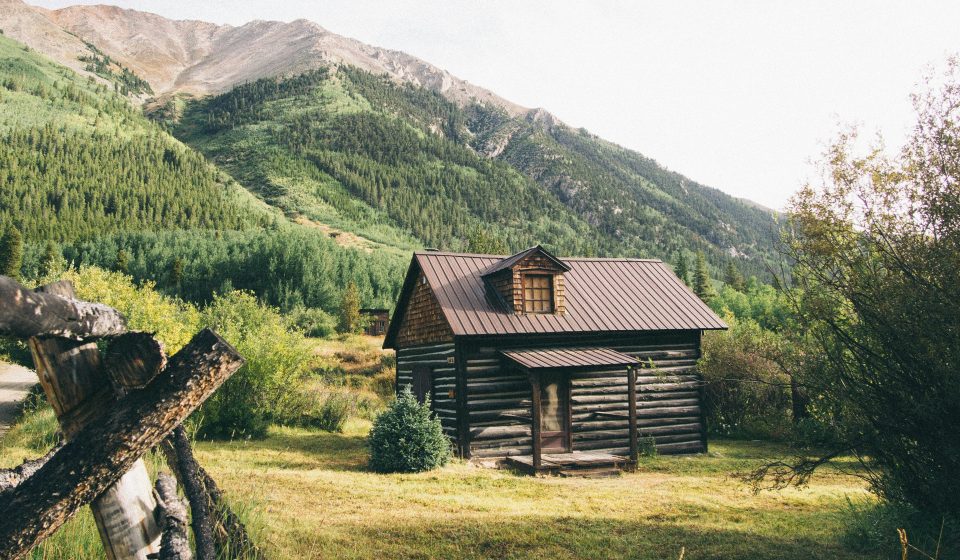
A small cabin, a piece of land and enough distance from everyday noise to slow down.
That desire has helped fuel interest in everything from rural retreats and tiny homes to homesteading and off-grid living.
And Southeastern Ohio has many of the physical characteristics that make the idea particularly appealing: wooded hills, rural communities and landscapes far removed from the image most people have of Ohio’s larger cities.
But the fantasy of disappearing into a cabin in the woods and the reality of actually living there are two very different things.
The Appeal Starts With Something Simple: Quiet
Ask people to imagine cabin life and the picture tends to look similar.
A porch facing the woods.
Coffee in the morning.
A wood stove burning on a cold evening.
Rain hitting a metal roof.
No traffic outside the bedroom window.
No neighbor separated from you by a thin apartment wall.
And perhaps most importantly, nowhere you absolutely have to be.
That’s the emotional appeal behind much of the modern interest in slow living.
It’s not necessarily about rejecting modern life.
It’s about deciding which parts of it deserve so much of our time.
What Does “Slow Living” Actually Mean?
Despite the name, slow living doesn’t require doing everything slowly.
It’s better understood as an attempt to live more intentionally.
Instead of automatically filling every available hour, the idea is to pay more attention to how time is being used.
That might mean cooking at home rather than constantly eating on the run.
It might mean spending an evening outside instead of scrolling through a phone.
For someone else, it could mean gardening, woodworking, reading or simply having fewer obligations competing for attention.
A cabin isn’t required for any of those things.
But for many people, a small rural home represents the lifestyle physically.
Less house.
Less clutter.
Less noise.
More deliberate choices.
Why Southeastern Ohio Fits the Picture
Ohio isn’t usually the first state that comes to mind when people imagine a secluded American cabin.
That may be part of the attraction.
Southeastern Ohio contains a dramatically different landscape from the flat farmland many outsiders associate with the state.
This part of Ohio lies within the Appalachian region, where forested hills, valleys, creeks and smaller communities shape much of the landscape.
The region includes areas around places such as Athens, Hocking Hills and communities stretching toward the Ohio River.
For someone coming from a dense urban or suburban environment, the change can feel substantial.
Instead of seeing rows of houses, a rural property may look out toward woods.
Instead of hearing traffic throughout the day, the dominant sounds may be birds, insects, rain and wind.
That’s the version of Ohio that makes cabin living easy to imagine.
The Cabin Dream Is Often About Having Less
Modern houses frequently sell themselves through size.
More bedrooms.
More bathrooms.
More storage.
Larger kitchens.
Bigger garages.
Cabins often work in the opposite direction.
Their charm frequently comes from limitation.
A smaller kitchen forces more thoughtful organization.
A compact living room means fewer pieces of furniture.
Limited storage makes it harder to accumulate things that aren’t actually being used.
For people accustomed to managing a house full of possessions, downsizing can initially feel restrictive.
But that’s precisely what attracts others.
The house stops being the center of life.
The land surrounding it becomes equally important.
A Porch Can Matter More Than Another Bedroom
That’s one of the interesting differences between conventional suburban housing and rural cabin properties.
A buyer looking at a suburban home might prioritize another bedroom or a remodeled bathroom.
Someone searching for a cabin may become excited about entirely different things.
How private is the porch?
Is there a creek?
How much of the property is wooded?
Can you see another house?
Where does the sun set?
Is there enough room for a garden?
Can you hear the road?
Those questions reveal what the buyer is actually purchasing.
Not simply a building.
A setting.
Then Comes the Off-Grid Dream
For some people, a rural cabin is enough.
Others start imagining something more ambitious.
Solar panels.
A private well.
Rainwater collection.
Wood heat.
A garden.
Backup batteries.
Perhaps enough land to produce some food.
Eventually the phrase “off-grid” enters the conversation.
It sounds wonderfully simple.
Produce your own electricity.
Get your own water.
Heat your own home.
Depend less on outside systems.
But genuine off-grid living can be considerably more complicated than social media makes it appear.
Solar Panels Don’t Automatically Mean Off-Grid
This distinction is important.
A house can have solar panels while remaining fully connected to the electrical grid.
Going genuinely off-grid requires a system capable of supplying electricity when the sun isn’t shining.
That can mean battery storage, careful energy management and often some form of backup power.
The system also has to be sized for actual household demand.
Running a few lights and charging phones is one thing.
Operating electric heating, water pumps, appliances and other equipment throughout an Ohio winter is another.
Anyone considering an off-grid property needs to think about the least favorable conditions, not merely a perfect sunny afternoon in July.
Water Becomes Your Responsibility Too
City residents can turn on a faucet without thinking much about what happened before the water arrived.
Rural living can change that relationship.
Depending on the property, water might come from a private well or another approved source.
That means maintenance and water quality become homeowner concerns.
Wastewater is another consideration.
Many rural properties rely on septic systems rather than municipal sewers.
A septic system isn’t particularly glamorous, but its condition can matter far more to a prospective cabin buyer than rustic furniture or a beautiful fireplace.
A failed system can turn an idyllic property into an expensive project.
Wood Heat Has Its Own Rhythm
Few things fit the cabin image better than a wood-burning stove.
There’s something undeniably appealing about coming inside on a cold evening and feeling heat from a fire.
But wood heat also requires work.
Firewood has to come from somewhere.
It needs to be cut or purchased.
It needs to be seasoned and stored.
The stove and chimney require appropriate installation and maintenance.
And someone has to keep the fire going.
That’s an important theme running through cabin life in general.
The things that look simple often require more direct involvement from the homeowner.
Rural Privacy Comes With Trade-Offs
A house surrounded by woods can feel wonderfully private.
But distance works both ways.
The grocery store may be farther away.
Medical care may require a longer drive.
A snow-covered rural road can become a serious concern.
Cellular reception can vary.
Internet options can be more limited than buyers accustomed to cities expect.
Contractors may have to travel farther to reach the property.
Emergency response can also be different from what someone experiences in a densely populated neighborhood.
None of those factors automatically makes rural living undesirable.
They simply belong in the calculation.
Internet Access Can Make or Break the Dream
This is especially important now that many people imagine working remotely from a cabin.
A beautiful property can quickly become impractical if reliable internet is essential for someone’s job and the available connection can’t support it.
That’s why prospective buyers shouldn’t assume connectivity based on an online coverage map alone.
Actual service availability should be checked for the specific address.
And if remote work is essential, having a backup option may be worthwhile.
The romantic version of cabin life doesn’t usually include a video call freezing halfway through an important meeting.
The practical version has to.
Old Cabins Can Hide Expensive Problems
Rustic character is another area where emotion and reality can collide.
Exposed beams can be beautiful.
Old wood can be beautiful.
Stone foundations can be beautiful.
But “old” and “rustic” aren’t substitutes for “structurally sound.”
Before buying an older cabin, important questions include the condition of the roof, foundation, electrical system, plumbing, chimney and drainage.
Moisture deserves particular attention.
So do insects and wood deterioration.
A cabin surrounded by nature is also surrounded by everything living in that nature.
That’s part of the experience.
Buying Land Requires More Than Falling in Love With the View
A wooded parcel may look perfect during a showing.
But the important questions often aren’t visible.
Where are the legal boundaries?
Does someone else have an easement across the property?
Is the driveway privately maintained?
Is part of the land in a flood zone?
Are there restrictions on additional structures?
Can another cabin actually be built?
What happens to the road after heavy rain or snow?
A buyer thinking about homesteading should also verify whether the property can legally and practically support whatever plans they have.
The phrase “10 acres” doesn’t automatically mean 10 acres of usable land.
Steep terrain, wetlands, access and other limitations can dramatically change what a property can actually do.
Slow Living Doesn’t Have to Mean Total Isolation
There’s another misconception worth addressing.
Wanting a quieter life doesn’t necessarily mean wanting to disappear from society.
For many people, the ideal arrangement may be somewhere in between.
Enough acreage for privacy.
A cabin or modest house.
Reliable electricity and internet.
A small town within reasonable driving distance.
Medical care accessible when needed.
Maybe a garden and a workshop.
Perhaps a creek or pond.
In other words, the most sustainable version of “simple living” may not be completely off-grid at all.
It may simply involve reducing unnecessary complexity.
The Real Luxury May Be Having Fewer Obligations
That’s ultimately why cabin life continues to capture people’s imagination.
The attraction isn’t always the cabin itself.
It’s what the cabin represents.
Time.
Quiet.
Privacy.
Space.
A morning without rushing.
An evening without somewhere else to be.
A smaller home that doesn’t consume every weekend with cleaning and maintenance.
A piece of land where sitting outside can become the day’s entertainment rather than something squeezed between other commitments.
Those things are difficult to photograph in a real-estate listing.
But they’re often exactly what people believe they’re buying.
You Don’t Have to Abandon Modern Life to Slow Down
It’s easy for the conversation around simple living to become extreme.
Sell everything.
Quit the job.
Move into the woods.
Go completely off-grid.
Grow all your food.
But slowing down doesn’t require any of that.
Someone can live in an ordinary house and adopt many of the same principles.
Buy less.
Spend more time outdoors.
Reduce unnecessary commitments.
Put the phone away for part of the day.
Cook more meals at home.
Take care of what you already own.
Create routines that aren’t centered entirely around work and consumption.
The cabin is one version of the idea.
It isn’t the only one.
Why the Dream Isn’t Going Away
For generations, Americans have romanticized the idea of getting away from it all.
What changes is the thing they’re trying to escape.
Today, it might be endless notifications, housing costs, commuting, digital overload or the feeling that every hour has already been assigned a purpose.
That makes a quiet cabin in the hills unusually powerful as an image.
It represents the opposite.
A smaller space.
A quieter environment.
A slower morning.
And perhaps a little more control over how the day unfolds.
Southeastern Ohio’s wooded Appalachian landscape provides a natural setting for that dream.
But anyone considering making it real should understand both sides.
Cabin life can offer privacy and simplicity.
It can also mean longer drives, more maintenance and greater personal responsibility for systems that city residents rarely have to think about.
For the right person, those aren’t necessarily disadvantages.
They may be part of the reason to do it.
Because the real goal of slow living isn’t to escape every responsibility.
It’s to decide which responsibilities—and which parts of life—are actually worth your time.
Could you trade the convenience of city or suburban life for a small cabin surrounded by woods?