If You See Hundreds of Tiny Praying Mantises Near Your Home, Don’t Panic—Here’s What Just Happened

Imagine opening your front door one morning and discovering dozens—or possibly hundreds—of tiny creatures crawling across the wall, porch and nearby plants.
At first glance, the scene can be alarming.
They’re incredibly small.
They’re moving everywhere.
And if you’ve never seen them before, you may have no idea where they came from.
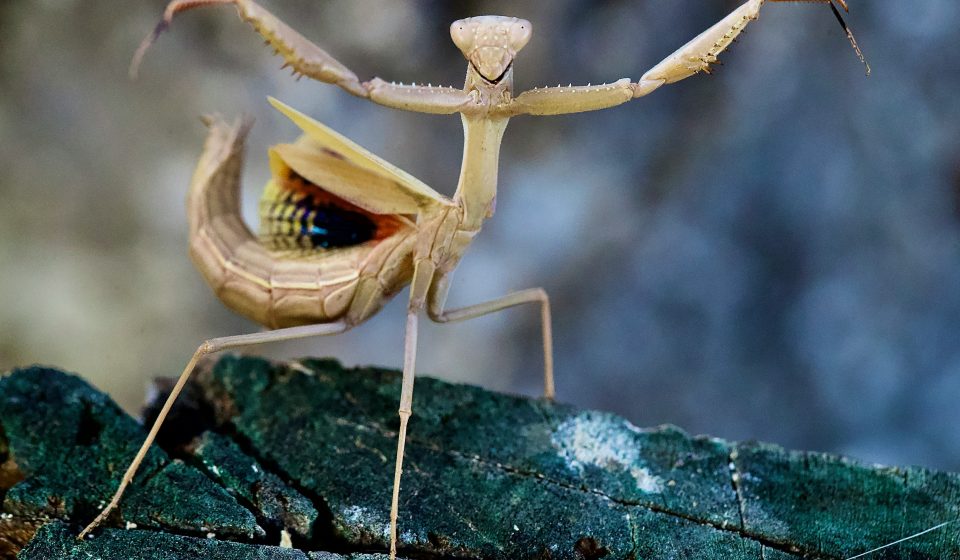
Look more closely, however, and you might recognize their triangular heads, long bodies and unmistakable folded front legs.
They’re baby praying mantises—and an egg case nearby has probably just hatched.
Although the sudden appearance of so many insects can look like an infestation, it’s actually a fascinating part of the praying mantis life cycle.
And if you find them around your home, you usually don’t need to do much at all.
It All Begins With a Strange Foam-Like Egg Case
Before the tiny mantises appear, there’s often another unusual object nearby.
It’s called an ootheca.
A female mantis produces a foamy material around her eggs that hardens into a protective case.
Depending on the species, these cases can be attached to twigs, plant stems and other sturdy surfaces.
They may even appear on fences, walls and buildings.
If you’ve ever noticed a small tan or brown mass attached to a branch during winter, you may have walked past a mantis egg case without realizing what it was.
Inside, an entire new generation may be waiting.
One Egg Case Can Hold a Surprising Number
This is why the hatching can look so dramatic.
An ootheca can contain dozens to hundreds of eggs, depending on the mantis species.
They remain protected inside the hardened case through the colder months.
Then, when seasonal conditions are appropriate, the young mantises emerge.
And they don’t politely appear one at a time over several weeks.
A large number can emerge around the same period.
Suddenly, a surface that looked completely ordinary can appear covered in miniature mantises.
The Babies Already Look Like Tiny Mantises
Baby praying mantises are called nymphs.
One of the remarkable things about them is how recognizable they already are.
They resemble miniature versions of adults, although they don’t yet have developed adult wings.
You’ll see the familiar triangular head.
Long legs.
Large eyes.
And, most importantly, the specialized front legs that eventually make mantises such effective ambush predators.
Those front legs are known as raptorial forelegs.
They’re built to grab and hold prey.
So although the newly emerged mantises may look delicate, they’re already equipped for a predatory life.
They’re About to Spread Out
Seeing so many together may make you wonder whether your porch is about to become permanently covered in mantises.
Probably not.
The young nymphs begin dispersing as they search for food and suitable habitat.
Nearby vegetation provides places to hide and hunt.
As they spread into shrubs, grasses, flowers and other plants, that enormous-looking cluster can disappear surprisingly quickly.
A day later, someone walking past the same location might never realize that an entire ootheca had recently hatched there.
They Have to Start Hunting Quickly
There is no mother mantis waiting nearby to teach the babies how to survive.
They’re essentially on their own.
Their predatory behavior begins early, and small nymphs feed on appropriately sized prey.
They can even eat one another.
Cannibalism is one reason the impressive number emerging from an egg case shouldn’t be mistaken for the number that will eventually reach adulthood.
The outside world is difficult for an insect this small.
They face predators, limited food and environmental hazards from the moment they emerge.
Producing many offspring helps compensate for that vulnerability.
Praying Mantises Are Impressive Hunters
Adult mantises are famous for remaining almost perfectly still while waiting for prey to approach.
Then everything changes.
Their specialized front legs can strike rapidly and seize an insect that gets within reach.
This sit-and-wait strategy is why a mantis can appear peaceful one moment and become an efficient predator the next.
Their familiar “praying” appearance comes from the position of those folded front legs.
But they aren’t folded for meditation.
They’re hunting equipment.
Are Praying Mantises Good for Your Garden?
This question requires a little nuance.
Praying mantises certainly eat many insects people consider garden pests.
But they aren’t selective pest-control specialists.
They’re generalist predators.
Essentially, if another animal is small enough for a mantis to capture, it may become prey.
That can include unwanted insects.
But it can also include beneficial insects.
Mantises may capture flies, caterpillars and other garden insects, while also taking bees, butterflies and other helpful species.
So describing them simply as harmless “natural pest control” doesn’t tell the entire story.
They’re predators participating in the broader garden ecosystem.
Their Eyes Are Another Remarkable Adaptation
Anyone who has looked closely at a praying mantis knows how unusual the face appears.
The head is triangular, with two prominent compound eyes.
Mantises rely heavily on vision while hunting.
They can detect movement and judge the position of potential prey before striking.
Their ability to turn the head also contributes to their almost strangely attentive appearance.
Sometimes it genuinely feels as though the mantis is watching you back.
That unusual appearance is part of what has made them among the most recognizable insects in the world.
What Should You Do If an Egg Case Hatches Near Your Door?
In many situations, the simplest response is the best one:
Leave them alone and let them disperse.
If they’re outdoors and aren’t in immediate danger, there usually isn’t a reason to interfere.
Avoid spraying them with insecticide simply because the sudden number looks alarming.
University extension guidance recommends leaving mantis egg cases outdoors so they can hatch naturally.
Nearby shrubs and vegetation give the newly emerged nymphs places to disperse and begin hunting.
If an egg case absolutely must be moved from an inconvenient outdoor location, guidance from Illinois Extension recommends relocating it to a sheltered position rather than placing it on the ground, where ants may reach the eggs.
Don’t Bring the Egg Case Into a Warm House
This is especially important during fall and winter.
Finding a mantis ootheca on a branch can tempt someone to bring it indoors for protection.
That can backfire.
The warm temperature inside a house may trigger the mantises to emerge earlier than they normally would outdoors.
Then you could suddenly have dozens of hungry baby mantises inside during a season when suitable prey isn’t available.
An egg case that is already outdoors is generally best left outdoors to experience natural seasonal temperatures.
What If They’re Right Beside the Front Door?
If they’ve already hatched, there’s usually no need to panic.
Watch where you step.
Give them time.
Avoid spraying chemicals around the area.
Most will begin moving away in search of vegetation and food.
If a few are sitting directly on a frequently used walkway, gently encouraging them toward nearby vegetation may reduce the chance of accidentally stepping on them.
But there’s no need to start collecting every individual.
Nature has already given them their instructions.
Don’t Assume Every Mantis Is the Same Species
There are multiple praying mantis species in the United States.
Depending on where you live, you might encounter native species as well as introduced ones.
The egg cases can look different depending on species, too.
For example, the Carolina mantis produces an ootheca with a different shape and texture from the larger egg case commonly associated with the Chinese mantis.
That means photographs of the ootheca can sometimes be useful when trying to identify what has hatched.
Location also matters.
If species identification is important, a local university extension service or experienced entomologist can be more reliable than simply comparing a single photo with random images online.
The Tiny Mantises Won’t Stay Tiny for Long
Like other insects with an external skeleton, mantises have to molt as they grow.
The nymph sheds its old exoskeleton and emerges larger.
This process happens repeatedly before adulthood.
With each stage, the insect begins looking more like the full-size mantis most people recognize from gardens.
The tiny creature that was barely noticeable near your front door can eventually become a striking predator several inches long, depending on species.
A Small Event Most People Never Notice
Perhaps the most interesting thing about a mantis hatch is how temporary it is.
For a brief period, dozens or hundreds of tiny insects may appear in one concentrated area.
Then they disperse.
The next morning, there may be almost nothing left to see.
That’s why encountering a newly hatched ootheca can feel so unusual.
You’re witnessing a stage of the mantis life cycle that normally happens quietly among branches, grasses and shrubs.
This time, it simply happened somewhere humans happened to notice.
So If You Open Your Door and See This, Don’t Panic
Hundreds of tiny praying mantises suddenly appearing around a doorway can certainly look strange.
But they didn’t invade your home overnight.
Most likely, an egg case that had been sitting quietly nearby has finally hatched.
The miniature mantises will begin dispersing, hunting and facing the difficult process of surviving to adulthood.
There’s usually no need for chemicals.
No need to destroy them.
And certainly no reason to panic.
Sometimes the best response to an unexpected event in nature is simply to watch it happen.
Because by tomorrow, those tiny mantises may already have disappeared into the garden.
Have you ever found a praying mantis egg case—or seen dozens of baby mantises hatch at once?