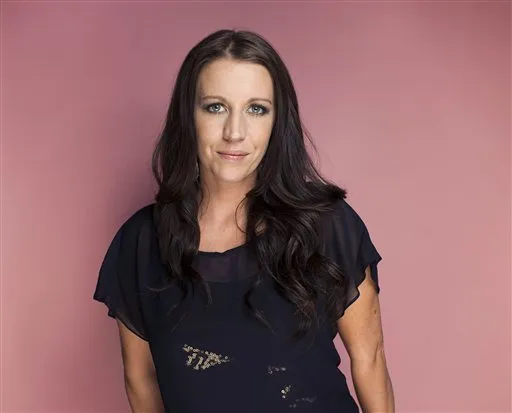

Long before the world knew Justin Bieber’s name, his mother was fighting a private battle to survive.
Pattie Mallette’s life story did not begin with YouTube videos, record deals, sold-out arenas or the extraordinary rise of the son she raised.
It began with pain she struggled for years to understand.
Mallette has spoken publicly about experiencing sexual abuse during childhood, carrying shame that did not belong to her, turning to drugs and alcohol as a teenager and reaching a point of despair where she attempted to take her own life.
Years later, she chose to tell that story publicly.
Not because it was easy to revisit.
But because, as she explained in interviews surrounding her memoir, Nowhere But Up: The Story of Justin Bieber’s Mom, she hoped someone else going through darkness might recognize that survival and healing were possible.
And at the center of her story was a pregnancy that changed the direction of her life.
Pattie Mallette’s Story Began Long Before Fame
When Justin Bieber eventually became one of the world’s most recognizable musicians, Pattie suddenly became familiar to millions as “Justin Bieber’s mom.”
But her own story was already complicated.
In interviews about her memoir, Mallette described experiencing abandonment and sexual abuse during childhood.
She told CNN’s Dr. Drew Pinsky that her parents separated when she was two and that her father moved away. She also described years of sexual abuse during childhood and the confusion and emotional damage that followed.
Those experiences didn’t simply disappear when the abuse stopped.
Their effects followed her into adolescence.
She Carried Shame That Wasn’t Hers
One of the most difficult parts of Mallette’s account is her description of self-blame.
People who experience abuse can carry responsibility for something that was never their fault.
Mallette described feeling shame and confusion and eventually realizing through therapy that those reactions were connected to what had happened to her.
She even recalled feeling guilty that she hadn’t stopped the abuse sooner.
That kind of distorted responsibility became part of the emotional burden she carried.
Her story emphasizes something important: surviving an abusive experience physically does not necessarily mean its psychological effects immediately end.
For Mallette, they didn’t.
As a Teenager, Her Life Spiraled
As adolescence arrived, Mallette said she began using drugs and alcohol.
She later described the substance use as a way of escaping the pain of her childhood.
The relief wasn’t real or lasting.
Instead, her life became increasingly chaotic.
In an interview with Dr. Drew, she described the combination of abandonment, abuse, unhealthy relationships, conflict and substance use eventually reaching a breaking point when she was 17.
She became deeply depressed.
Then came one of the darkest moments of her life.
At 17, She Tried to End Her Life
Mallette has publicly discussed a suicide attempt during her teenage years.
In her CNN interview, she explained that she was overwhelmed by pain and shame and wanted an immediate escape from what she was feeling.
She survived.
That survival became a dividing line in her story.
It did not mean everything suddenly became easy.
Recovery rarely works that way.
Mallette has spoken instead about counseling, therapy, faith and a longer healing process.
She later described writing her memoir itself as another part of that process.
Therapy and Faith Became Important Parts of Her Recovery
Mallette has repeatedly credited professional counseling alongside her Christian faith with helping her move forward.
She told interviewers that counseling was a major part of her recovery and that her faith helped her through periods when life had felt hopeless.
That’s an important distinction.
Her story wasn’t simply:
Something terrible happened, then everything became good.
There were years of consequences.
Years of processing.
Years of learning how childhood experiences had shaped her decisions and her understanding of herself.
Mallette herself has resisted describing healing as a perfectly finished process.
She told Dr. Drew that writing Nowhere But Up furthered her healing, while acknowledging that she didn’t think there was necessarily a single point of complete “closure.”
Then She Learned She Was Pregnant
Mallette was still very young when another defining moment arrived.
She became pregnant with Justin.
Accounts from the period surrounding the publication of her memoir say she was 17 when she became pregnant and 18 when she gave birth.
She was not entering motherhood from a position of financial security or emotional simplicity.
She was young.
Single.
Still carrying the effects of her own childhood.
And she faced pressure from people around her to terminate the pregnancy.
Mallette said she couldn’t do it.
She Chose to Continue the Pregnancy
Speaking about that period years later, Mallette said she knew she had to keep her baby even though she didn’t know exactly how she was going to manage.
The certainty wasn’t about having a perfect plan.
She didn’t have one.
It was about making a decision and then committing herself to what came next.
She described being determined to do the best she could and to do what was necessary to raise her child.
Pregnancy didn’t magically erase her past.
But Mallette later described becoming pregnant as one of the defining moments that made her realize she was responsible for more than herself.
Motherhood Gave Her a New Responsibility
That distinction matters.
Stories like Mallette’s are sometimes simplified into a neat formula:
A baby “saved” someone.
Real life is more complicated.
A child should never be assigned responsibility for curing a parent’s trauma, depression or substance problems.
Mallette’s own broader account includes counseling, faith, personal effort and years of healing.
But she has said that pregnancy changed her sense of responsibility.
There was another life involved now.
Another person whose future depended partly on what she did next.
That became powerful motivation.
Then Justin Was Born
When her son finally arrived, Mallette remembered hearing his cry.
Years later, she recalled the sound with an unmistakably musical comparison.
She thought it sounded as though he were singing.
At that moment, of course, she couldn’t have known where his voice would eventually take him.
There was no global superstar yet.
No enormous audience.
No Bieber phenomenon.
Just a young mother and her newborn son.
The Celebrity Story Came Much Later
This is what makes Mallette’s account different when separated from the mythology surrounding Justin Bieber’s fame.
We know the ending that came afterward.
Millions of fans.
YouTube.
A music career.
International celebrity.
But Pattie Mallette making decisions as a young mother did not have access to that future.
She wasn’t raising a guaranteed superstar.
She was raising a child.
The enormous success that followed can make the early struggle look almost inevitable in retrospect.
It wasn’t.
Justin’s Rise Began Much More Modestly
Years later, videos of a young Justin performing were uploaded online.
What initially seemed like ordinary videos for people to watch began attracting increasingly large audiences.
Mallette later recalled watching the view counts rise—from small numbers into thousands—without initially imagining that a professional music career would result.
Then everything accelerated.
The boy she had decided to raise under difficult circumstances became internationally famous.
Suddenly, Pattie’s past existed beside an extraordinary public success story.
But she eventually decided that the difficult parts deserved to be told too.
She Wrote Nowhere But Up
Mallette published Nowhere But Up: The Story of Justin Bieber’s Mom with co-writer A.J. Gregory.
The memoir confronted subjects many people would have preferred to keep private.
Childhood sexual abuse.
Abandonment.
Depression.
Drugs and alcohol.
Suicidal despair.
Teen pregnancy.
Single motherhood.
Faith.
Recovery.
Mallette said writing the book was cathartic and part of her healing process.
But she also had another reason.
She wanted other people—especially young people experiencing difficult circumstances—to know they weren’t alone.
Justin Found Parts of the Book Painful
There was another complication.
This wasn’t only Pattie’s history.
It was painful for her son to read what his mother had survived.
Mallette said Justin read the book before publication and found sections concerning abuse and suicide especially difficult.
But she also said he supported her decision to share the story.
That reveals something important about personal storytelling.
Speaking openly about trauma can help others.
But it can also affect the people closest to the survivor.
Mallette chose to tell her story anyway.
She Wanted Other Young People to Hear It
In interviews, Mallette repeatedly returned to the same purpose.
Hope.
She wanted teenagers and young women facing their own dark circumstances to understand that their present situation did not necessarily determine the rest of their lives.
When asked what she would tell her younger self, her message was essentially to stop being so hard on herself and not give up because things could improve.
That may be one of the most meaningful parts of her story.
Not celebrity.
Not wealth.
Not fame.
Survival.
Her Story Also Challenges the Shame Surrounding Abuse
Mallette’s willingness to discuss self-blame is significant.
Abuse can distort how survivors understand responsibility.
A child may ask why they didn’t stop it.
Why they didn’t tell someone.
Why they froze.
Why they remained silent.
Why they didn’t understand what was happening.
Those questions can become shame.
But responsibility belongs to the person who committed the abuse—not to the child who survived it.
Mallette spent years working through those wounds.
By speaking publicly, she was challenging the secrecy that had once contributed to her pain.
Speaking Was Part of Reclaiming Her Story
There is a striking reversal in Mallette’s life.
As a child, she described feeling voiceless.
As an adult, she published a book telling millions of people what had happened.
She went on television.
She answered difficult questions.
She discussed subjects that once caused profound shame.
That doesn’t mean public disclosure is necessary for healing.
Every survivor has the right to privacy.
But for Mallette, telling her story became part of her own process.
And she hoped her openness might help someone else find the courage to seek help.
Her Story Shouldn’t Be Reduced to “Everything Happened for a Reason”
That would oversimplify what she survived.
Childhood abuse did not become acceptable because her life later improved.
Depression wasn’t valuable because she eventually found purpose.
Her suicide attempt wasn’t simply a dramatic chapter leading toward fame.
Trauma doesn’t need a positive ending to become real or worthy of compassion.
What is meaningful is what Mallette did afterward.
She survived.
She sought help.
She continued working through what happened.
She became a mother.
And eventually she found a way to speak about experiences she once carried in shame.
Justin’s Fame Doesn’t Erase Pattie’s Struggle
Celebrity can distort stories.
Once someone becomes enormously successful, everything that happened before fame can start looking like the opening act.
But Pattie Mallette’s experiences mattered before anyone knew who Justin Bieber was.
Her recovery mattered even if her son had never become famous.
Her decision to keep going mattered before there were fans watching.
Her motherhood mattered before anyone knew whether the baby in her arms would grow up to sing.
That’s perhaps the better way to understand her story.
A Young Mother Couldn’t See the Future
When Mallette heard her newborn son’s first cry, she didn’t know what would happen.
She couldn’t see the millions of fans.
She couldn’t see the recording studios.
She couldn’t see the tours.
She couldn’t see the headlines.
She simply knew that she was his mother.
And she had decided to try.
That may be less spectacular than the celebrity story that followed.
But it is far more human.
Healing Wasn’t a Straight Line
Mallette has been careful about this point.
Years after the worst period of her adolescence, she still spoke about healing as an ongoing process.
There had been therapy.
Faith.
Counseling.
Personal work.
Writing.
Time.
That matters because stories of survival can become misleading when we make recovery sound instantaneous.
Someone struggling today shouldn’t conclude they’re failing because they haven’t experienced a dramatic transformation.
Healing can be slow.
Progress can coexist with difficult days.
As Mallette’s own account demonstrates, surviving something is often only the beginning of learning how to live beyond it.
Her Son Was Part of the Story, Not the Entire Story
It would be easy to end with Justin Bieber’s achievements.
But doing so would miss the point.
Pattie Mallette’s story isn’t remarkable simply because the child she raised became famous.
Her story is about what came before anyone knew his name.
A girl who endured experiences no child should endure.
A teenager who tried to escape her pain.
A young woman who survived.
A mother who made a commitment without knowing what the future held.
And an adult who eventually decided to speak publicly about the parts of her life she had once carried with shame.
Final Thoughts
Today, millions know Pattie Mallette primarily because they know her son.
But her memoir asks readers to look further back.
Before Justin Bieber became famous, his mother had already survived childhood sexual abuse, depression, substance misuse and a suicide attempt.
She sought counseling.
Her faith became important to her recovery.
Then, while still very young, she learned she was pregnant.
Despite pressure to terminate the pregnancy, Mallette said she knew she couldn’t make that choice.
She didn’t know exactly how she would raise her child.
She didn’t know what kind of future awaited them.
She simply committed herself to doing her best.
Years later, she would remember hearing Justin’s newborn cry and thinking it sounded musical.
The world now knows what happened to that voice.
But perhaps the deeper part of the story isn’t that her baby eventually became Justin Bieber.
It’s that before the fame, money and global recognition, there was a young woman trying to rebuild a life that had nearly ended.
And she kept going.
Editor’s note: This article discusses childhood sexual abuse, depression, substance misuse and a suicide attempt based on Pattie Mallette’s published memoir and public interviews. These experiences should not be interpreted as suggesting that trauma inevitably leads to substance misuse or suicidal behavior, or that parenthood alone is a treatment for mental-health conditions. People experiencing suicidal thoughts or a mental-health crisis should seek immediate professional or emergency support available in their location.