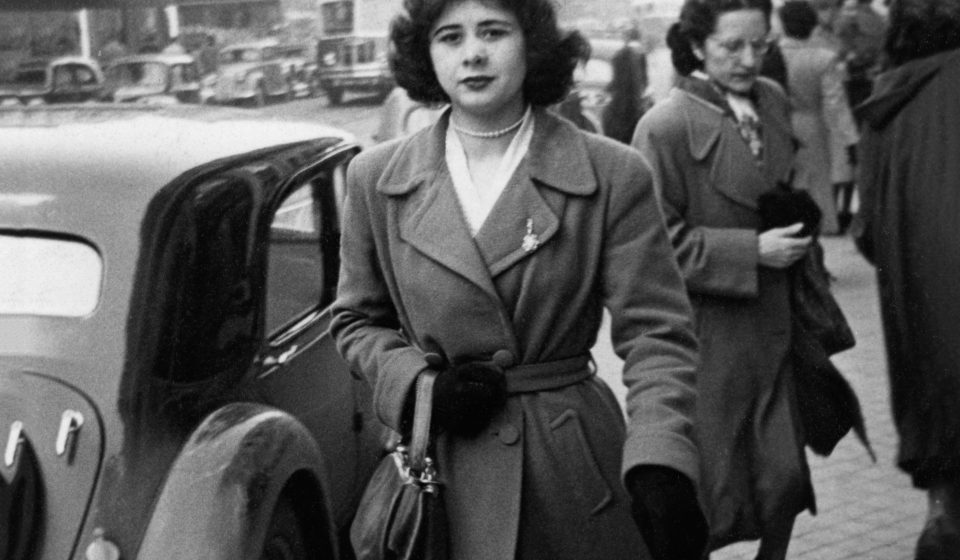

At first glance, it may seem like an ordinary photograph of young women from another era.
Look a little longer, though, and the differences begin to appear.
The clothes.
The hairstyles.
The expressions.
The absence of phones in everyone’s hands.
Even the photograph itself has a texture and character that immediately feels different from the crystal-clear digital images filling our screens today.
For people who lived through the 1970s, pictures like this can bring back surprisingly specific memories. For younger generations, they offer a glimpse into everyday life before smartphones, social media, digital cameras, and instant communication became part of nearly every waking hour.
But what is it about a vintage photograph that makes the decade so recognizable?
The Clothing Often Gives Away the Era First
Fashion is one of the easiest ways to estimate when an old photograph was taken.
The 1970s are remembered for some dramatic trends—bell-bottoms, platform shoes, bold prints, denim, wide collars, and colorful patterns.
But everyday clothing wasn’t always as extravagant as modern costume parties and television shows might suggest.
Many young people wore comparatively simple outfits.
Trousers, sweaters, polo-style shirts, jackets, skirts, dresses, and practical shoes could all be part of an ordinary wardrobe.
That’s important because nostalgia can sometimes exaggerate the past.
Not everyone walked around looking like a disco performer.
Just as people today don’t dress according to one single trend, young women in the 1970s had different tastes, budgets, backgrounds, and reasons for choosing what they wore.
Still, certain cuts, fabrics, colors, and combinations can make a photograph immediately feel like it belongs to the decade.
Then There Are the Hairstyles
Hair is another powerful time marker.
Longer, more natural-looking styles became strongly associated with the period, although there was considerable variety.
Some women wore their hair long and relatively straight.
Others preferred waves, curls, bangs, layered styles, or shorter cuts.
And unlike today’s world, where a new celebrity hairstyle can circulate globally within minutes, trends spread differently.
People saw styles in magazines, television programs, movies, catalogs, advertisements, and, most importantly, on other people.
A haircut could become part of the visual identity of an entire period.
Decades later, those styles can make an otherwise ordinary family photograph instantly recognizable.
But Perhaps the Most Interesting Detail Is What’s Missing
Look at many casual photographs from the period and one modern object is obviously absent:
The smartphone.
Of course, that’s hardly surprising.
The first commercially available handheld cellular phones were still years away, and the smartphone as we know it belonged to a much more distant future.
But knowing that intellectually and seeing it in a photograph are two different things.
Today, phones are so thoroughly integrated into daily life that their absence can make an old photograph feel strangely peaceful.
People waiting somewhere today may be checking messages, watching videos, scrolling social media, listening through wireless earbuds, reading news, taking pictures, or answering work emails.
A person in the 1970s didn’t have those options in a pocket.
That changed the environment around everyday social interactions.
Life Before the Internet Wasn’t Necessarily Better—Just Different
It’s tempting to look at a vintage photograph and conclude that people were happier because they didn’t have smartphones.
Reality is more complicated.
Every generation has its pressures.
People in the 1970s worried about jobs, money, relationships, politics, family problems, health, and the future just as people do today.
Technology has also solved countless problems.
Someone separated from family by thousands of miles can now make a video call almost instantly.
Emergency information can reach millions of people rapidly.
Directions are available within seconds.
Photographs can be shared with relatives around the world.
A song that once required finding a record can now be played almost immediately.
So the lesson of an old photograph isn’t necessarily that we should return to the past.
It’s that daily behavior changes alongside technology.
Socializing Required More Planning
Consider something as simple as meeting friends.
Today, plans can change repeatedly through a group chat.
Running late?
Send a message.
Changed restaurants?
Share the location.
Can’t find someone?
Call them.
Before mobile phones became commonplace, arrangements required more commitment.
If you agreed to meet someone at a certain place and time, you generally couldn’t assume you could contact them from anywhere if plans changed.
That sounds like a small difference.
It wasn’t.
Technologies don’t only change what devices we own.
They gradually change how we behave.
Music Was Different Too
Music played an enormous role in youth culture during the 1970s.
But listening to it required physical media and equipment.
Records were central to the decade, while radio remained enormously influential.
Listening to an album wasn’t necessarily something done alone through tiny wireless earbuds while walking around.
Music could be a shared activity.
Someone put on a record.
People listened together.
They talked about it.
They turned it over when the side ended.
The limitations of the technology helped shape the experience.
Today, having millions of songs available almost instantly feels normal.
To someone from the early 1970s, that idea would have sounded extraordinary.
Photography May Be the Biggest Difference of All
Think about how casually we take pictures today.
You can take 20 photographs in a few seconds.
Don’t like one?
Delete it.
Someone blinked?
Take another.
Lighting bad?
Try again.
Want to change the image afterward?
Editing tools can alter exposure, color, framing, skin appearance, background details, and much more.
Most importantly, taking another picture costs essentially nothing.
Film photography worked differently.
A roll contained a limited number of exposures.
After the pictures were taken, the film had to be developed before people could see the results.
That meant you couldn’t immediately inspect the image on the back of the camera.
You might discover later that someone blinked.
The picture might be slightly blurry.
Someone might not be looking at the camera.
And that photograph could still end up in the family album.
That’s Why Old Photos Can Feel So Unpolished
Modern social media has accustomed us to highly selected images.
A person may take dozens of photographs before choosing one to post.
They can adjust it.
Crop it.
Apply a filter.
Try another angle.
Vintage family photographs frequently preserve something different.
They aren’t necessarily more “authentic” simply because they’re old, but the technological process imposed limitations that don’t exist in the same way today.
Sometimes the imperfections are exactly what make those photographs memorable.
A strange expression.
Someone looking away.
An awkward pose.
An accidental object in the background.
Those details can become priceless decades later.
People Didn’t Know Which Ordinary Moments Would Become History
This may be the most fascinating thing about vintage photographs.
The people in them usually weren’t trying to document “the 1970s.”
They were documenting Tuesday.
A birthday.
A vacation.
A school event.
A family gathering.
An afternoon with friends.
The clothes that look unmistakably vintage to us may have seemed completely ordinary to them.
The furniture nobody would choose today might have been recently purchased.
The car we now call a classic might simply have been the family vehicle.
Nobody was thinking:
“We should capture this because people will find it historically interesting in 50 years.”
That’s what gives old photographs their power.
History isn’t made only from presidents, wars, inventions, and famous events.
It’s also preserved in kitchens, parking lots, schoolyards, living rooms, and family photo albums.
Look at the Background
When examining an old photograph, people naturally focus on the faces.
But the background can sometimes reveal even more.
Look for cars.
Signs.
Furniture.
Streetlights.
Storefronts.
Packaging.
Telephones.
Televisions.
Kitchen appliances.
Even mundane objects can tell you something about when and where a picture was taken.
A photograph unintentionally becomes a tiny archive.
Something the photographer barely noticed may become the most interesting detail half a century later.
Fashion Eventually Comes Back Around
Another amusing part of looking at 1970s photographs is discovering how familiar some clothing can look.
Fashion rarely moves in a perfectly straight line.
Trends disappear.
Then elements return.
High-waisted pants, flared silhouettes, vintage-inspired sneakers, denim styles, earthy colors, and other influences associated with earlier decades have repeatedly resurfaced in newer forms.
A young person can therefore look at a photograph from decades ago and occasionally think:
I’d wear that today.
The context changes.
The styling changes.
Materials change.
But fashion constantly borrows from its own history.
What Would Someone From 2076 Notice About Us?
This is where old photographs become particularly interesting.
We can easily spot what looks dated about 1976.
But identifying what will look dated about 2026 is much harder.
Perhaps it will be our phones.
Maybe future generations will laugh at the enormous camera modules on the back of today’s devices.
Perhaps they’ll notice our sneakers.
Our cars.
Our hairstyles.
Our kitchens.
Our obsession with photographing food.
Maybe they’ll wonder why people stared down at rectangular screens so often.
Or perhaps technologies we consider futuristic today will appear primitive to them.
We don’t know.
And that’s exactly the point.
Today’s Normal Is Tomorrow’s Nostalgia
A teenager today may not think there is anything historically interesting about a family dinner.
Or a school hallway.
Or sitting with friends.
Or riding in a parent’s car.
But someone looking at those photographs 50 years from now may notice dozens of details.
That’s exactly what happens when we look at photographs from the 1970s.
We aren’t only seeing people.
We’re seeing a vanished version of ordinary life.
The hairstyles matter.
The clothes matter.
The technology matters.
But what often affects people most is something harder to describe.
It’s the realization that the people in the photograph were living in the present.
Their present.
They didn’t know we would someday call their clothes “vintage.”
They didn’t know their cars would become classics.
They didn’t know family photographs would eventually be stored in clouds instead of albums.
They were simply living.
Maybe That’s Why These Photos Feel So Powerful
A vintage photograph reminds us how quickly the present becomes the past.
One day, the clothes you’re wearing right now will identify an era.
The phone in your hand will look outdated.
The car outside your home may seem ancient.
Children may ask what some everyday object was used for.
And photographs you barely think about today could become precious pieces of family history.
That’s why looking at a picture from the 1970s can become more than a game of spotting old fashion.
It’s a reminder to look carefully at ordinary life.
Because ordinary life doesn’t stay ordinary forever.
Eventually, it becomes history.
So take another look at the photograph.
Ignore the obvious for a moment.
Look at the clothes.
The hair.
The expressions.
The background.
The objects people are carrying—or aren’t carrying.
What detail immediately tells you that you’re looking at another era?