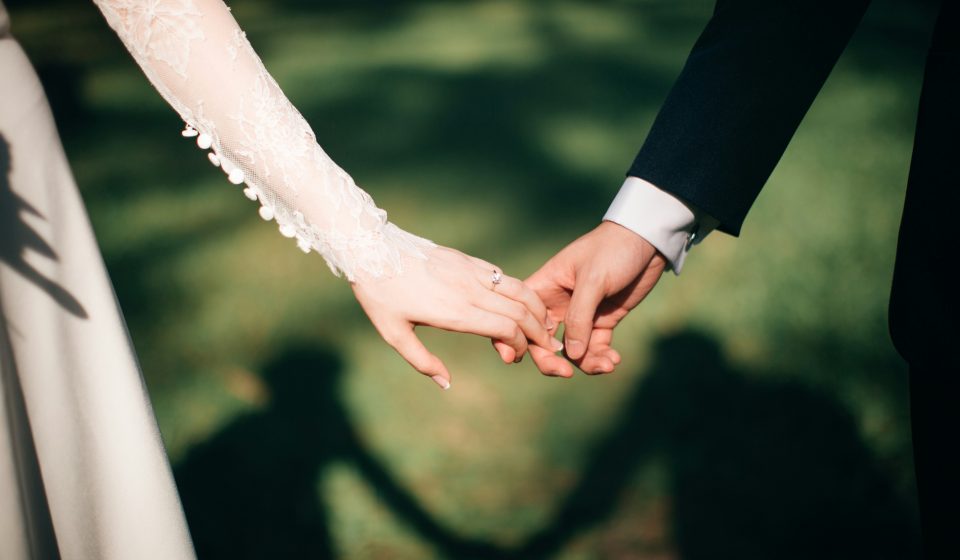
I Married a 70-Year-Old Hospice Patient to Fulfill Her Last Wish—After the Funeral, Her Lawyer Revealed Why She Chose Me

When I first met Eleanor, I thought I was giving her a few hours of my time.
I had no idea she had been waiting nearly 50 years for someone from my family to walk through her door.
She was 70 and receiving hospice care when we met.
I was a young volunteer who thought my job was simple: sit with patients, listen when they wanted to talk, read when they were tired, and make the lonely hours feel a little less lonely.
Eleanor didn’t seem interested in being treated like someone who was dying.
“Everyone comes in here whispering,” she told me during one of my first visits.
“I’m sick, Daniel.
I’m not asleep.”
That was Eleanor.
Direct.
Funny.
Occasionally difficult.
And completely unforgettable.
Over the following weeks, I started looking forward to seeing her.
We talked about books, terrible television, childhood memories, food she missed, and places she wished she had visited.
Then one afternoon, she told me about something she’d wanted almost her entire life.
She had always wanted to be a bride.
Not an expensive wedding.
Not hundreds of guests.
She wanted a white dress, flowers, music, and someone standing beside her.
Most of all, she said, she wanted to know what it felt like to be chosen.
I thought she was joking at first.
She wasn’t.
So I decided to give her the wedding she thought she would never have.
I believed I was doing something kind for a woman approaching the end of her life.
Three weeks later, Eleanor was gone.
And after her funeral, a lawyer handed me an envelope that changed everything I thought I knew about her—and about my own family.
Eleanor Never Wanted My Pity
My first few visits with Eleanor were awkward.
I was still learning how to behave around people receiving end-of-life care.
Should I ask about their illness?
Should I avoid mentioning the future?
Was it wrong to laugh?
Eleanor apparently sensed every question going through my head.
“Daniel,” she said, “if you’re going to sit there looking terrified, at least bring me something interesting to read.”
I laughed.
After that, things became easier.
She liked old movies and crossword puzzles.
She loved music from her youth and complained that coffee never tasted strong enough anymore.
Sometimes we talked for an hour.
Sometimes she was too tired and I simply sat beside her.
She never asked me to pretend she was getting better.
But she also didn’t want her illness to become the only thing anyone saw when they looked at her.
One afternoon, I asked whether there was anything she still wished she could do.
Her expression changed.
“There is one thing,” she said.
“I Always Wanted to Be a Bride”
Eleanor told me she had never married.
She said it casually at first.
Then she admitted that she had once imagined a very different life.
“I had the dress picked out once,” she said.
“What happened?”
She smiled sadly.
“Life.”
I waited for more.
She didn’t give it.
Instead, she told me what she remembered wanting most.
Not the reception.
Not the cake.
Not even the marriage certificate.
“I wanted to walk into a room wearing white and have someone look at me like they were glad I came.”
I didn’t know what to say.
Then she laughed.
“Ridiculous, isn’t it?”
“No.”
“Daniel, I’m 70 years old.”
“So?”
“I’m in hospice.”
“I noticed.”
She laughed again.
That conversation stayed with me all night.
By the following morning, I had an idea.
We Planned a Garden Ceremony
What followed was never meant to be a conventional wedding.
The story, as it has been passed down, describes a symbolic ceremony arranged around Eleanor’s final wish.
Any actual legal marriage would have depended on local law, proper licensing, consent, and Eleanor’s ability to knowingly enter the marriage—details that aren’t established in the surviving account.
But to Eleanor, the emotional meaning was what mattered.
With help from people around us, we began planning something small.
A white dress was found.
Someone brought flowers.
There would be music.
The garden would be decorated simply.
And I found a silver ring.
When I showed Eleanor the dress, she stared at it without speaking.
Then she touched the sleeve.
“You really did this?”
“We’re not done yet.”
She started crying.
That frightened me more than anything else had.
“What’s wrong?”
“Nothing,” she said.
“That’s the problem.”
For One Afternoon, Eleanor Wasn’t a Patient
On the day of the ceremony, the weather cooperated.
A few chairs were arranged outside.
There were flowers near the garden path and music playing softly.
Then Eleanor appeared.
I had seen her dozens of times by then.
I’d seen her exhausted.
I’d seen her frustrated.
I’d seen her in pain.
I’d seen her laugh so hard that a nurse came in to check what had happened.
But I’d never seen her look the way she did in that white dress.
She was smiling before she reached us.
“You look beautiful,” I told her.
“You’re supposed to say that.”
“I mean it.”
“Good answer.”
Everyone laughed.
She held the flowers tightly as we went through the ceremony.
There were tears.
There was laughter.
There was no attempt to pretend that we were beginning an ordinary married life together.
We both understood what the day represented.
For Eleanor, it was the experience she had believed life had denied her.
When I placed the ring on her finger, she looked down at it for several seconds.
Then she turned toward everyone watching.
“I’m a bride,” she said.
The joy in her voice made several people cry.
For one afternoon, illness wasn’t the center of the room.
Eleanor was.
Three Weeks Later, She Was Gone
Eleanor’s health declined quickly afterward.
My visits became quieter.
She slept more.
Sometimes I wasn’t sure whether she knew I was there.
During one of our final conversations, I asked whether she regretted anything about the ceremony.
She opened her eyes.
“Only that I waited 70 years.”
I smiled.
She squeezed my hand.
“Don’t do that.”
“Do what?”
“Wait.”
I didn’t understand exactly what she meant.
I thought she was talking generally about life.
Later, I would realize there was much more behind those words.
Eleanor died peacefully three weeks after the ceremony.
Her funeral was small.
A few people from hospice attended, along with the chaplain and others who had known her.
I stood toward the back.
I remember thinking how strange it was that someone could affect me so deeply in such a short amount of time.
Then, after the service, a man approached me.
“Daniel?”
“Yes?”
“My name is Martin.
I was Eleanor’s attorney.”
He was holding an envelope.
“She asked me to give this to you after her funeral.”
Inside Was a Photograph of My Grandmother
I opened the envelope when I got home.
Inside were two things.
The first was an old wedding invitation.
The paper had yellowed with age.
Eleanor and Thomas.
A date from almost 50 years earlier was printed beneath their names.
The second item was a photograph.
I stared at it.
Eleanor was young in the picture—probably in her early twenties.
Beside her stood another woman.
I knew that face.
I’d seen it in family albums my entire life.
It was my grandmother.
Rose.
I immediately called her.
“Grandma, did you know Eleanor?”
There was silence.
Not confusion.
Not hesitation.
Silence.
Then she asked a question that told me everything.
“She’s gone, isn’t she?”
My Grandmother Finally Told Me the Truth
I drove to Rose’s house.
She was sitting at the kitchen table when I arrived.
The photograph was between us.
For several minutes, she couldn’t look at it.
Finally she said, “She was my best friend.”
That made no sense.
I’d known Eleanor for weeks.
She had known who I was.
She had asked questions about my family.
Yet she’d never once told me she knew my grandmother.
“Why didn’t either of you tell me?”
Rose started crying.
Then she told me what had happened.
Nearly five decades earlier, Eleanor had been engaged to a man named Thomas.
They had saved money for their wedding.
They weren’t wealthy, but according to Rose, they had enough to begin their life together.
Then my grandmother’s life collapsed.
Her husband left.
She had two young children and almost nothing.
Rent was due.
There were bills she couldn’t pay.
Rose said she had been terrified that she and her children would lose their home.
Eleanor found out.
And without asking Thomas first, she gave Rose the money she and Thomas had saved for their wedding.
Eleanor Gave Away Her Wedding to Save My Family
I struggled to understand what my grandmother was telling me.
“All of it?”
Rose nodded.
“Almost everything.”
“What did Thomas do?”
“He was furious.”
Not because he wanted Rose and her children to suffer.
Because the money represented years of planning between him and Eleanor, and Eleanor had made an enormous decision without him.
Their relationship never recovered.
The wedding was postponed.
Arguments followed.
Eventually, the engagement ended.
Thomas moved on.
Eleanor never married.
I looked at the old invitation again.
Suddenly the hospice ceremony felt completely different.
Eleanor hadn’t simply dreamed vaguely about wearing a wedding dress.
She had once been preparing for a real wedding.
Then she’d sacrificed the money behind that future to help my grandmother.
And decades later, without knowing any of this, I had been the person who finally stood beside her while she wore white.
“Why Didn’t You Repay Her?”
It was an unfair question.
I knew that almost immediately.
But I asked it anyway.
Rose didn’t become defensive.
“I tried.”
When she eventually became financially stable, she attempted to repay Eleanor.
Eleanor refused the money.
Rose tried gifts.
Eleanor refused those too.
Then came something more difficult than debt.
Guilt.
Every conversation reminded Rose of what Eleanor had lost.
Every meeting made her feel as though she had taken something that couldn’t be returned.
So instead of facing that discomfort, my grandmother slowly withdrew.
Calls became less frequent.
Visits stopped.
Years passed.
“I thought leaving her alone would make things easier,” Rose said.
“For who?”
She looked at me.
“For me, probably.”
That answer hurt.
But at least it was true.
She Had Written Letters for Years
Rose disappeared into another room and returned carrying a box.
Inside were letters.
Dozens of them.
Some were sealed.
Some were unfinished.
Most had never been mailed.
I picked one up.
“Dear Eleanor…”
Another began:
“I thought about you today.”
Another:
“I still don’t know how to thank you.”
My grandmother had spent decades speaking to Eleanor on paper while remaining silent in real life.
“Why didn’t you send them?”
“I was ashamed.”
That was the tragedy neither woman had been able to undo.
Eleanor had sacrificed something enormous out of love.
Rose had turned that sacrifice into a debt she believed she could never repay.
And guilt had destroyed the friendship that generosity had originally tried to protect.
Eleanor Knew Exactly Who I Was
I called Martin the following morning.
“Did Eleanor know Rose was my grandmother?”
“Yes.”
“From the beginning?”
“Very early on.”
“Why didn’t she tell me?”
“She wanted you to know her as Eleanor.”
That answer stayed with me.
She hadn’t wanted me to visit because I owed her.
She hadn’t wanted gratitude inherited from my grandmother.
She wanted our conversations to be genuine.
According to Martin, once Eleanor realized who I was, she decided that if there was an appropriate way for the truth to come out, it should happen after her death.
She wasn’t asking for repayment.
She wasn’t trying to shame Rose.
She simply didn’t want the story to disappear with her.
Then Martin told me there was one more thing.
The Lawyer Had Been Keeping a Ring
We met again several days later.
Martin placed a small box on the table.
Inside was an engagement ring.
Not the silver ring from our garden ceremony.
This one was old.
It had belonged to Eleanor.
Thomas had given it to her before the wedding that never happened.
“Why didn’t she sell it?”
“I asked her that once,” Martin said.
“What did she say?”
“That not everything valuable should be converted into money.”
Eleanor had asked him to keep the ring until the right time.
She wanted it eventually to reach someone who understood its story.
There was no fortune.
No mansion.
No shocking inheritance.
The thing Eleanor left behind was more complicated than money.
It was a reminder.
My Grandmother Visited Eleanor’s Grave
A few weeks later, I drove Rose to the cemetery.
She carried one of the letters.
We stood beside Eleanor’s grave for a long time.
Finally, my grandmother knelt and placed the envelope beside the flowers.
“I’m sorry,” she whispered.
Then she said something else.
“Thank you.”
Neither could change the past.
Rose couldn’t give Eleanor those lost decades back.
She couldn’t repair the engagement.
She couldn’t revive their friendship.
But she could finally stop hiding from what had happened.
Sometimes forgiveness doesn’t mean restoring everything.
Sometimes restoration is no longer possible.
It means telling the truth before another generation inherits the silence.
Years Later, the Ring Found Its Next Bride
I kept Eleanor’s engagement ring safe.
For years, it stayed in its box.
Then my daughter Sophie grew up.
When she became engaged, I sat down with her and told her about Eleanor.
I told her about Rose.
About Thomas.
About the wedding savings.
About the hospice garden.
About a woman who had given away the money intended for her own wedding because two children needed a home more urgently than she needed a ceremony.
And I told Sophie the part I believed Eleanor most wanted remembered.
Generosity shouldn’t become a prison for the person who receives it.
Gratitude should bring people closer, not make them disappear from one another.
When I finished, I gave Sophie the box.
She opened it and cried.
“Can I wear it?”
“That’s why she kept it.”
Sophie chose to incorporate Eleanor’s ring into her own wedding.
As I watched my daughter prepare to begin her marriage, I thought about the woman who had once saved for a wedding that never happened.
Her ring had finally reached another bride.
The Most Important Gift Wasn’t the Ring
For years, I thought the kindest thing I’d ever done for Eleanor was arranging that garden ceremony.
I don’t think that anymore.
Kindness isn’t a competition.
Eleanor had already changed my family’s life before I was born.
My grandmother survived a desperate period because a friend refused to let her face it alone.
Those two children grew up.
One branch of that family eventually led to me.
Then, decades later, I happened to walk into Eleanor’s room.
You could call that coincidence.
You could call it fate.
I don’t know.
What I do know is that I arrived believing I was the person doing the giving.
I left understanding how much my family had already received.
Hospice Care Is About Life as Well as Dying
People sometimes think hospice means giving up.
That’s not what the philosophy of hospice is meant to represent.
Hospice care generally focuses on comfort, dignity, symptom management, and quality of life when curative treatment is no longer the primary goal.
And quality of life can mean more than medication.
It can mean music.
Conversation.
A favorite meal.
Reconciliation.
A family visit.
A meaningful ritual.
Or, in Eleanor’s story, putting on a white dress and spending one afternoon feeling like the bride she had once expected to become.
That doesn’t erase illness.
It doesn’t make dying less painful for the people involved.
But end-of-life care can still contain joy.
A person’s final chapter is still part of their life.
Don’t Wait Until There’s No Time Left
The sentence Eleanor spoke during one of our final conversations makes more sense to me now.
“Don’t wait.”
My grandmother waited to send the letters.
She waited to apologize.
She waited for guilt to disappear on its own.
It never did.
Eleanor, meanwhile, had spent decades without the wedding she’d once planned.
Then, near the end of her life, she finally admitted what she wanted.
There is a lesson in both choices.
Some things really do have to wait.
Circumstances aren’t always under our control.
But other things—an apology, a phone call, an expression of gratitude, telling someone we love them—are postponed because we assume there will always be another opportunity.
Sometimes there isn’t.
I Thought I Was Fulfilling Her Last Wish
When I stood beside Eleanor in the garden, I believed the story was simple.
A dying woman had always wanted to be a bride.
A volunteer decided to help make that happen.
For one afternoon, she received something life had denied her.
Only after her funeral did I understand that I had been standing inside a story that began decades before I was born.
Eleanor had once sacrificed her own wedding savings to help my grandmother and her children survive.
That decision cost her more than Rose understood at the time.
Yet Eleanor never demanded repayment.
Decades later, when my name and family connection unexpectedly returned to her life, she still didn’t ask me for anything.
I was the one who offered the ceremony.
Maybe that’s why it mattered so much to her.
For once, she didn’t have to sacrifice.
She didn’t have to rescue anyone.
She didn’t have to be the strong friend.
She could simply put on a white dress, carry flowers, smile, and allow other people to do something for her.
Eleanor had spent much of her life choosing others.
In her final weeks, someone chose her.
And long after the flowers from that little garden ceremony disappeared, the story she left behind continued doing what she had done all those years before:
bringing one family back together.
If someone you loved had been carrying regret for decades, would you encourage them to reach out—even if you didn’t know whether forgiveness would come?
Editor’s note: This article is presented as a human-interest narrative based on the supplied story.
The names, events, hospice facility, marriage circumstances, and legal details have not been independently verified and should not be interpreted as documented reporting of an identifiable real-world case.