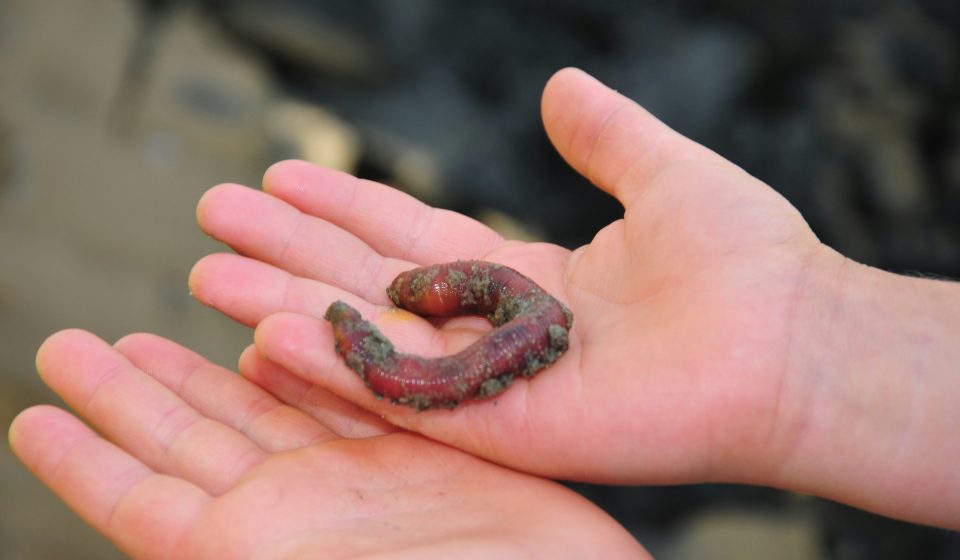

There was a time when finding something strange in the dirt could keep a group of kids entertained for an entire afternoon.
No phones.
No notifications.
No expensive equipment.
No adult had to organize the activity or tell us what we were supposed to discover.
We simply went outside.
And for some children, one of those small adventures involved searching through damp soil for what we called “trumpet worms.”
The name mattered less than the hunt.
We followed rumors about where someone had found them.
We crouched beside patches of earth.
We dug carefully with sticks and dirty fingers.
And whenever somebody discovered a promising little hollow or strange formation in the ground, everyone came running.
To an adult, it might have looked like almost nothing.
To us, it was treasure.
Childhood Didn’t Need Much to Become an Adventure
A patch of dirt could become an unexplored world.
A ditch could occupy an afternoon.
A fallen tree could become a fortress.
A creek could become an expedition.
And something unusual beneath the soil could become the greatest discovery of the week.
Children have an extraordinary ability to transform ordinary surroundings through imagination.
We didn’t necessarily need to own the newest thing.
Sometimes we simply needed somewhere to explore.
The Search Was Half the Fun
Finding something was exciting.
But searching for it was often even better.
Someone would announce that they’d heard about a good spot.
Maybe another kid had found something there the previous day.
That was enough.
Suddenly, there was a mission.
We’d inspect the ground.
Move leaves.
Turn over loose pieces of earth.
Get mud on our knees.
Every few minutes someone would shout that they’d found something, and everybody else would rush over to inspect it.
Most of the time, the discovery was ordinary.
That didn’t matter.
For a few seconds, we believed we’d found something extraordinary.
Dirt Didn’t Feel Dirty Then
Adults worry about laundry.
Children worry about whether there’s still enough daylight left to play.
We came home with muddy knees, grass stains and dirt beneath our fingernails.
Shoes that had started the morning clean looked completely different by dinner.
Sometimes our parents weren’t particularly impressed.
But the mess was evidence.
We had been somewhere.
We had done something.
We had a story.
We Didn’t Need a Screen to Tell Us What Was Interesting
Today, entertainment can arrive instantly.
A child can open a device and have thousands of videos, games and images competing for attention within seconds.
Our entertainment often worked in the opposite direction.
Nothing happened until we made something happen.
We had to invent the game.
Choose the destination.
Find the interesting object.
Create the rules.
When boredom arrived, there wasn’t always a device available to eliminate it immediately.
So boredom often became the beginning of imagination.
A Small Discovery Could Become Neighborhood News
Children didn’t need social media for something to “go viral.”
We had our own network.
One kid told another.
That kid told a sibling.
The sibling told someone down the street.
By afternoon, half the neighborhood knew.
“There’s a bunch of them over there.”
That was all it took.
Suddenly, everyone wanted to see.
Information traveled through bicycles, backyards, school hallways and front porches.
And because nobody had photographed everything immediately, mystery lasted longer.
We Couldn’t Just Search for the Answer
That changed the experience.
If we found something strange, we often didn’t know exactly what it was.
Maybe we asked an older sibling.
Maybe a parent had an explanation.
Maybe someone confidently invented an answer and the rest of us believed it.
Sometimes the mystery survived for years.
There was a special kind of wonder in not immediately knowing.
The world seemed larger because so much of it remained unexplained.
We Learned to Notice Tiny Things
Childhood exploration trained our attention in ways we probably didn’t appreciate.
We noticed tracks in mud.
Holes in the ground.
Unusual stones.
Insects beneath leaves.
Changes in the creek after rain.
Bird nests.
Seeds.
Shells.
Roots.
We learned that interesting things weren’t always large.
Sometimes you had to kneel.
Sometimes you had to look underneath something.
Sometimes the person willing to slow down noticed what everybody else walked past.
“Enough” Meant Something Different
That’s perhaps what makes memories like these feel so powerful now.
We weren’t thinking about whether our childhood was expensive.
We didn’t calculate the monetary value of an afternoon.
We weren’t comparing the activity with something somebody else had posted online.
We simply had what we had.
A few friends.
Some dirt.
A rumor.
Several hours before dinner.
And somehow that could be enough.
The Best Discovery Belonged to Everyone
When somebody found something exciting, the instinct was usually to call everyone over.
“Come look!”
That sentence defined a lot of childhood.
Discovery became more exciting when somebody else saw it too.
We didn’t need to own everything we found.
We needed witnesses.
Someone else had to confirm that yes, this thing really was as strange and fascinating as we thought.
A tiny discovery became a shared memory.
We Were Learning Without Calling It Learning
Nobody handed us a worksheet.
Nobody announced an educational objective.
But outdoor exploration constantly required decisions.
Where should we look?
Why is the ground wetter here?
What happens if we dig farther?
Why are there insects beneath this rock but not that one?
What made this hole?
Where does that trail lead?
Children naturally ask questions when they’re allowed to explore.
Sometimes the answers were wrong.
Sometimes we never found an answer at all.
But curiosity itself became the lesson.
There Was Freedom in Not Having Everything Scheduled
Many childhood memories aren’t really about the activity.
They’re about time.
Long stretches of it.
An afternoon could feel enormous.
Summer seemed almost endless.
There wasn’t always somewhere we had to be in 20 minutes.
That gave small experiences room to become important.
You could spend an hour investigating something that an adult might dismiss in five seconds.
To a child, that wasn’t wasted time.
That was the day.
We Made Stories Out of Almost Nothing
A strange hole wasn’t simply a hole.
It had a history.
Something lived there.
Something had escaped.
Maybe there were more nearby.
Maybe we’d discovered a place nobody else knew about.
The stories became more elaborate with every person who joined.
By the time we went home, an ordinary patch of ground could have its own mythology.
Then we’d return the following day to see whether anything had changed.
Nobody Was Documenting Every Moment
There may be few photographs of those afternoons.
That’s strange to consider now.
Today, almost any interesting moment can become a photo or video within seconds.
Back then, many of our favorite experiences disappeared without leaving a visual record.
No picture of the muddy shoes.
No video of everyone running toward the latest discovery.
No selfie proving we were there.
And yet we remember.
Sometimes imperfectly.
Sometimes differently from the friends who were standing beside us.
But the memory survived without a camera.
Maybe That’s Why Certain Images Hit So Hard
Years later, you can see one strange object from childhood and suddenly remember an entire period of your life.
Not simply the object.
The temperature outside.
The neighborhood.
The people you played with.
The walk home.
Your mother’s voice calling you inside.
The friend who lived two houses down.
The shoes you always destroyed.
Memory attaches itself to ordinary things.
That’s why an object meaningless to one generation can instantly transport another generation decades into the past.
Nostalgia Isn’t Really About Wanting the Object Back
Most adults don’t actually want to spend every afternoon digging through mud again.
What they miss is what surrounded the experience.
The freedom.
The curiosity.
The friendships.
The feeling that an afternoon belonged entirely to you.
The ability to become genuinely excited about something that cost nothing.
We aren’t necessarily nostalgic for dirt.
We’re nostalgic for the version of ourselves who could see treasure in it.
Childhood Felt Bigger Because the World Was Still New
Adults become efficient.
We identify things quickly.
We categorize them.
We decide whether they’re useful.
Then we move on.
Children don’t always do that.
A child can spend ten minutes examining something an adult steps over without noticing.
That’s because childhood contains so many first encounters.
The world hasn’t become ordinary yet.
Everything still has the possibility of being important.
Growing Up Changes What We Notice
Eventually, afternoons become schedules.
Play becomes work.
The neighborhood becomes traffic.
Rain becomes an inconvenience.
Mud becomes something that needs cleaning.
And the tiny things beneath our feet disappear from our attention.
They haven’t necessarily gone anywhere.
We’ve simply stopped looking.
That’s one reason childhood memories can feel almost like memories of another planet.
The physical world may be largely the same.
We’re different.
Technology Isn’t the Enemy
It’s easy for nostalgia to become unfair.
Every generation tends to believe the childhood it remembers was somehow more authentic than the one that followed.
Today’s children still explore.
They still invent games.
They still become fascinated by strange objects.
And technology can provide extraordinary opportunities for learning, creativity and connection.
The point isn’t that screens ruined childhood.
It’s that unstructured curiosity remains valuable too.
There should still be room for boredom.
Room for dirt.
Room for exploration without a predetermined outcome.
Adults May Need That Reminder as Much as Children Do
Perhaps that’s why these memories stay with us.
They’re reminders that attention doesn’t always need to be productive.
You can look at something simply because it’s interesting.
You can walk without tracking your steps.
You can sit outside without photographing the sunset.
You can discover something without immediately posting it.
Not every experience needs an audience.
Not every minute needs to produce something measurable.
The World Still Contains Small Mysteries
They’re everywhere.
Under stones.
Along trails.
Beside rivers.
In gardens.
Across old neighborhoods.
Most of us simply move too quickly to notice them.
The childhood version of us would probably stop.
Kneel down.
Look closer.
Call somebody over.
“Come see this.”
Maybe growing older doesn’t mean losing that instinct completely.
Maybe it just becomes buried beneath everything else demanding our attention.
If You Remember This, You Probably Remember More Than the Search
You may remember the friends beside you.
The muddy knees.
The arguments over who found something first.
The excitement when somebody discovered a good spot.
The disappointment when it was time to go home.
You may even remember a place that no longer exists.
A vacant lot now covered by houses.
A creek that’s been fenced off.
A field that became a parking lot.
Or a childhood home that belongs to somebody else now.
That’s what gives simple memories their weight.
The world changes around them.
We Thought We Were Looking for Treasure
Maybe we were.
Just not the kind we understood at the time.
We thought the treasure was whatever we found beneath the soil.
Years later, the valuable part is the memory itself.
An afternoon with nowhere else to be.
Friends calling one another over.
Dirty hands.
Wild theories.
A world that still seemed enormous.
And the absolute certainty that something wonderful might be hiding a few inches beneath our feet.
Final Thoughts
Those childhood searches weren’t extraordinary because of what we found.
They were extraordinary because of what we brought to them.
Curiosity.
Imagination.
Patience.
Friendship.
A willingness to be amazed by something small.
We learned to live within our limits without necessarily feeling limited.
A clump of dirt could become treasure.
A hollow in the ground could become a story repeated for weeks.
And a completely ordinary afternoon could become something we’d remember decades later.
Maybe the magic didn’t disappear when we grew up.
Maybe we’re simply standing too tall to notice it.
Every once in a while, it might be worth doing what we did naturally as children:
Slow down.
Get closer.
And look.
Do you remember searching for these—or another strange little “treasure” when you were a kid?