My 9-Year-Old Son Built Our Elderly Neighbor a Wheelchair Ramp With His Late Dad’s Tools—Then Someone Smashed It Overnight

My husband left behind an entire garage full of tools when cancer took him two years ago.
Our son Mason was seven.
He’s nine now.
And for two years, he treated those tools as though touching them might somehow erase another piece of his father.
Then one afternoon, Mason looked at the elderly woman who lived two houses down from us.
He looked at the three porch steps keeping her trapped inside.
And for the first time since his dad died, he asked me a question I never expected.
“Mom?”
“Yes?”
“Can I use Dad’s wood?”
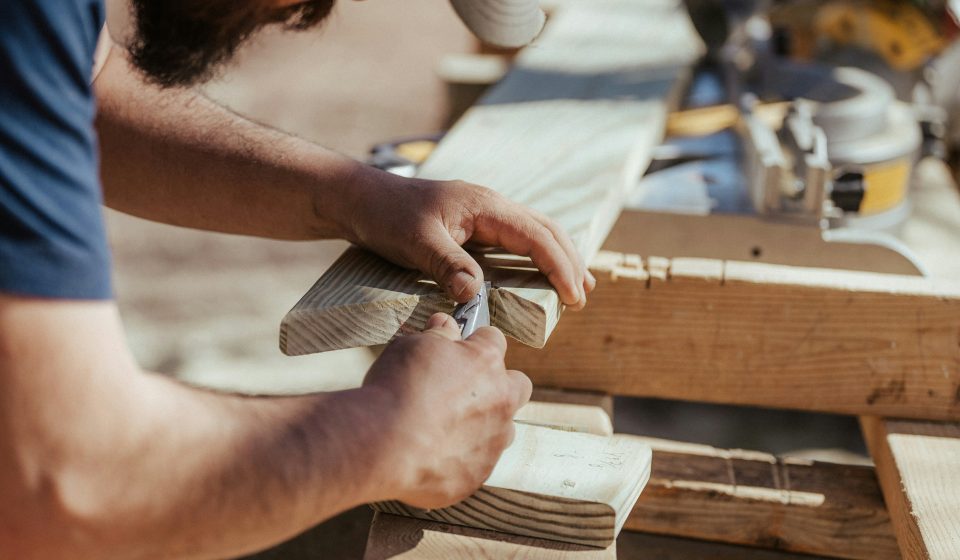
A week later, my nine-year-old son had helped build our seventy-eight-year-old neighbor a wheelchair ramp.
The first time she rolled down it, she cried.
Then the realtor next door saw what we’d built.
She called it an eyesore.
The following morning, Mason ran outside screaming.
The ramp had been smashed to pieces.
But whoever destroyed it had made one enormous mistake.
A neighbor’s security camera had recorded everything.
And what happened after that brought three black SUVs to our street.
Mason Was Seven When We Lost His Dad
My husband Mark had been a carpenter for nearly twenty years.
Working with his hands wasn’t merely his job.
It was part of how Mason knew him.
Before Mark became too sick to work, Mason spent hours beside him.
He learned how to measure boards.
How to sand rough edges.
How to drive a screw straight instead of burying it crooked.
But the lesson Mason remembered most wasn’t really about carpentry.
Mark used to tell him:
“Build things people actually need.”
After Mark died, those words became another memory my son carried around.
So did the tools.
He Guarded His Dad’s Tools
For two years, Mason rarely wanted anything changed in the garage.
Mark’s tools remained where he’d left them.
There were boards stacked against a wall.
Some expensive hardwood scraps.
Some ordinary treated lumber.
Tape measures.
Hand tools.
The ordinary equipment of a carpenter’s working life.
To another person, it was a garage.
To Mason, it was part of his father.
Then Mrs. Bennett gave him a reason to use it.
Mrs. Bennett Lived Two Houses Away
She was seventy-eight and lived alone in a little blue house she’d owned since the early 1980s.
Mason adored her.
He carried her groceries inside.
After trash collection, he’d drag her bins back.
Sometimes I’d look through the kitchen window and see Mason sitting on her porch steps while Mrs. Bennett sat inside the doorway talking to him.
She had stories.
A lot of them.
She’d served as an Army nurse during the Vietnam era.
One afternoon Mason came home and announced:
“Mrs. Bennett has met more interesting people than everyone in this neighborhood combined.”
“Everyone?”
“Definitely everyone.”
I couldn’t really argue.
But Mrs. Bennett Rarely Left Her House
A bad fall followed by several surgeries had left her unable to walk safely.
She used a wheelchair.
Her front yard had a large maple tree that offered shade.
But I almost never saw her sitting beneath it.
One afternoon, Mason finally noticed too.
We were bringing groceries over when he asked:
“How come you don’t sit under your tree?”
Mrs. Bennett looked outside.
Then she looked down.
Between her front door and the walkway were three steps.
“Those might as well be a mountain,” she told him.
Mason didn’t immediately answer.
He just stared at those steps.
I recognized the expression.
I’d seen it countless times on Mark’s face.
My son was measuring something in his head.
That Night, He Found Me Washing Dishes
“Mom?”
“Yes?”
“Can I use Dad’s wood?”
I stopped.
For two years, Mason had protected Mark’s things.
Until that moment, he’d never asked permission to turn any of those materials into something new.
“What for?”
“Mrs. Bennett.”
I knew immediately.
But I also knew what Mason didn’t fully understand.
A wheelchair ramp isn’t a child’s woodworking project.
“Mason, building a wheelchair ramp isn’t the same as building a birdhouse.”
“I know.”
“It has to hold her weight.”
“I know.”
“It needs the right angle.”
“I know.”
Then I turned around.
He was holding Mark’s tape measure.
“Dad showed me how.”
Sometimes He Looks So Much Like His Father It Hurts
Not physically.
Not always.
It’s something else.
An expression.
A gesture.
The way he concentrates.
There are moments when watching Mason feels like someone has opened a door into a room I wasn’t prepared to enter.
I looked at the tape measure.
Then at my son.
“Okay.”
His face changed immediately.
“But we’re doing it together.”
He smiled.
Our Evenings Belonged to the Ramp
For the next week, that’s what we did.
I researched the safety requirements.
We measured carefully before cutting anything.
Mason sanded edges.
He helped with the rails.
He insisted on driving most of the screws himself.
The finished ramp wasn’t something a luxury builder would photograph for a brochure.
It wasn’t professional carpentry.
But it was solid.
Before Mrs. Bennett ever trusted it with her wheelchair, a contractor Mark had known came over and checked the work.
Every support.
Every important connection.
Only after he had inspected it did we ask Mrs. Bennett to try it.
She Was Terrified
Mason called her to the doorway.
“Ready?”
She stared down the ramp.
“What if it collapses?”
“It won’t.”
She looked at him.
“That’s a lot of confidence for a nine-year-old.”
Mason answered without hesitation.
“My dad taught me.”
Nobody said anything for a second.
Then Mrs. Bennett rolled forward.
Mason Walked Beside Her
The front wheels crossed the threshold.
Then the rear wheels.
Mason stayed beside her wheelchair with both hands hovering nearby even though she didn’t need him to push.
Slowly, she reached the bottom.
Then she reached the grass.
She stopped.
Her hand covered her mouth.
“Oh.”
Mason crouched beside her.
“You okay?”
She nodded.
But she was crying.
“I Forgot What This Felt Like”
“What?”
Mrs. Bennett looked around her own yard.
“Being outside without needing somebody to carry me.”
That’s when I understood what Mason had actually built.
It wasn’t just a ramp.
Those three steps had turned the boundary of Mrs. Bennett’s own home into something she couldn’t independently cross.
Now she could decide when she wanted to go outside.
No waiting for someone strong enough to help.
No asking permission.
No depending on someone else’s schedule.
That afternoon, she sat beneath her maple tree for nearly two hours.
And for the first time in a long while, something inside me loosened.
Mark would have understood exactly what Mason had done.
Then Tiffany came outside.
Tiffany Was the Realtor Next Door
She was somewhere in her early forties and worked in real estate.
She always seemed dressed as though a camera crew might appear at any moment to film an advertisement for an expensive condominium.
She stopped beside her driveway.
And stared.
“What is that?”
I looked toward the ramp.
“The ramp?”
“Obviously the ramp.”
Mason looked up.
Tiffany walked closer.
Then she said:
“That thing is an eyesore.”
At First, I Thought She Was Insulting Mason’s Work
That alone would have been cruel enough.
A nine-year-old had spent a week helping build something for an elderly neighbor.
But then Tiffany looked past the ramp.
At Mrs. Bennett.
And I realized the wood wasn’t the only thing bothering her.
“It’s not on your property,” I said.
“I’m aware.”
“Then I’m not sure why you’re worried about it.”
Her eyes returned to Mrs. Bennett.
And then she said something I still couldn’t believe had come out of another adult’s mouth.
She Started Talking About “Curb Appeal”
Tiffany said she was trying to attract young families to the neighborhood.
Then she complained that a homemade wheelchair ramp—and an elderly woman sitting outside in a wheelchair—weren’t exactly good for curb appeal.
I thought I’d misunderstood.
“I’m sorry?”
“It scares away potential clients.”
Mason heard her.
So did Mrs. Bennett.
I watched Mrs. Bennett’s hands tighten around the arms of her wheelchair.
I stepped toward Tiffany.
“Go home.”
She rolled her eyes.
“I’m talking about property values.”
“No.”
I looked directly at her.
“You’re talking about a human being sitting in her own yard as if she’s clutter.”
Her expression hardened.
Then she walked away.
But Something About the Way She Looked at the Ramp Bothered Me
She hadn’t spoken about it like something ugly she wanted to complain about.
She’d looked at it like a problem.
A problem she wanted gone.
That night, Mason asked me about it before bed.
“Does Mrs. Bennett make houses worth less?”
“No.”
“Then why did Tiffany say it?”
I had to think about how to answer a nine-year-old.
Finally, I said:
“Because some adults convince themselves money makes cruelty reasonable.”
Mason was quiet.
Then:
“Dad would’ve hated that.”
He was right.
The Next Morning, Mason’s Scream Woke Me
I ran outside barefoot.
Then I stopped.
The ramp was destroyed.
One railing had been ripped completely away.
Boards were smashed.
Supports had been knocked loose.
Pieces of lumber were scattered across Mrs. Bennett’s yard.
Mason stood in the middle of the wreckage.
In his hands was half of a broken board.
His pencil measurements were still visible along the side.
Mrs. Bennett Was Back Inside
She sat in the doorway.
Her wheelchair couldn’t cross the destroyed ramp.
Yesterday she’d spent nearly two hours beneath her tree.
Now three steps were a mountain again.
That’s when my anger changed.
Whoever had done this hadn’t merely destroyed lumber.
They knew what the ramp did.
They knew why it existed.
And they had taken that independence away anyway.
Then I looked across the street.
Tiffany was standing beside a FOR SALE sign.
Coffee cup in hand.
I Walked Straight Toward Her
“What did you do?”
Tiffany looked past me.
At the destroyed ramp.
Then she smiled.
“Looks like somebody finally improved the view.”
Behind me, Mason began crying.
For a moment, I wanted to knock the coffee out of her hand.
Instead, I asked:
“You admit you did it?”
“I didn’t admit anything.”
“You just happen to be standing here enjoying it?”
She gave me the same smug expression.
“Maybe whoever removed it understands neighborhood standards better than you.”
I was furious.
But anger wasn’t evidence.
Then someone behind me spoke.
“I Have a Camera”
I turned.
Our neighbor Daniel was standing in his driveway.
He pointed toward his house.
“Wide-angle lens.”
Tiffany’s smile disappeared.
That was the first moment I knew something had changed.
The Video Was Clear
We watched it.
There was no need to guess.
At 2:17 in the morning, the footage showed Tiffany crossing her lawn.
She was carrying a small sledgehammer.
Fourteen minutes later, Mason’s ramp was destroyed.
There it was.
She had complained about the ramp during daylight.
Then, according to the footage described in the story, she’d returned while everyone slept and smashed it apart.
When the video finished, Mrs. Bennett held out her hand.
“Send that to me.”
“For the police?”
Her expression didn’t change.
“For several people.”
That Answer Surprised Me
Mrs. Bennett wasn’t someone who created drama.
She’d barely raised her voice during the entire confrontation.
But now she clearly had a plan.
I didn’t know what it was.
Neither did Mason.
The answer came the next morning.
The First Black SUV Turned Onto Our Street
I was drinking coffee when I saw it.
A black SUV.
Then another.
Then a third.
Mason moved toward the window.
Whatever Mrs. Bennett had done with Daniel’s video, this wasn’t what either of us expected.
All three vehicles stopped.
Not in front of Mrs. Bennett’s house.
Not in front of mine.
They stopped outside Tiffany’s.
“Mom.”
“I see them.”
Then my phone rang.
Mrs. Bennett.
“Come outside.”
Several Men Stepped Out
One of them was carrying a large red box.
Tiffany opened her front door.
And something unexpected happened.
She smiled.
Not the expression she’d given us.
This was her professional smile.
The smile she used when business mattered.
And she clearly recognized at least one of the men.
That worried me.
Until that moment, I’d assumed the SUVs had arrived because of the video.
Now I wasn’t sure.
Maybe these weren’t people coming to confront Tiffany.
Maybe they were clients.
Executives.
Business partners.
People she’d been waiting for.
Then one man stepped forward.
He Was Older, Silver-Haired and Wearing a Dark Suit
He looked to be in his sixties.
He and Tiffany spoke for a moment.
I couldn’t hear what they were saying.
Then he handed her the red box.
Tiffany opened it.
From across the street, I could make out photographs.
Papers.
Nothing more.
Then I saw her face.
All the color disappeared.
Her hands began shaking.
“No!” she screamed.
“You can’t do this!”
Mason looked at me.
I didn’t know what “this” was.
Whatever Was in That Box Changed Everything
The silver-haired man said something quietly.
Tiffany looked across the street.
Straight toward us.
Then she started walking.
Fast.
Angry.
She pointed at Mrs. Bennett.
Then at me.
Then Mason.
“You little brat.”
I immediately stepped in front of my son.
“Don’t speak to my son.”
Tiffany kept coming.
“Do you have any idea what you’ve done?”
Mason moved behind me.
“I didn’t do anything.”
“You couldn’t leave things alone!”
Mrs. Bennett rolled closer to her doorway.
She looked at Tiffany.
And finally spoke.
“Tiffany…”
But what Mrs. Bennett said next—and what was inside that red box—was something neither Mason nor I had been prepared to hear.
Editor’s note: This story should be treated as a fictionalized or unverified narrative. The supplied material ends as Mrs. Bennett begins speaking to Tiffany and does not reveal what was inside the red box, who the men in the three SUVs were, what connection they had to Tiffany, or what happened afterward. This Part 1 intentionally does not invent those missing details.