My son-in-law slid a piece of lined paper across the kitchen table. There was just a single number on it, circled twice.

“That behavior was wrong of me,” I admitted. “I ought to have informed you the very day I signed for it. I grew fearful of making this phone call, so I procrastinated, which was entirely cowardly. I apologize for that portion.”
A lengthy silence stretched across the line. Faint cartoon sounds played in the background.
“What are you paying for rent?”
“Five hundred and fifty dollars.”
Her voice climbed into a thin register. “So finances were not even the real issue here. It represents a mere two-and-a-half-hundred-dollar difference. You would rather pay money to a total stranger than to your own flesh and blood?”
“Mr. Brandt is hardly a stranger. And no. I simply prefer being your mother rather than your tenant, Michelle. That sums up the entire situation.”
“We prepared a dedicated space for you!”
“You certainly did. I witnessed all the hard work poured into it.”
“I already notified the daycare center that we might be pulling Sadie out, and I told my supervisor I might be available to pick up Friday shifts.”
“I was entirely unaware of that.”
“That is because you never bothered to ask! You merely smiled, offered a polite thank you, and went off to do whatever you pleased!”
I kept my voice completely steady. I have never once accomplished anything positive with that young woman by raising my voice—neither when she was fifteen nor in the present day.
“Honey,” I said softly, “I am going to state one thing, and then I will let you go, because you are understandably upset and it is nearing the children’s bedtime. I would have gladly come over and watched those little ones without charging a single cent. I would have performed the task with pleasure. However, you informed me I would be earning my keep. I finished earning my keep with you many years ago. I do not believe I carry any remaining balance.”
She abruptly disconnected the call.
I set the telephone down upon the very table Dale and I acquired back in 1981, sitting quietly until the window grew dark and the elevator warning lights flickered on.
Ten days passed.
Zero phone calls. No incoming photo messages on my mobile phone, which she typically used to send nearly every evening—pictures of Sadie sporting spaghetti smeared across her forehead or Eli missing a front tooth. Nothing at all.
I will tell you the honest truth regarding those ten days.
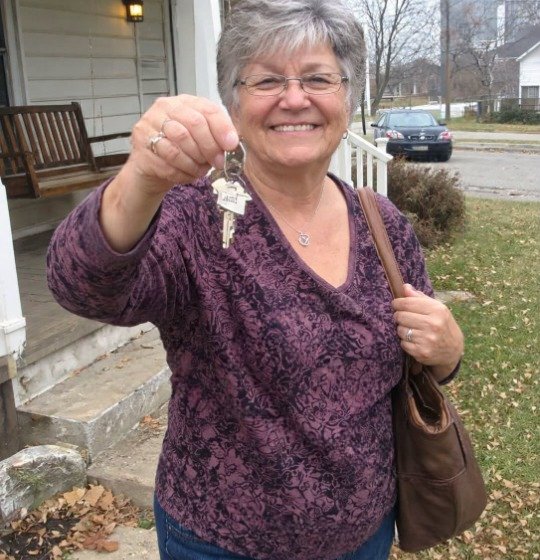
I possessed my own private door. I had my two brass keys, my porch swing, and my blooming violets. Every evening I seated myself upon that swing clad in my denim jacket to watch the semi-trucks pull onto the weighing scale, wondering privately whether I had paid far too steep a price for my independence.
Because it was never really the basement space that bothered me; I have lived far more plainly than that in the past. Nor was it truly the eight hundred dollar figure, even though the harsh arithmetic of it stung deeply.
The core issue was that living down there meant operating entirely on conditional terms.
With every single bag of groceries brought inside, I would have been mentally calculating my portion. Every Thursday when exhaustion set in and I merely longed to sit down, those words would have echoed inside my mind: Earning your keep.
A grandmother who resides in a household on wages ceases to function as a grandmother. She transforms into hired domestic help who happens to love the children.
Furthermore, once the children grew older and the burdensome daycare expenses finally vanished, what would my keep supposedly be valued at then?
I desired closeness with those children, but I refused to be bound or owned by a transactional arrangement.
Even so, I would gladly have traded the front porch swing, the violets, and both brass keys for a mere five minutes of having Sadie curl up in my lap. I knew that to be true, which made those ten long days exceedingly difficult to endure.
What ultimately pulled me through was an ordinary shoebox.
I walked into Brandt’s store on the second day to pick up some sunflower seeds. Mr. Brandt stood behind the counter with his reading glasses shoved up high on his forehead, surrounded by roughly two hundred stray slips of paper scattered everywhere—invoices, charge tickets, and a bank statement marked by a dried coffee ring.
“Lois handled all of this bookkeeping,” he remarked, not speaking directly to me. Lois was his late wife who had passed away four years prior. “For forty-three solid years she managed it, and I never once bothered to ask how. Now the accountant over in Kearney is demanding the third-quarter records by the fifteenth, and I cannot even tell you whether Don Swanson has paid for his creep feed since May.”
I set my purse down on the counter.
“Do you maintain a formal ledger, or does the entirety of your financial record live inside this box?”
“There is a ledger around here somewhere. I simply lost the ability to make the columns balance roughly a year ago.”
“Mr. Brandt, I kept the books over at the lumber yard for twenty-two consecutive years using a double-entry system. Hand me that ledger, the shoebox, and a fresh pot of coffee.”
He stared at me as if I had just offered to haul out the fifty-pound grain sacks single-handedly.
The task required three afternoon sessions spent sitting at the small wooden desk positioned in the rear near the veterinary supplies.
As it turned out, Don Swanson had indeed failed to settle his account for creep feed since May, alongside four other patrons. Additionally, I uncovered a deposit entry from July that had been mistakenly logged twice.
By the time I finished, the ledger balanced down to the exact penny, and I had located a little over two thousand dollars in forgotten charge tickets that had never been billed out.
He walked out to my front porch that Friday evening, standing on my single step with his cap held tightly in his hands—the customary way older local men conduct all matters of importance.
“I would like to hire you to perform this bookkeeping every Friday,” he stated. “I cannot afford to pay its true worth, but I can knock your monthly rent down to four hundred dollars, if that happens to be agreeable to you.”
“That arrangement is entirely agreeable.”
“Understand this is not charity, Judy. I want you to be clear on that point. You are actively rescuing my hide.”
“I recognize that completely,” I replied. “That is precisely why I am accepting.”
Following his departure, I remained seated on the porch swing a little longer.
A profound difference existed here, and I could feel it just as plainly as the cold iron swing chain resting in my hand.
Mr. Brandt had come directly to my door, asked for assistance with my specific skill set, and offered fair compensation in return. Nobody had thrown around phrases about earning my keep; instead, he told me I was saving his hide.
I thought to myself, that is all I ever truly wanted from my own daughter.
Simply to be asked.
On the tenth day—a Thursday—I was busy frying potatoes for my evening meal when the loud slam of a pickup truck door echoed out front.
I instantly recognized the sound of that specific door; it belonged to Todd’s Ford, whose driver’s side has stuck tightly ever since the day he accidentally backed into the mailbox.
I turned down the burner on the stove and looked out through the sink window.
Michelle was climbing out from the passenger side, still wearing her work scrubs featuring tiny cartoon teeth printed across the fabric from her job at the dental office. Her eyes looked distinctly red around the edges.
Todd rounded the front of the truck carrying a yellow legal pad. Even viewed from the window, the entire top page appeared densely covered in his handwriting.
The children were nowhere in sight.
I dried my hands on a dish towel and pushed open the screen door before they even had a chance to knock.
For a second, nobody spoke. Down the street, a heavy grain truck geared down noisily.
“Judy,” Todd began.
He is a substantial man standing six-foot-two, yet he stood awkwardly on my front walkway like a schoolboy summoned to the principal’s office.
“I was the one who came up with that number—the eight hundred. That decision originated from me, not her. I want that established first.”
“Understood.”
“May we step inside?”
“You are always welcome inside. The potatoes are currently on the verge of burning, so someone is going to have to eat them.”
Michelle emitted a sound that was half-laugh, half-sigh.
She climbed my single step, paused in the doorway, and surveyed my front room—the sofa, her late father’s recliner, and the violets resting on the sill.
Then her gaze drifted toward the kitchen table. She walked over, placing her hand flat against the surface right over the old burn mark where she had once dropped a hot skillet when she was eleven years old.
“You kept the table,” she murmured.
I scooped out the fried potatoes and sliced up the remaining portion of a ham. None of us ate with much appetite.
Afterward, Todd laid the yellow legal pad squarely in the middle of my kitchen table and rotated it around to face me.
“I need you to examine this,” he said earnestly. “I ought to have presented this to you in the first place instead of that other paper. I wanted to hide it initially; truthfully, I did not want anyone to see it.”
“Of course I kept the table.”
The document turned out to be a budget.
A completely honest one—the kind a man compiles at one o’clock in the morning after finally quitting lying to himself.
At the very top listed his take-home pay from the manufacturing plant combined with her earnings from the dental clinic, totaling $5,400 per month.
Beneath that appeared the expenses, outlined line by line.
Housing payment covering taxes and insurance: $1,180. The truck payment: $612. Daycare costs—which he had underscored heavily: $1,080. Groceries, electricity, and the credit card balance utilized to install a brand-new furnace last January when the old unit quit during a severe cold snap: $4,800 total, carrying an interest rate that caused me to suck air through my teeth.
Fourteen distinct lines in all. At the bottom, he had drawn a prominent box around the total monthly outflow.
$5,710.
“That leaves you three hundred and ten dollars short every month,” I noted.
“Every single month. Ever since June,” he said, rubbing his jaw. “They eliminated overtime hours back in June. I had grown accustomed to pulling ten or twelve extra hours a week for three consecutive years, treating that fluctuating money as stable wages. That represented my grave mistake. When those hours vanished, I kept assuming they would return by the autumn season, but they never did. We ended up covering the deficit using the credit card.”
Michelle kept her eyes fixed downward on her plate.
“So when your living situation changed,” Todd continued, “I sat down and reasoned that if Judy moved into our basement, that would remove Sadie from daycare expenses most of the week and keep Eli out of after-school care. Then I looked up standard apartment rental rates, jotted down eight hundred dollars, and convinced myself it represented a fair market price.”
He forced himself to meet my eyes, a gesture I gave him credit for. He looked right at me unflinchingly.
“It was not fair at all. I was attempting to patch a gaping hole in my sinking boat utilizing your Social Security check. I knew it the exact moment I drew a circle around that figure, yet I slid the paper across the table anyway because I was panicked. I am deeply sorry, Judy. Dale would have rightly taken me out behind the machinery shed.”
“Dale would have first shown you how to properly read your own pay stub,” I remarked. “Then he might have taken you to the shed.”
He let out a long, shuddering breath.
That expression finally explained what I had witnessed cross his face on the day I folded that notebook paper into my purse. It was pure shame. He had been carrying that shame long before I ever sat down at their table.
“And regarding the other matter,” I added, turning my attention toward my daughter. “The earning my keep comment.”
Michelle’s chin began to tremble—the exact way it used to whenever she was a little girl.
“I have replayed those words in my head every single night since,” she confessed. “I struggle to articulate it so that it does not sound entirely worse.”
“Go ahead and try.”
She pressed the heel of her hand firmly against one eye.
“I desperately wanted to avoid taking anything from you. You and Dad never possessed any financial extra—not ever. And you never once asked anyone for assistance, not a single time. Therefore, I could not simply bring myself to say, Mom, we are sinking financially, I need your help. My mouth simply refused to form the words.”
She shook her head slowly.
“I foolishly thought if I structured it like a formal business deal complete with a precise monetary amount—where you were paying rent, performing childcare labor, and we were supplying you with living quarters—then everything would balance out evenly. That way, nobody was begging, and nobody was receiving charity. I genuinely thought that represented the respectful approach. But then those terrible words tumbled out of my mouth—Earn your keep—spoken to my own mother. The second I heard them spoken aloud and witnessed your facial expression, I just kept plowing forward because I had no idea how to stop.”
I reached across the table, gently pulled her hand away from her face, and held it tightly.
“Michelle. Look directly at me. Who on earth taught you that you are not permitted to ask for help?”
She let out a wet, watery laugh. “You did.”
“I expect I did teach you that.”
And indeed I had. Thirty-one years spent inside another man’s home, taking immense pride in never requiring a single thing from anybody. She had learned that exact lesson right here at this very table.
“Well, I was entirely mistaken to do so,” I stated. “I discovered that harsh reality this past month. A man walked up to my door asking for assistance plainly, with his cap held in his hand, and it turned out to be the kindest gesture anyone has extended toward me since your daddy passed away.”
With that, I pulled the yellow legal pad in front of me and retrieved my reading glasses from my jacket pocket.
“Todd. Hand me that pencil over there.”
“Judy, we did not come over here to—”
“I am well aware of why you came. You came to offer an apology, which you have spoken aloud, and I have accepted it. Now, however, you happen to be sitting at a bookkeeper’s table looking at a set of financial records that fail to balance properly, and I refuse to be kept awake tonight by the sound of drying fans or anything else. Hand me that pencil.”
He promptly handed it over.
“Here is precisely what I propose to do,” I said. “And it is the exact approach I would have taken had anyone simply asked me straightforwardly in the beginning. Tuesdays and Thursdays. Both children. I will pick Eli up directly from school, and Sadie is mine to care for all day long right here. At my house, not yours.”
“Mom, you are under no obligation to—”
“I am not finished speaking. I will perform these duties strictly as their grandmother, which means zero monetary charge. Furthermore, it implies this remains my kitchen governed by my rules. If I happen to schedule a doctor’s appointment over in Kearney on a Tuesday, I will notify you a week in advance so you can make alternate arrangements. I am not your paid employee. Additionally, I keep Mr. Brandt’s business books on Fridays, and that schedule is not shifting.”
“You actually keep his business books?” Todd asked, looking stunned.
“I do. And that work successfully knocks one hundred and fifty dollars off my monthly rent.”
I was already calculating figures in the margin of the page just as I had calculated board feet at the lumber yard for twenty-two years. Two days caring for Sadie and two days for Eli amounted to one hundred dollars weekly—roughly four hundred and thirty-three dollars a month.
I drew a firm line straight through the $1,080 daycare line item and jotted down $647 right beside it.
“That covers your three hundred and ten dollar monthly deficit,” I noted, “with an extra one hundred and twenty-three dollars left over. Every single dime of that surplus goes directly toward paying off that furnace credit card until it is completely dead. Not toward the truck payment, and not toward Christmas gifts. The credit card.”
Todd stared down at the legal pad in disbelief.
“That shows black ink,” he said slowly, sounding like a man deciphering foreign words.
“It represents thin black ink, to be sure, but it provides enough margin to quit borrowing. Moreover, if the plant restores your overtime hours, you must resist the temptation to build your lifestyle around them this time. You squirrel that extra money away.”
“Yes, ma’am.”
“One final thing before I slice into the pie.”
I removed my glasses, folding them carefully.
“I love the two of you dearly, and I have no intention of holding a lingering grudge. However, I want it distinctly understood, spoken in kindness, that I refuse to ever be spoken to in that manner again—not regarding room and board, and certainly not about earning my keep. If you ever find yourselves in genuine need of me, you walk up to my door and simply ask. You might genuinely be surprised by how frequently my answer turns out to be yes.”
Michelle rested her head down directly against her late father’s kitchen table right over the burn mark, weeping with a depth of sorrow she had not displayed even at his funeral.
Todd placed his heavy hand comfortingly across her back.
I went to fetch the pie.
It featured nothing more than a store-bought crust filled with tart apples harvested straight from the Olsons’ tree. Each of them ate two full slices.
That conversation occurred three weeks ago.
On the very first Tuesday, Sadie came marching up my walkway hauling a backpack considerably larger than herself, stopping dead in her tracks right on the bottom step.
“Grandma. Your house features an actual swing.”
“It certainly does.”
“Is it intended for me?”
“It is intended for whoever happens to be sitting upon it.”
We occupied that swing until the tip of her nose turned cold, with her eagerly pointing out every single grain truck passing by and asking what cargo each carried. I instructed her on the various loads: corn, corn, corn, soybeans, and more corn.
At precisely three o’clock, I walked up to the school building holding her tiny mitten securely in my hand. Eli emerged through the first-grade exit doors, spotted me standing by the flagpole alongside the other mothers and grandmothers, and instantly took off running.
He had not run toward me with that level of uncontainable excitement since he was three years old. Previously, I was merely Grandma who dropped by their house to sit in the corner chair; now, I represented a destination worth running toward.
Then came the weekend.
Michelle approached my door after finishing her work shift on a Wednesday, knocked gently, and announced, “Mom, Todd and I have not managed to go anywhere by ourselves—just the two of us—since before Sadie was born. Would you be willing to keep the kids overnight this Saturday? You are completely free to say no.”
“I certainly have that option,” I replied. “However, I choose not to.”
My small house possesses no spare guest bedroom nor any surplus space whatsoever. Therefore, I improvised by constructing a comfortable pallet spread across the middle of the front room floor utilizing every spare quilt I own. The wedding-ring quilt my mother hand-pieced years ago was placed right on top. I informed the children we were building a cozy nest.
We enjoyed pancakes for supper because rules bend at Grandma’s house, and played round after round of Old Maid until Eli finally figured out that Sadie was deliberately showing him her playing cards. I washed two sticky faces at my kitchen sink while the grain elevator lights glowed brightly through the window above.
I had originally intended to sleep in my own proper bed, but Sadie flatly refused to allow it.
Consequently, I stretched out comfortably on the sofa dressed in my housecoat with the floor lamp dimmed low, while the two children slept soundly on the floor right beside me nestled in quilts, accompanied by the steady nighttime hum of the outdoor drying fans.
“Grandma?” Sadie whispered softly through the dark.
“Try to fall asleep, sweet pea.”
“Is this tiny room your entire house?”
“This constitutes the entirety of it.”
She pondered that information for a moment, and I could practically hear her young mind working.
“I rather like it,” she murmured. “I can see you from everywhere inside.”
I had to pause for a quiet moment before I could manage an appropriate reply.
“I can see you from everywhere, too.”
“Grandma?”
This time it was Eli, propping himself up on one elbow.
“Mom mentioned you were planning to live down in our basement, but then you changed your mind.”
“That is not entirely how it happened, buddy.”
“Did you simply not want to live with us anymore?”
Now, that qualifies as the sort of inquiry where you better formulate the correct response right away.
“I desperately wanted to live near you,” I explained. “Which is quite different. If I had moved into your basement, I would simply have functioned as another piece of furniture inside your household—like the living room couch. By living here, you have to make the effort to come over. You visit me entirely on purpose.”
I reached downward through the dim light to touch the top of his head.
“I wanted to be someone you chose to come and visit on purpose.”
He immediately lay back down on his pallet.
“I would come visit you on purpose,” he said softly. “I would walk over here even if you lived inside the grain elevator.”
“Well, I certainly could not afford the rental rates at the elevator.”
He giggled quietly, prompting Sadie to giggle right along with him. Within roughly four minutes, both of them were fast asleep.
I did not sleep much that night, nor did I particularly want to.
I lay quietly listening to the rhythmic breathing of my two grandchildren sheltered beneath my mother’s handmade quilt, inside a home no larger than a postage stamp—one I had managed to rent entirely on my own using a check written across the hood of a Buick.
At two o’clock, the freight train rolled through town.
The window glass rattled in its frame. Sadie bolted straight upright with her hair sticking out in every possible direction.
“That is only the train,” I whispered soothingly. “It passes by every single night. It is merely traveling down the tracks.”
“Is it calling out goodnight to us?”
“I strongly suspect that it is.”
She crawled up off the floor pallet, climbed directly onto the couch, and wedged herself tightly against my side—a tangle of sharp knees and elbows, resting her ice-cold feet right against my shins.
She was fast asleep again long before the caboose cleared the crossing.
I had a brief conversation with Dale inside my head, the way I routinely do.
I told him, You would have had that porch step properly shimmed level by now.
I told him, The account books finally balance.
I told him, I have got both of them right here with me. And I am not earning a single thing.
Michelle arrived to pick them up the following morning prior to church services.
I spotted her van pulling up through the sink window. I stood at the stove holding a pancake turner while both children sat at the table Dale and I shared for decades, still dressed in their pajamas with maple syrup smeared up to their elbows.
She walked up the footpath.
She climbed my single step. Todd had stopped by the previous Saturday to shim it level using a cedar shingle along with Dale’s old torpedo level that I had handed over to him.
She possessed a clear view of all of us straight through the screen door, which stood wide open to the morning air.
Yet my daughter paused right there on the step.
And she knocked anyway.
“The door is wide open,” I called out. “Come on inside, honey. There is plenty of food.”
She stepped across the threshold, walked over to kiss the top of each sticky head, and finally planted a gentle kiss on my forehead.
Pulling out a plate, she seated herself down in the fourth empty chair.
Just outside the window, the very first semi-truck of the morning pulled slowly onto the weighing scale.
I am sixty-seven years old.
I possess two rooms. Two keys. Two grandchildren joining me on Tuesdays and Thursdays. And an ordinary shoebox filled with figures on Fridays.
I pay four hundred dollars a month for a dwelling where you can survey the entirety of it from the very center.
And whenever my family desires my company, they simply walk up one step and knock upon my door.
I always let them in.