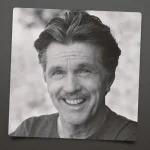

Michael Forest, the veteran character actor whose remarkable career stretched from Roger Corman movies and classic television to Star Trek and an extensive second career behind the microphone, has died.
He was 97.
Forest died on October 14, 2026, while living at a senior facility in Sparks, Nevada.
His friend James A. Brown announced his death, bringing renewed attention to a performer whose résumé extended across more than six decades and several very different corners of the entertainment industry.
For Star Trek fans, however, one role stands above the rest.
Forest was Apollo.
The Role That Made Him Part of ‘Star Trek’ History
In 1967, Forest appeared in the second season of Star Trek: The Original Series.
The episode was titled “Who Mourns for Adonais?”
Forest played Apollo, a powerful being claiming to be the Greek god himself.
The Enterprise encounters him after the ship is seized by an enormous hand in space.
Apollo wants something humanity has largely left behind:
Worship.
Forest’s imposing physical presence helped make the character memorable.
At approximately 6-foot-3, he already had the stature to command the screen.
But the performance wasn’t simply about looking powerful.
Apollo was proud, threatening and larger than life, yet also ultimately tragic.
That combination helped the episode endure among fans long after its original broadcast.
One Episode Created a Decades-Long Connection
Forest appeared as Apollo in only one episode of the original Star Trek.
Yet the role followed him for decades.
That’s one of the unusual things about the franchise.
A performer didn’t necessarily need to appear in dozens of episodes to become part of its history.
Sometimes one memorable character was enough.
Apollo became that character for Forest.
Decades later, the official Star Trek website was still interviewing him about the performance and his memories of working on the series.
And his connection to Apollo eventually went even further.
He Returned to Apollo Nearly Half a Century Later
Forest revisited the character in 2013 for the fan-produced series Star Trek Continues.
The episode, “Pilgrim of Eternity,” returned to Apollo decades after the original television story.
It was an unusual opportunity for an actor.
Very few performers get to return to a memorable guest character almost half a century after first playing the role.
For longtime fans, Forest’s return created a direct connection between the original 1960s series and a modern tribute to it.
But Star Trek represented only a small portion of an exceptionally long career.
His Real Name Was Gerald Michael Charlebois
Michael Forest was born Gerald Michael Charlebois on April 17, 1929, in Harvey, North Dakota.
His family moved to Seattle when he was young.
Forest eventually studied English and drama at San Jose State University.
By the mid-1950s, he was pursuing acting professionally.
His background included stage work as well as film and television.
And one connection would prove particularly important during his early career.
Roger Corman.
Meeting Roger Corman Helped Open the Door to Film
Forest studied acting with respected actor and teacher Jeff Corey.
Roger Corman was also connected to those classes.
That meeting helped lead Forest into the low-budget filmmaking world that would become such an important part of his early screen career.
Corman became famous for producing and directing films quickly and economically while giving opportunities to performers and filmmakers who sometimes went on to much larger careers.
Forest became one of the actors associated with that period.
He Appeared in Several Roger Corman Productions
Among Forest’s early film credits were movies associated with Roger and Gene Corman.
They included The Saga of the Viking Women and Their Voyage to the Waters of the Great Sea Serpent.
He also appeared in Beast from Haunted Cave.
Then came Ski Troop Attack.
And Atlas.
These weren’t prestige Hollywood productions with enormous budgets.
But they became part of the history of American B-movies and helped establish Forest as a dependable working actor.
His physical presence made him particularly suited to westerns, adventure films and rugged characters.
Television Provided Even More Opportunities
Forest’s television work was extensive.
He appeared across many of the programs that defined American television during the 1950s and 1960s.
His credits included The Adventures of Rin Tin Tin.
Gunsmoke.
Perry Mason.
The Twilight Zone.
The Dick Van Dyke Show.
And eventually Star Trek.
Those appearances illustrate the life of a successful character actor during television’s rapidly expanding early decades.
Forest didn’t need to become the permanent star of one series.
He could move from production to production, playing entirely different characters.
‘The Twilight Zone’ Was Another Classic Stop
Before becoming Apollo, Forest appeared in another series that would develop an enormous cultural legacy.
The Twilight Zone.
He appeared in the episode “Black Leather Jackets.”
The story centered on seemingly ordinary young men who were actually part of an alien plan.
For modern television audiences, having credits on both The Twilight Zone and the original Star Trek places Forest inside two of the most enduring science-fiction franchises of the era.
But science fiction was only one part of his television work.
He Also Appeared on ‘The Dick Van Dyke Show’
Forest appeared on the beloved sitcom The Dick Van Dyke Show as Joe Coogan.
The character was connected to Laura Petrie’s past, giving Rob Petrie reason to become jealous.
It was a very different assignment from playing a Greek god capable of threatening the Enterprise.
That contrast illustrates one of the defining characteristics of Forest’s career.
Range.
He could play imposing figures.
Romantic figures.
Villains.
Soldiers.
Western characters.
Science-fiction characters.
And later, he could disappear almost entirely behind his voice.
Stage Acting Was Important to Him Too
Forest wasn’t exclusively a screen performer.
His career included substantial theater work.
He performed Shakespeare and reportedly played Othello multiple times.
That stage background makes his casting as Apollo easier to understand.
A character written as an actual Greek god required an actor comfortable with elevated dialogue and theatrical presence.
Forest had both.
His career wasn’t built around one style of acting.
He moved between classical theater, television production, low-budget genre movies and international film work.
Then His Career Became International
Forest spent years living and working in Europe.
His filmography expanded beyond American productions.
That period also helped lead to another enormous part of his professional life:
Dubbing and voice acting.
Forest had a voice that could carry authority and character without requiring audiences to see him.
Over time, that became a significant career of its own.
Hundreds of Productions Used His Voice
Forest became highly prolific as a dubbing and voice-over performer.
Reports about his career describe him as having worked on hundreds of dubbed films and other productions.
While living in Rome, he became involved extensively in English-language dubbing.
This meant viewers could hear Forest even when another actor was physically appearing on screen.
It’s a part of film history that audiences often overlook.
Dubbing performers can become the voice through which international audiences experience an actor’s performance.
Forest spent years doing exactly that.
Anime Fans May Know His Voice Without Knowing His Face
His later voice career also brought him into Japanese animation.
Forest contributed English-language performances to a variety of anime productions.
Among his credits were titles including Samurai Champloo, Planetes and Paranoia Agent.
He also provided the voice of Inui in Paprika.
Those projects introduced his work to audiences far younger than the viewers who had originally watched him on Star Trek in 1967.
Someone could therefore know Michael Forest from a classic television western.
Another person might know him as Apollo.
And another might recognize only his voice from anime.
Few careers connect those audiences so naturally.
‘The Big O’ Added Another Memorable Voice Role
Forest also voiced Alex Rosewater in the English-language version of The Big O.
The series developed a strong following among anime audiences.
Again, the role was far removed from his early live-action work.
By then, Forest had demonstrated that his career didn’t depend on audiences recognizing his face.
His voice had become another instrument entirely.
He Entered the World of ‘Power Rangers’
Forest also voiced Prince Olympius in Power Rangers Lightspeed Rescue.
That credit brought his work to yet another generation.
Consider the span involved.
An actor who was already working professionally during the 1950s later became part of a children’s action franchise at the beginning of the 21st century.
And his career still wasn’t finished.
He Appeared in ‘Cast Away’
Forest also had a role in the 2000 Tom Hanks film Cast Away.
He played Pilot Jack.
It wasn’t the kind of enormous role that would redefine his career.
But that’s precisely what makes it representative of Forest’s professional life.
He kept working.
Across eras.
Across genres.
Across formats.
The individual part might be small or large, but the cumulative body of work became enormous.
He Continued Acting Into His Later Years
Forest’s credits extended well into the modern era.
He continued appearing in projects decades after his first screen work.
For someone born in 1929, the sheer chronological range of that career is striking.
He worked through massive changes in entertainment.
Black-and-white television.
The expansion of color TV.
The studio era’s decline.
The rise of independent and genre filmmaking.
Modern blockbuster cinema.
Anime dubbing.
Digital productions.
Streaming-era audiences.
Very few performers remain professionally connected to entertainment across so many transformations.
His Wife, Diana Hale, Was Also an Actress
Forest was married to actress Diana Hale.
They married in 1970 and remained together for more than five decades.
Hale died in 2022.
Their long marriage formed another important part of Forest’s life away from his many screen and voice credits.
She also joined him in the Star Trek Continues production in which Forest returned as Apollo, appearing as Athena.
For longtime Star Trek followers, that made his return to the character even more distinctive.
More Than 50 Years of Marriage
Forest and Hale were married for approximately 52 years before her death.
By that stage, Forest had already lived through several distinct careers inside one profession.
The young actor associated with Roger Corman had become a familiar television guest star.
The television actor had become Apollo.
The live-action performer had become a prolific voice artist.
And the actor whose career began in the 1950s was still being discovered by new audiences decades later.
Why Character Actors Matter
Hollywood history naturally focuses on stars.
The actors whose names appear above the title.
The performers around whom entire movies are built.
But film and television couldn’t function without character actors.
They’re the people who enter an episode and make a world feel larger.
They may appear for 20 minutes and create a character viewers remember for 50 years.
They may play a villain one week and a sympathetic stranger the next.
Michael Forest’s career is an unusually clear example.
He didn’t need one permanent leading role to build a legacy.
Apollo Proves the Point
One episode.
That’s all it took.
Forest’s Apollo appeared in a single episode of the original Star Trek.
Yet nearly six decades later, major remembrances of Forest still lead with that performance.
It demonstrates how longevity in entertainment isn’t always measured by screen time.
Sometimes it’s measured by impact.
Apollo became part of Star Trek history.
Forest became part of its extended family.
But His Voice Work Shouldn’t Be an Afterthought
It’s tempting to frame Forest’s career entirely around Star Trek.
That would be incomplete.
His extensive dubbing and animation work represented decades of professional performance.
Voice acting demands different skills.
Physical appearance disappears.
Facial expression disappears.
The performer has to communicate character through timing, tone, rhythm and emotion.
Forest successfully transitioned into that world and accumulated an extensive catalog of credits.
For some viewers, those performances may actually be the work they know best.
His Career Connected Several Generations
Imagine three viewers.
One remembers Michael Forest from a Roger Corman movie.
Another immediately pictures Apollo towering over Captain Kirk.
A third recognizes Alex Rosewater from The Big O or one of Forest’s other anime performances.
All three know the same performer.
That’s an unusual legacy.
And it explains why describing Forest merely as “the actor who played Apollo” doesn’t quite capture what he accomplished.
Remembering Michael Forest
Michael Forest died on October 14, 2026, at age 97.
He leaves behind a career that is difficult to summarize with a single title.
He was a stage actor.
A film actor.
A television character actor.
A Roger Corman veteran.
A Twilight Zone guest performer.
A Star Trek icon.
A dubbing artist.
An anime voice actor.
And a working performer whose career extended across generations.
His portrayal of Apollo in “Who Mourns for Adonais?” will almost certainly remain the image most closely associated with his name.
That’s understandable.
It was memorable enough to survive nearly 60 years of changing television culture.
But Forest’s larger legacy lies in everything surrounding that performance.
The Corman films.
The westerns.
The television appearances.
The Shakespeare.
The European work.
The hundreds of hours spent behind a microphone.
And the willingness to keep performing as entertainment itself changed around him.
Michael Forest may be remembered first as Apollo, but the breadth of his career is what made him a true working actor for generations.
Michael Forest was born April 17, 1929, and died October 14, 2026, at age 97. His death was publicly announced by his friend James A. Brown and subsequently reported by entertainment publications and industry sources.