Rosemary Has Been Linked to Memory for Centuries—Here’s What History and Modern Science Actually Say

Crush a fresh sprig of rosemary between your fingers and its fragrance appears almost immediately.
Sharp.
Woody.
Fresh.
For some people, that scent means dinner.
For others, it brings back a garden, a family kitchen or meals prepared by someone they loved.
And long before scientists began analyzing the compounds responsible for rosemary’s distinctive aroma, people were already connecting this evergreen herb with something deeply human:
memory.
Rosemary has been used in cooking, fragrance and traditional practices for centuries. It has appeared in literature and ceremonies and has become closely associated with remembrance.
Today, researchers are also interested in rosemary’s chemistry, including compounds such as 1,8-cineole, rosmarinic acid, carnosic acid and carnosol.
But rosemary is also a good example of why traditional use and modern medical evidence need to be separated carefully.
Some of the herb’s history is well established.
Some scientific findings are intriguing.
And some popular wellness claims go considerably further than the evidence supports.
So what do we actually know about this familiar plant?
Rosemary Is More Than a Kitchen Herb
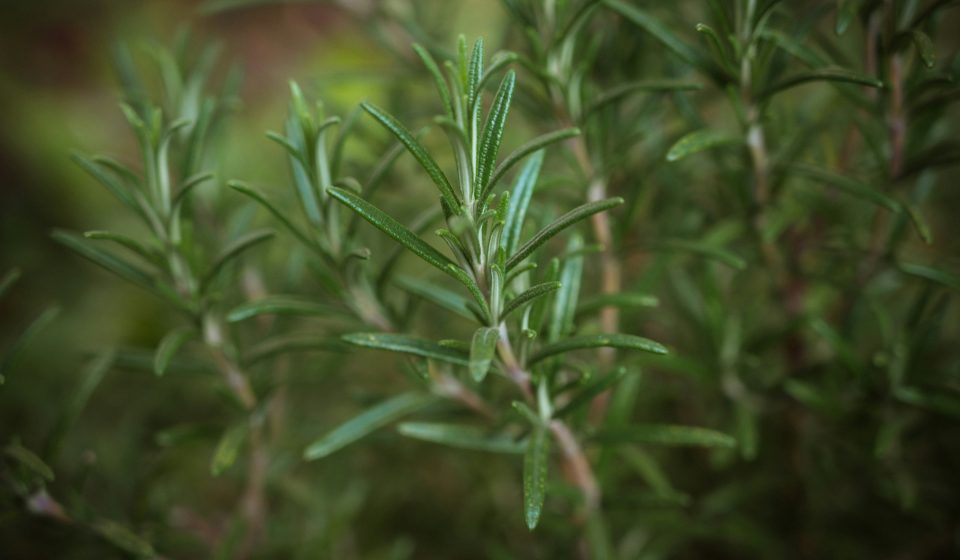
Rosemary is an aromatic evergreen shrub native to the Mediterranean region.
Its narrow leaves contain fragrant essential oils that give the plant its unmistakable smell.
The herb is now familiar around the world.
You’ll find it growing in gardens and pots.
You’ll find dried rosemary in spice cabinets.
Fresh sprigs are added to breads, potatoes, vegetables and meat dishes.
Its essential oil is also used in fragrance and cosmetic products.
Yet rosemary’s cultural history extends far beyond cooking.
For hundreds of years, the plant has been associated with remembrance.
Kew Gardens notes this longstanding symbolism and points to one of the most famous literary references of all.
In Shakespeare’s Hamlet, Ophelia associates rosemary with remembrance.
That phrase helped preserve an association that was already deeply rooted in European culture.
Why Did Rosemary Become Connected With Memory?
Historical traditions surrounding plants don’t always have one simple origin.
Meanings develop over time.
They move between communities.
They appear in ceremonies, medicine, folklore, religion and literature.
Eventually, certain plants acquire symbolic identities.
Rosemary became strongly associated with remembering.
That made it appropriate for occasions concerned with memory, loyalty and loss.
But it’s important to distinguish symbolism from medicine.
The fact that generations associated rosemary with memory does not prove that smelling or consuming rosemary prevents memory loss.
Cultural history can inspire scientific questions.
It cannot answer them by itself.
Then Scientists Started Studying the Aroma
This is where the story becomes especially interesting.
Rosemary essential oil contains numerous volatile compounds.
One of them is 1,8-cineole, also known as eucalyptol.
Researchers have investigated whether exposure to rosemary aroma might influence cognitive performance.
One small study published in 2012 involved 20 healthy volunteers exposed to rosemary aroma while completing cognitive tasks.
Researchers measured 1,8-cineole in the participants’ blood and found that higher concentrations were associated with better performance on some measures of speed and accuracy.
That’s intriguing.
But it needs context.
Twenty People Can’t Settle the Question
A small experiment can identify a possible effect worth investigating.
It cannot establish rosemary as a proven memory treatment.
The 2012 study was small.
It examined healthy volunteers under controlled conditions.
It did not demonstrate that rosemary prevents dementia.
It did not establish that rosemary reverses age-related cognitive decline.
It did not show that regularly diffusing rosemary oil produces lasting improvements in memory.
And it certainly didn’t establish a medical treatment.
The responsible conclusion is much narrower:
There is some experimental evidence suggesting rosemary aroma may influence certain aspects of cognitive performance, but much more research is needed to understand the effect and its practical significance.
That’s less dramatic than saying rosemary “boosts your brain.”
It’s also much closer to what the evidence can support.
Rosemary Water Has Been Studied Too
Researchers have also explored rosemary in forms other than aroma.
A 2018 study examined acute consumption of commercially available rosemary water in healthy adults and investigated cognitive performance, mood and cerebral blood-flow-related measures.
Again, studies like this are interesting because they provide potential directions for further research.
But isolated experiments shouldn’t be transformed into sweeping wellness promises.
Different rosemary products can contain different concentrations of compounds.
Tea isn’t the same thing as essential oil.
A culinary serving isn’t the same thing as an extract.
An experimental preparation isn’t necessarily equivalent to something prepared at home.
Dose matters.
Formulation matters.
And evidence from one form can’t automatically be applied to every other form.
What About Rosmarinic Acid?
Another compound frequently mentioned in discussions of rosemary is rosmarinic acid.
Despite its name, rosmarinic acid isn’t found exclusively in rosemary.
It occurs in many plants.
Researchers are interested in it partly because of its antioxidant and anti-inflammatory activity observed in experimental studies.
Scientific reviews describe rosmarinic acid as a polyphenolic compound with a wide range of biological activities under investigation.
Rosemary itself also contains other compounds of scientific interest, including carnosic acid and carnosol.
This chemistry is real.
The problem begins when laboratory findings are converted directly into claims about what eating rosemary will do inside a person.
“Contains Antioxidants” Doesn’t Mean “Prevents Disease”
The word antioxidant has become enormously powerful in wellness marketing.
It sounds almost automatically beneficial.
Rosemary extracts do demonstrate antioxidant activity in laboratory testing, and researchers have identified phenolic compounds that contribute to those properties.
But biological systems are complicated.
A compound neutralizing reactive molecules in a laboratory assay doesn’t prove that sprinkling more rosemary on dinner will prevent a particular disease.
How a compound is absorbed matters.
How much reaches different tissues matters.
How it’s metabolized matters.
Dose matters.
Interactions matter.
And outcomes in actual humans matter.
That’s why laboratory research is usually the beginning of a medical question, not the final answer.
Can Rosemary Prevent Alzheimer’s Disease?
There is currently no basis for treating rosemary as a proven way to prevent or cure Alzheimer’s disease or other forms of dementia.
Researchers are interested in compounds found in rosemary because some have shown neuroprotective or anti-inflammatory effects in experimental models.
Recent scientific reviews continue exploring those possibilities.
But promising mechanisms aren’t the same as demonstrated clinical prevention.
That distinction becomes particularly important when discussing older adults.
People concerned about memory changes deserve evidence-based medical evaluation—not the suggestion that an herb can substitute for it.
Normal Forgetfulness and Concerning Memory Changes Aren’t the Same
Everyone forgets things occasionally.
A name.
Where the keys went.
Why you walked into a room.
A word that eventually comes back five minutes later.
Those experiences don’t automatically indicate dementia.
But persistent or worsening cognitive changes that interfere with everyday functioning deserve attention.
If someone is repeatedly getting lost in familiar places, struggling with previously manageable tasks, experiencing significant changes in judgment, or showing other progressive cognitive problems, an herbal remedy shouldn’t delay professional evaluation.
There are many possible causes of cognitive symptoms, and some may be treatable.
Rosemary can remain in the kitchen.
Medical concerns belong with qualified healthcare professionals.
What About Rosemary for Pain and Stiffness?
Traditional uses of rosemary have included preparations intended for physical comfort.
Modern researchers have also studied rosemary and its constituents for anti-inflammatory and topical applications.
But saying rosemary has been studied for inflammation isn’t the same as saying a rosemary bath treats arthritis or that rosemary oil will reliably relieve painful joints.
People may find warm baths and massage relaxing.
The sensory experience of an aromatic herb may make those routines more pleasant.
That’s a perfectly reasonable reason to enjoy them.
It doesn’t require turning them into medical treatments.
Persistent joint pain, swelling, weakness or unexplained symptoms deserve proper assessment rather than relying exclusively on home remedies.
Essential Oil Is Not the Same as the Herb
This distinction is especially important.
A few rosemary leaves used in cooking are very different from concentrated rosemary essential oil.
Essential oils contain concentrated volatile compounds.
“Natural” doesn’t mean something can be used in unlimited quantities or by every route.
Essential oils shouldn’t automatically be treated like ordinary food ingredients.
They can irritate skin and may be unsafe if misused.
Products should be used according to appropriate instructions, and concentrated essential oils shouldn’t be swallowed simply because the source plant is edible.
People with medical conditions, those taking medications, and people who are pregnant or breastfeeding should be particularly cautious about concentrated herbal products and seek professional advice when appropriate.
You Don’t Need Essential Oil to Enjoy Rosemary’s Aroma
Fortunately, one of rosemary’s simplest pleasures requires almost nothing.
Take a fresh sprig.
Gently rub or crush a few leaves.
Smell the aroma.
That’s it.
You don’t need to believe the scent is treating your brain.
You don’t need a complicated wellness ritual.
You don’t need to turn an herb into medicine.
Scent itself can be enjoyable.
And smell has a genuine relationship with memory and emotion through the brain’s olfactory system.
That helps explain why a familiar aroma can suddenly bring back a place, person or experience from years earlier.
Sometimes Rosemary “Brings Back Memories” in the Most Literal Sense
Imagine someone whose grandparents grew rosemary outside their kitchen.
Decades later, that person encounters the same fragrance.
Suddenly, they’re thinking about Sunday meals.
A garden.
A childhood summer.
Someone who is no longer alive.
That experience doesn’t require rosemary to pharmacologically enhance memory.
The scent itself can function as a cue connected with autobiographical memories.
That’s part of what makes smell so emotionally powerful.
Perfume can do it.
Fresh bread can do it.
Wood smoke can do it.
Coffee can do it.
Rosemary can too.
That May Help Explain Its Enduring Symbolism
It’s easy to see why an aromatic evergreen plant could become associated with remembrance.
It is visually distinctive.
Its fragrance is strong.
The plant can persist for years under suitable growing conditions.
And once people repeatedly use something during meaningful ceremonies, its scent can itself become connected with those experiences.
Culture reinforces memory.
Memory reinforces symbolism.
And eventually the plant carries meaning across generations.
Rosemary Also Has a Long Life in the Kitchen
This is where rosemary’s benefits become much less controversial.
It tastes good.
Its strong flavor pairs well with many savory foods.
Rosemary can complement roasted potatoes and other vegetables.
It can flavor breads.
It works with beans, soups and sauces.
It can accompany poultry and other meats.
Fresh sprigs can perfume dishes while cooking and then be removed.
Chopped leaves can provide a much stronger flavor.
For many families, these uses are inherited rather than learned from cookbooks.
Someone remembers how a parent cooked potatoes.
Another person remembers bread made by a grandmother.
Recipes become a kind of family archive.
Food Can Preserve Memory Too
This may be rosemary’s most meaningful connection with remembrance.
Not as a supplement.
Not as a cure.
As part of everyday life.
The smell of rosemary roasting with dinner can remind someone of home.
A recipe can survive after the person who taught it is gone.
A plant can be divided and replanted.
A child can eventually cook the same dish for their own family.
That’s cultural memory.
And it doesn’t need a clinical trial to be meaningful.
What About Rosemary Tea?
Rosemary is sometimes prepared as an herbal infusion.
For many people, drinking a warm herbal beverage is simply comforting.
The warmth.
The aroma.
The routine of sitting down for a few minutes.
Those experiences can be enjoyable without assigning medicinal effects to the drink.
But herbal teas aren’t automatically appropriate for everyone simply because they’re made from plants.
The amount consumed, concentration, medications and individual medical circumstances can matter.
Occasional culinary use and concentrated medicinal use shouldn’t be treated as interchangeable.
Growing Rosemary Can Be Simple—Under the Right Conditions
Rosemary’s reputation for toughness has some basis in the plant’s Mediterranean origins.
It generally prefers plenty of sun and well-drained soil.
Once established in suitable conditions, rosemary can tolerate relatively dry conditions better than many garden plants.
But the popular claim that it “asks for almost nothing” is an exaggeration.
Rosemary can suffer if soil remains waterlogged.
Cold conditions can damage some varieties.
Indoor plants can struggle without enough sunlight.
Like any plant, it has requirements.
Resilience doesn’t mean indestructibility.
Its Resilience Still Makes a Powerful Metaphor
Science doesn’t need to validate every symbolic use of a plant.
People have always used nature metaphorically.
A tree can represent endurance.
A flower can represent love.
A changing season can represent aging.
Rosemary’s evergreen appearance, fragrance and ability to persist in dry Mediterranean conditions make it easy to understand why people have associated it with continuity and remembrance.
There’s nothing wrong with appreciating that symbolism.
Problems arise only when metaphor is presented as medicine.
Tradition and Science Don’t Have to Compete
We don’t need to dismiss centuries of cultural tradition simply because every historical belief hasn’t been confirmed in a laboratory.
And we don’t need to transform preliminary scientific research into proof that ancient people understood modern neuroscience.
Both approaches oversimplify the story.
Rosemary can be historically significant and scientifically interesting.
Its traditional association with memory can be culturally meaningful without proving that it prevents memory loss.
Its chemical compounds can show biological activity without turning the herb into a cure-all.
Those ideas can coexist.
That’s What Makes Rosemary So Interesting
There isn’t one reason this plant has survived in human culture for so long.
It’s useful.
It’s aromatic.
It’s attractive.
It’s relatively easy to grow in suitable climates.
It flavors food.
Its essential oil has commercial uses.
It carries centuries of symbolism.
And researchers continue studying its chemistry.
But perhaps rosemary’s greatest strength is its ordinariness.
It doesn’t have to be an exotic “superfood.”
It doesn’t need miraculous claims.
A sprig growing in a garden can already provide fragrance.
A few leaves can transform a meal.
A familiar smell can remind someone of home.
And an old literary association can connect a plant growing today with people who lived centuries ago.
Rosemary for Remembrance
That association remains powerful.
Shakespeare’s famous reference to rosemary and remembrance still resonates because the idea is easy to understand. Kew notes that rosemary has carried this symbolic connection with memory for hundreds of years.
Modern science has added an intriguing layer to the story.
Small experimental studies suggest that exposure to rosemary aroma and compounds such as 1,8-cineole may influence certain aspects of cognitive performance. Researchers are also studying rosmarinic acid and other rosemary compounds for a variety of biological effects.
But that’s where careful language matters.
Rosemary hasn’t been proven to preserve memory with age.
It isn’t an established treatment for dementia.
It shouldn’t replace medical care.
And laboratory antioxidant activity shouldn’t be translated into promises that eating or drinking rosemary will prevent disease.
The evidence doesn’t support those conclusions.
What rosemary can offer with much greater certainty is simpler.
Flavor.
Fragrance.
Tradition.
A connection with the past.
And perhaps a reason to slow down for a moment—whether you’re tending a plant, preparing dinner or crushing a fresh sprig between your fingers.
For an herb associated with remembrance for centuries, that may be meaningful enough.
Sometimes a plant doesn’t need to perform miracles to deserve a place in our lives.