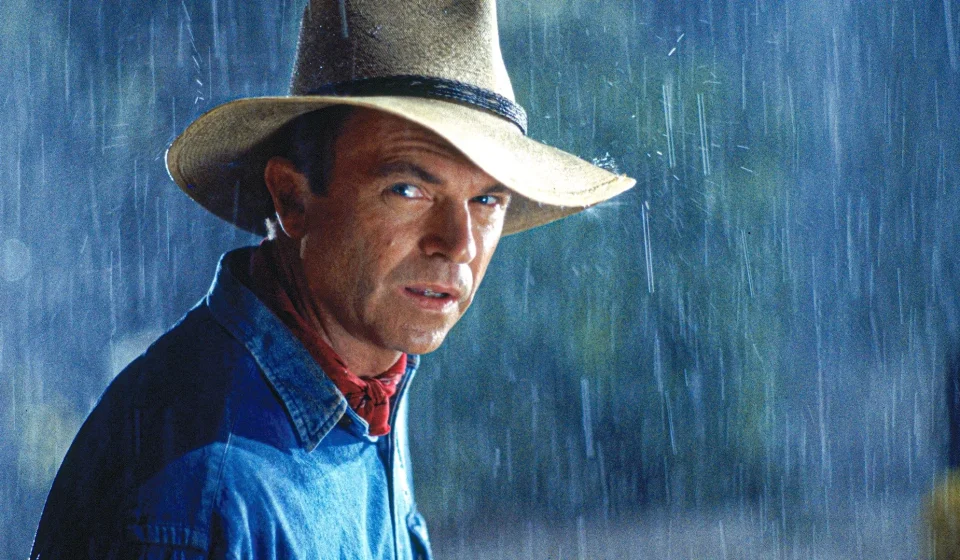

For millions of movie fans, Sam Neill will forever be the man standing in awe—and sometimes terror—as dinosaurs returned to life in Jurassic Park.
But his career stretched far beyond Dr. Alan Grant.
Over more than five decades, Neill moved between blockbusters, intimate dramas, thrillers, television and independent films with an ease that made him one of the most recognizable and respected actors of his generation.
That is why news of his death in July 2026 struck audiences around the world so deeply.
Neill died suddenly in Sydney on July 13, 2026.
He was 78.
His death came only months after he had shared an extraordinary update about the cancer diagnosis that had changed his life.
He was cancer-free.
And according to his family, he remained cancer-free when he died.
His Family Announced the News
Neill’s death wasn’t merely an unconfirmed social-media rumor.
His family announced it publicly.
They said the loss was sudden and unexpected and that Neill had been surrounded by family in Sydney.
The announcement also emphasized an important detail:
Neill remained cancer-free.
That distinction matters because the actor had spoken publicly about his battle with blood cancer in the years before his death.
Sam Neill Had Been Diagnosed With Blood Cancer
Neill revealed in 2023 that he had been diagnosed with stage-three angioimmunoblastic T-cell lymphoma, a rare form of non-Hodgkin lymphoma.
The diagnosis had come in 2022.
His cancer journey became public when he discussed it around the release of his memoir, Did I Ever Tell You This?
But Neill didn’t want illness to become the defining story of his life.
He continued working.
He continued spending time on his farm and vineyard.
And he continued approaching mortality with the humor and perspective that longtime fans had come to associate with him.
Then Came Remarkable News
In April 2026, only months before his death, Neill announced that he was cancer-free.
His longtime representative later said Neill had beaten lymphoma following CAR T-cell therapy.
It was an extraordinary development after years of treatment.
That’s also why his death was so unexpected.
The illness that had caused so much concern was no longer the immediate threat many fans might have assumed it was.
His Cause of Death Was Later Confirmed
A few days after Neill’s death, his longtime agent Philip Grenz provided additional information.
Grenz confirmed that Neill had died from pneumonia.
He also reiterated that Neill had beaten lymphoma before becoming sick.
That clarification is important.
Because Neill’s cancer battle was so widely known, some people understandably connected his death directly to cancer.
But his representative said pneumonia was the cause of death.
He Had Been Working Right Up to the End
Another striking part of Neill’s final chapter is how active he remained professionally.
According to his representative, Neill had filmed four projects back-to-back during the previous year.
Several projects featuring him were still awaiting release after his death.
His IMDb credits include upcoming appearances connected with The Legend of Zelda and Godzilla x Kong: Supernova.
It means audiences will continue seeing new work from Neill even after his passing.
For an actor whose career stretched across generations, that feels strangely appropriate.
For Many Fans, He Will Always Be Dr. Alan Grant
Neill already had an accomplished career before Jurassic Park arrived in 1993.
But Steven Spielberg’s dinosaur blockbuster transformed him into a face recognized around the world.
As paleontologist Dr. Alan Grant, Neill gave the movie something essential.
Grant wasn’t simply an action hero.
He was intelligent.
Skeptical.
Often uncomfortable.
And completely believable as a scientist suddenly confronted with creatures he had spent his life studying only as fossils.
When Grant first sees a living dinosaur, Neill’s reaction helps sell one of the most famous moments in modern blockbuster cinema.
The audience believes because Grant believes.
He Returned to the Character Years Later
Neill returned as Alan Grant in Jurassic Park III in 2001.
More than two decades later, he came back once again for Jurassic World Dominion.
That 2022 film reunited him with Laura Dern and Jeff Goldblum, bringing three of the original movie’s central stars together again.
For longtime fans, seeing Grant, Ellie Sattler and Ian Malcolm sharing the screen carried enormous nostalgic weight.
But reducing Neill’s career to dinosaurs would miss much of what made him special.
His Career Was Remarkably Diverse
Neill could move from a massive Hollywood production to a disturbing psychological drama without seeming out of place in either.
In Dead Calm, he starred alongside Nicole Kidman and Billy Zane in a tense psychological thriller largely set at sea.
In Jane Campion’s acclaimed The Piano, he played Alisdair Stewart opposite Holly Hunter and Harvey Keitel.
He appeared in The Hunt for Red October.
He starred in Event Horizon.
He played Merlin.
He appeared in Hunt for the Wilderpeople.
And television audiences knew him from productions including Peaky Blinders.
The roles didn’t always resemble one another.
That was the point.
He Could Be Warm, Threatening or Completely Unsettling
Part of Neill’s appeal was that audiences could never entirely predict what kind of presence he would bring to a role.
He could project warmth and intelligence.
He could be restrained and vulnerable.
He could also become intimidating or deeply unsettling.
That versatility allowed him to avoid becoming permanently trapped by the enormous success of Jurassic Park.
Alan Grant remained his most famous character.
But it was never his only identity as an actor.
His Life Away From Acting Was Equally Distinctive
Neill also developed a public persona far removed from Hollywood.
He owned Two Paddocks, a vineyard in Central Otago, New Zealand.
Wine became a serious passion.
So did farm life.
His social-media presence frequently offered glimpses of a man who seemed as comfortable around animals, vines and rural landscapes as he was on a film set.
For many fans, those posts revealed a different side of the actor.
There was humor.
Self-deprecation.
Animals with memorable names.
And relatively little of the polished celebrity image audiences might expect from an international movie star.
He Was Born Far From Hollywood
Neill was born Nigel John Dermot Neill in Omagh, Northern Ireland, in 1947.
His family later moved to New Zealand when he was a child.
He adopted the name Sam while young.
From there, his path eventually led into New Zealand film and then onto the international stage.
His breakthrough roles helped establish him during an important period for Australian and New Zealand cinema.
By the time Hollywood audiences encountered him in Jurassic Park, he was already a highly experienced actor.
His Work With Jane Campion Remains Important
Among Neill’s most celebrated performances was his role in The Piano.
Jane Campion’s 1993 film became one of the defining movies of its era.
Neill played Alisdair Stewart, husband to Holly Hunter’s Ada.
It was a complicated, uncomfortable character far removed from the straightforward heroism audiences associated with Alan Grant.
The fact that both films arrived in the same year illustrates something important about Neill’s career.
In 1993 alone, audiences could see him anchoring one of Hollywood’s biggest blockbusters while also appearing in one of the year’s most acclaimed dramas.
A New Generation Found Him Through Television
Neill continued reaching younger audiences long after his early film successes.
One notable example was Peaky Blinders.
He played Major Chester Campbell in the acclaimed crime drama.
The role gave him another opportunity to display the darker side of his screen presence.
Once again, he could make a character threatening without relying on exaggerated performance.
His calmness often made him more intimidating.
Then There Was Hunt for the Wilderpeople
Taika Waititi’s Hunt for the Wilderpeople offered another memorable chapter.
Neill played Hector, or “Uncle Hec,” opposite Julian Dennison.
The film mixed comedy, grief, adventure and an unlikely relationship between its central characters.
For viewers who primarily knew Neill as Dr. Grant or from darker dramatic roles, Hec demonstrated yet another side of him.
Warm.
Gruff.
Funny.
And deeply human.
Cancer Changed His Perspective, but Not His Identity
When Neill revealed his cancer diagnosis, the news naturally became a major part of coverage surrounding him.
But he resisted allowing the disease to consume his identity.
He continued discussing movies.
His farm.
Wine.
Family.
Work.
And life itself.
His memoir wasn’t simply a book about cancer.
It was a reflection on a long and unusually varied life.
Even when discussing mortality, Neill often maintained the humor that had become part of his public personality.
Then He Beat the Disease
By April 2026, the update was extraordinary.
Neill was cancer-free.
After the uncertainty surrounding his illness, it appeared to mark the beginning of another chapter.
That’s what makes the events only a few months later particularly difficult for admirers to process.
His death was not announced after a long public decline.
His family described it as sudden and unexpected.
Pneumonia Took Him at 78
His representative’s later confirmation provided the answer many fans were seeking.
Pneumonia caused Neill’s death.
The cancer he had fought was no longer present.
It’s an important distinction, especially because headlines connecting his cancer recovery and death can easily create the wrong impression.
He didn’t announce that he was cancer-free and then die because that announcement had somehow been mistaken.
According to his representative and family, he had genuinely beaten the lymphoma.
A different illness took his life.
Tributes Followed From Across the Entertainment World
After his death, tributes came from colleagues, filmmakers, actors and fans.
The reaction reflected the unusual breadth of Neill’s career.
Different generations remembered different versions of him.
For some, he was Alan Grant.
For others, The Piano.
For others, Dead Calm.
Some discovered him through Peaky Blinders.
Others loved him in Hunt for the Wilderpeople.
And many followed his life away from acting through his vineyard and social-media posts.
His Final Work Means His Career Isn’t Quite Finished for Audiences
Death normally makes an actor’s filmography feel suddenly complete.
Neill’s situation is slightly different.
He had continued working extensively.
Projects filmed before his death remained unreleased.
Among them is the upcoming live-action adaptation of The Legend of Zelda.
He also filmed a role in Godzilla x Kong: Supernova.
So audiences haven’t necessarily seen Sam Neill’s final screen appearance yet.
New performances can still arrive.
More Than Jurassic Park
It’s understandable that headlines identify Neill as the “Jurassic Park star.”
Dr. Alan Grant is one of cinema’s most recognizable characters.
But Neill’s legacy is considerably larger.
His career crossed genres, countries and generations.
He worked with acclaimed filmmakers.
He appeared in global blockbusters.
He took strange roles.
Dark roles.
Funny roles.
Quiet roles.
And he continued working into his late 70s.
Remembering Sam Neill
The final months of Sam Neill’s life contain a painful contradiction.
After years of dealing with blood cancer, he received the news everyone had hoped for.
He was cancer-free.
Then, only months later, he died unexpectedly from pneumonia.
He was 78.
But focusing exclusively on the circumstances of his death risks missing what came before it.
More than five decades of performances.
A career that moved effortlessly between New Zealand, Australia, Britain and Hollywood.
A vineyard.
A farm.
A sense of humor.
And characters that remain part of movie history.
For millions of people, seeing Sam Neill will always bring back the wonder of watching Dr. Alan Grant stare at a living dinosaur for the first time.
But his legacy extends far beyond that one unforgettable moment.
Sam Neill beat the cancer that had threatened his life. His final death was sudden and unexpected—but the work he left behind spans generations.
Sam Neill died in Sydney on July 13, 2026, at age 78. His family publicly confirmed his death, and his longtime representative later confirmed pneumonia as the cause.