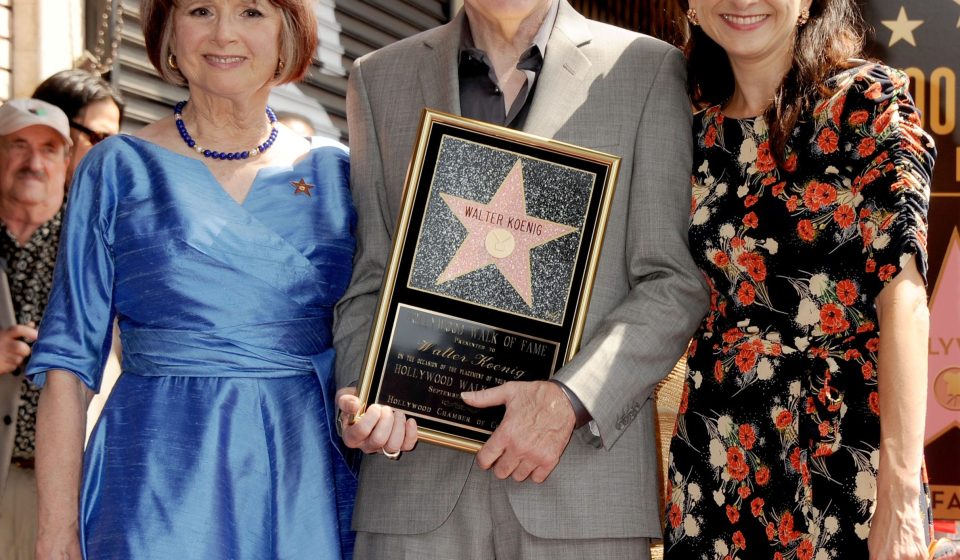

Walter Koenig, the actor who became a science-fiction icon as Pavel Chekov in the original Star Trek television series and later returned to the role across the franchise’s movies, has died.
He was 90.
Koenig died at his home in North Hollywood on October 25, 2026, according to his representative.
His daughter and niece were with him.
For generations of Star Trek fans, Koenig will forever be remembered as the young Russian navigator aboard the USS Enterprise—a character introduced during the Cold War who helped embody Gene Roddenberry’s optimistic vision of a future in which people from rival nations could work together.
But Koenig’s life extended well beyond the Enterprise.
He was an actor.
A writer.
A teacher.
A husband and father.
And decades after Star Trek first put him on television screens, he remained deeply connected to the fans who had helped make Chekov one of science fiction’s most recognizable characters.
Walter Koenig Died at His North Hollywood Home
Koenig’s death was confirmed by his representative, Zachery McGinnis.
He died at home surrounded by his daughter and niece.
The announcement described a performer whose warmth and humor had left a lasting impression on generations of fans.
His death quickly brought tributes from across the Star Trek community.
Among the most personal came from George Takei.
Takei and Koenig had known each other for nearly six decades.
They first met as young actors on the bridge of the Enterprise.
Their friendship lasted for the remainder of Koenig’s life.
George Takei Remembered More Than Chekov
Takei, who played Hikaru Sulu, shared an emotional tribute after learning of his longtime friend’s death.
“My heart is heavy,” he wrote.
But Takei made clear that the man he knew was much more than the Russian navigator familiar to millions.
“Walter was more than Chekov,” Takei wrote. “He was a writer, a teacher, a thoughtful man, and a loyal friend.”
Their friendship had extended far beyond television.
When Takei married Brad Altman in 2008, Koenig served as his best man.
In a business where friendships can disappear when a production ends, theirs lasted nearly 60 years.
Koenig Joined ‘Star Trek’ in Its Second Season
Walter Koenig wasn’t part of Star Trek from its first episode.
He joined the series in 1967, at the beginning of its second season.
His character was Ensign Pavel Andreievich Chekov, the youthful Russian navigator of the USS Enterprise.
The timing was significant.
The United States and Soviet Union were deep in the Cold War.
Yet here was a Russian officer working alongside Americans and a diverse multinational crew in an imagined future.
Koenig later spoke about the broader message behind that decision.
The Enterprise wasn’t simply exploring space.
Its crew represented an optimistic idea that people of different races, nationalities and backgrounds could coexist and genuinely care about one another.
For a television program airing during the 1960s, that vision carried additional meaning.
Chekov Quickly Became Part of the Enterprise Family
Koenig appeared in 36 episodes of the original series.
Chekov was young, enthusiastic and sometimes played for humor, particularly through his exaggerated Russian pride and distinctive accent.
But he became much more than comic relief.
He belonged on the bridge.
Alongside Captain Kirk, Spock, McCoy, Scotty, Uhura and Sulu, Chekov became part of the ensemble that audiences would continue embracing long after NBC canceled the original show.
Nobody involved could have known how long that association would last.
Koenig certainly didn’t.
He later recalled that when he auditioned, he thought the job might amount to several television episodes.
Instead, it shaped the rest of his career.
‘Star Trek’ Refused to Disappear
The original series ran for only three seasons, from 1966 to 1969.
That could easily have been the end.
It wasn’t.
Reruns helped the program find an increasingly devoted audience.
Fan conventions followed.
Then came the movies.
Koenig returned as Chekov when the original crew reunited for Star Trek: The Motion Picture in 1979.
He would continue appearing as the character across the original cast’s film era.
The young navigator from the 1960s was now growing older alongside the audience that had embraced him.
He Appeared in Seven ‘Star Trek’ Films
Koenig’s connection to Chekov ultimately extended across seven feature films.
Those appearances carried him from Star Trek: The Motion Picture through the later original-cast era and into Star Trek Generations.
Among them was Star Trek II: The Wrath of Khan, widely regarded as one of the franchise’s defining films.
Chekov was no longer simply a young man sitting at the Enterprise navigation console.
The character had a history.
So did Koenig.
What had started as a television job in 1967 had become a decades-long relationship.
But Koenig Had Complicated Feelings About the Role
Becoming inseparable from one character can be both a gift and a professional limitation.
Koenig understood that.
Star Trek gave him worldwide recognition.
It also contributed to typecasting after the original series ended.
During the 1970s, acting opportunities were not always easy to find.
Being instantly recognizable as Chekov could make it difficult for audiences—and casting directors—to see him as somebody else.
So Koenig expanded his creative work.
He wrote.
He taught.
He continued acting.
And eventually another major science-fiction franchise gave him the opportunity to play a character almost completely different from the cheerful Enterprise navigator.
‘Babylon 5’ Introduced a Very Different Walter Koenig
Fans of 1990s science fiction knew Koenig for another memorable character:
Alfred Bester.
Koenig appeared repeatedly on Babylon 5 as the powerful Psi Cop.
Bester was manipulative, intelligent and threatening—a dramatic departure from the youthful Chekov.
For viewers who had spent decades associating Koenig with the Enterprise, the performance was a reminder of his range.
He could be unsettling.
He could be calculating.
He could make an audience distrust him almost immediately.
The role became one of the most significant parts of his career outside Star Trek.
Writing Was Always Part of His Creative Life
Acting wasn’t Koenig’s only outlet.
He wrote scripts for television series including Family, The Incredible Hulk and other productions.
He also wrote books.
His 1988 memoir, Warped Factors: A Neurotic’s Guide to the Universe, offered his perspective on his career and experiences.
Earlier, he had written Chekov’s Enterprise, drawing from his experiences surrounding the first Star Trek feature film.
Writing allowed Koenig to exercise a degree of creative control that acting didn’t always provide.
When an actor waits for somebody else to offer a role, opportunities depend on other people’s decisions.
A writer can begin with a blank page.
Koenig did both.
He Also Became a Teacher
Takei’s tribute calling Koenig a teacher wasn’t simply sentimental language.
Koenig spent time teaching acting and directing at institutions including UCLA and other schools.
It was another side of a career frequently overshadowed by the enormous cultural footprint of Star Trek.
For fans, he was Chekov.
For students, colleagues and friends, his identity was considerably broader.
That distinction became especially visible in the tributes following his death.
His Marriage to Judy Levitt Lasted More Than 57 Years
Away from the screen, one relationship spanned most of Koenig’s adult life.
He married actress Judy Levitt in 1965.
Their marriage lasted until her death in December 2022.
They had been together for more than 57 years.
Levitt was an actress herself and appeared in productions that included Star Trek films and Babylon 5.
The couple had two children, Andrew and Danielle.
Their family would eventually endure devastating losses that no amount of professional success could soften.
Their Son Andrew Died in 2010
Andrew Koenig followed his parents into entertainment.
Television audiences knew him particularly for playing Richard “Boner” Stabone on the sitcom Growing Pains.
In February 2010, Andrew died by suicide at age 41.
His death followed a search after he had been reported missing in Vancouver.
For Walter and Judy, the loss was devastating.
Koenig’s public life continued afterward—conventions, appearances, acting and interactions with fans—but behind that familiar face was a father who had experienced one of the most profound losses a parent can face.
Koenig Had Also Survived a Serious Health Crisis
Years before his son’s death, Koenig faced his own major health emergency.
In his 50s, he suffered a heart attack and underwent quadruple bypass surgery.
He recovered and continued working for decades afterward.
His career ultimately stretched across more than 60 years.
And even as he grew older, he continued making appearances and maintaining a connection with the science-fiction community that had followed him since the 1960s.
He Never Turned His Back on ‘Star Trek’ Fans
Some actors spend years attempting to distance themselves from the role that made them famous.
Koenig’s relationship with Star Trek was more complicated than simple nostalgia, but he continued engaging with the community surrounding it.
He attended conventions.
He spoke with fans.
He reflected on the franchise’s history.
And he understood that Star Trek had become something larger than a television job.
For many viewers, the series represented optimism.
Exploration.
Friendship.
And the possibility of a future in which humanity had moved beyond some of the divisions defining the present.
Chekov was part of that vision.
George Takei and Koenig Shared a Friendship That Outlasted the Show
Perhaps one of the most moving parts of Koenig’s story has nothing to do with fictional starships.
It’s what happened after the cameras stopped.
Takei and Koenig remained friends.
Not for a few years.
For decades.
Koenig stood beside Takei at his wedding.
Takei remembered Koenig publicly after his death.
Their relationship was evidence that the chemistry audiences saw among the original Star Trek cast wasn’t entirely manufactured for television.
Real relationships grew out of that experience.
Some endured for the rest of their lives.
An Era of ‘Star Trek’ Is Disappearing
Koenig’s death carries another painful significance for longtime fans.
The original Enterprise crew has gradually dwindled over the decades.
DeForest Kelley died in 1999.
James Doohan died in 2005.
Leonard Nimoy died in 2015.
Nichelle Nichols died in 2022.
Now Walter Koenig is gone.
His death leaves William Shatner and George Takei as the surviving members of the original series’ principal cast.
For people who grew up watching that crew together, each loss feels like another piece of television history slipping away.
But Chekov Isn’t Going Anywhere
That’s the strange permanence of film and television.
Walter Koenig is gone.
Pavel Chekov remains young.
A viewer discovering Star Trek decades from now can still watch him arrive on the bridge of the Enterprise.
They can hear the accent.
See the enthusiasm.
Watch the crew face another impossible problem.
And for that viewer, Koenig’s performance will be new.
That’s one of the privileges—and peculiarities—of an acting career.
The performer ages.
The performance doesn’t.
Walter Koenig Was More Than One Famous Uniform
His representative’s announcement emphasized something George Takei echoed in his own tribute.
Walter Koenig’s legacy didn’t begin and end with Chekov.
He was a writer.
A teacher.
A husband.
A father.
A friend.
An actor who found another memorable science-fiction role in Babylon 5.
And a performer who spent decades meeting the people who continued caring about a television series that initially lasted only three seasons.
Still, there is no escaping the role that changed everything.
In 1967, Walter Koenig walked onto the bridge of the Enterprise.
Nearly six decades later, fans were still calling him Chekov.
That’s not a small legacy.
It’s the kind most actors spend a lifetime hoping to create.
Walter Koenig died at 90, but the optimistic young navigator he brought to life will continue traveling the stars for generations to come.
Which Walter Koenig performance do you remember most—Chekov in Star Trek, Alfred Bester in Babylon 5, or another role from his long career?