We Noticed Something Strange in Our Restaurant Salad—Here’s What Diners Should Actually Do Next

Dinner had been completely ordinary until someone at the table stopped eating.
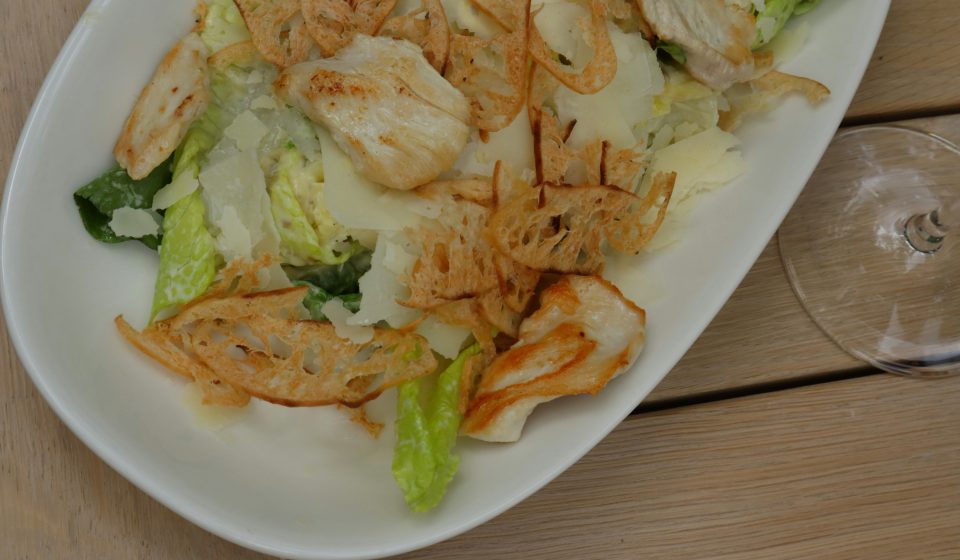
There was something unusual in the salad.
At first, none of us knew exactly what we were looking at.
Was it part of the vegetable?
A seed?
Plant material?
Something introduced during preparation?
Or something that shouldn’t have been in the food at all?
That uncertainty was enough to change the mood immediately.
And it raised a surprisingly practical question:
What should you actually do if you find something unfamiliar in restaurant food?
The answer isn’t to panic.
But it also isn’t to keep eating and assume everything is harmless.
First, Stop Eating the Dish
This is the simplest response.
If you genuinely can’t identify something in your food, set the dish aside.
You don’t need to taste the unknown object.
You don’t need to touch it repeatedly.
And you don’t need to decide immediately whether it is dangerous.
Simply stop eating until you know more.
That’s especially sensible if the object appears foreign to the dish, contaminated, spoiled or otherwise unusual.
Don’t Immediately Decide What It Is
This is where people frequently make mistakes.
A photograph gets posted online.
Within minutes, commenters announce:
“Those are insect eggs.”
“That’s mold.”
“Those are parasites.”
“It’s just a seed.”
“You’re definitely going to get sick.”
Without proper identification, those statements may be little more than guesses.
Food—especially produce—can contain structures unfamiliar to many consumers.
Seeds, stems, roots, fibers and damaged plant tissue can look strange.
But genuine foreign material or contamination can occur too.
Appearance alone may not provide a reliable answer.
In This Story, the Object Was Never Identified
That’s important.
The original account describes diners discovering something unusual in a salad, but it doesn’t establish exactly what they found.
Without that information, it would be misleading to invent an identification.
We can’t responsibly call it an insect.
We can’t call it eggs.
We can’t call it a parasite.
We can’t call it harmless plant material.
The correct answer is:
We don’t know.
And sometimes acknowledging uncertainty is more useful than creating a dramatic explanation.
Tell the Restaurant Staff
Once you’ve stopped eating, notify your server.
You don’t need to begin with an accusation.
A straightforward statement is enough:
“We found this in the salad and don’t know what it is. Could someone take a look?”
That gives the restaurant an opportunity to investigate.
Depending on the situation, staff may involve a manager or kitchen employee.
They may remove the dish.
They may check ingredients from the same batch.
They may inspect preparation areas.
They may contact a supplier if appropriate.
The response will depend on what was found.
Take a Clear Photograph Before the Dish Disappears
If something genuinely appears out of place, documenting it can be useful.
Take a clear photograph of the object while it’s still in the food.
A wider photograph showing the entire dish can provide context.
If possible, avoid manipulating the object unnecessarily just to produce a more dramatic picture.
The purpose isn’t social-media engagement.
It’s documentation.
If questions arise later, a clear image of what you actually encountered is far more useful than trying to describe it from memory.
Don’t Throw Everything Away Immediately
If there is a legitimate concern about contamination or illness, preserving information can matter.
That doesn’t necessarily mean carrying restaurant food home.
It means avoiding unnecessary destruction of potentially relevant evidence before the restaurant has had an opportunity to inspect it.
If the situation appears serious, ask management how they intend to document and handle the complaint.
Keep your receipt as well.
It establishes what you ordered and when.
Fresh Produce Has a Complicated Journey
A salad can look simple when it reaches your table.
Its ingredients may have gone through many stages first.
Produce begins in an agricultural environment.
It may then be harvested, sorted, packed, transported, distributed, stored and prepared before reaching a restaurant plate.
The FDA notes that fresh produce can become contaminated at different points from growing and harvesting through storage or preparation, which is why safe handling practices matter throughout the supply chain.
A problem discovered at a restaurant therefore doesn’t automatically reveal where it originated.
“Natural” Doesn’t Automatically Mean Safe
It’s also important not to swing too far in the opposite direction.
Sometimes people see an unusual object in vegetables and respond:
“It’s produce. Things from nature get into it. Don’t worry.”
That’s not a reliable safety assessment.
Natural materials aren’t automatically harmless.
Likewise, something that looks disturbing isn’t automatically dangerous.
Identification and context matter.
When you don’t know what something is, uncertainty should remain uncertainty until better information is available.
Washing Produce Helps—but Doesn’t Create Zero Risk
Proper handling and washing are important parts of food preparation.
But no food-safety system can guarantee that every meal served everywhere will be completely free of every possible problem.
Food safety works by reducing risk through multiple layers.
Agricultural practices.
Processing controls.
Transportation.
Storage temperatures.
Kitchen hygiene.
Employee practices.
Preparation procedures.
Each layer matters.
Restaurants Have Responsibilities Too
Customers reasonably expect food served in a restaurant to be properly stored, prepared and handled.
The FDA Food Code provides a model framework used by regulatory authorities for food safety in retail and food-service settings.
It addresses areas such as employee hygiene, food sources, temperature control, contamination prevention and cleaning.
Exact legal requirements can vary by jurisdiction.
But the basic principle is straightforward:
Restaurants are responsible for maintaining food-safety practices designed to reduce contamination and foodborne illness.
One Strange Object Doesn’t Automatically Prove a Dirty Kitchen
This distinction matters.
Imagine finding a small piece of unexpected agricultural material in leafy greens.
That alone wouldn’t necessarily prove that restaurant employees failed to wash their hands or that the entire kitchen was unsanitary.
On the other hand, repeated contamination, pest evidence, unsafe temperatures, poor employee hygiene or multiple complaints could indicate a more serious problem.
Context matters.
One incident should be investigated rather than instantly converted into a conclusion about an entire restaurant.
The Restaurant’s Response Can Tell You a Lot
Mistakes and unexpected problems can occur in almost any business.
What happens afterward matters.
A professional response might include listening to the customer, removing the affected dish, involving management and investigating the possible source.
Depending on the circumstances, the restaurant might inspect other ingredients or stop serving a particular item until the concern is understood.
A dismissive response to a legitimate food-safety concern is different from a restaurant taking the issue seriously and investigating it.
Should You Accept a Replacement Meal?
That’s a personal decision.
Some people will be comfortable ordering something else after management addresses the concern.
Others will lose their appetite entirely.
Both reactions are understandable.
You aren’t obligated to continue eating simply because the restaurant offers a replacement.
At the same time, the discovery of one unexplained object doesn’t necessarily establish that every item in the restaurant is unsafe.
Use the available information and your own comfort level.
What If You Already Ate Some of the Food?
Don’t panic.
Finding something unusual after you’ve eaten part of a meal doesn’t mean illness is inevitable.
What matters depends on what the substance was, whether contamination actually occurred, how much was consumed and the person’s health circumstances.
If you feel completely well, there may be nothing else to do beyond documenting the incident and monitoring how you feel.
But avoid assuming that every unknown exposure is automatically harmless.
Symptoms Matter More Than Internet Comments
Foodborne illness can cause different symptoms depending on the organism or contaminant involved.
Common symptoms can include diarrhea, abdominal pain or cramps, nausea, vomiting and fever.
Timing varies considerably.
Some foodborne illnesses begin within hours.
Others can take days.
That means a person shouldn’t automatically blame the last thing they ate for every stomach symptom—and shouldn’t automatically rule it out either.
If symptoms become significant, medical evaluation may be appropriate.
Know the Warning Signs That Need More Attention
Some situations warrant prompt medical advice.
CDC guidance advises seeking medical care for severe food-poisoning symptoms such as bloody diarrhea, diarrhea lasting more than three days, high fever, vomiting so frequent that liquids can’t be kept down, or signs of dehydration.
Dehydration can include reduced urination, dry mouth or throat, or dizziness when standing.
Certain people can also face higher risk from foodborne illness, including young children, older adults, pregnant people and those with weakened immune systems.
For those groups, a lower threshold for contacting a healthcare professional can be appropriate.
Severe Allergic Reactions Are Different
If the concern involves a possible allergen rather than ordinary contamination, the situation can become urgent.
Symptoms such as difficulty breathing, throat tightness, significant swelling, faintness or a rapidly developing severe allergic reaction require emergency attention.
Someone with a prescribed epinephrine auto-injector should follow their medical emergency plan.
Don’t wait for restaurant management to finish investigating before addressing a medical emergency.
Health comes first.
If You Think You Swallowed Something Sharp, Seek Advice
Not every restaurant-food incident is about bacteria.
Foreign objects can occasionally include hard or sharp material.
If someone believes they swallowed glass, metal or another potentially dangerous object, especially if they develop pain, bleeding, difficulty swallowing or breathing problems, medical evaluation is appropriate.
Don’t deliberately induce vomiting unless a qualified professional specifically instructs you to do so.
When Should You Report the Restaurant?
Not every disappointing meal needs a government report.
But suspected foodborne illness, serious contamination or unsafe food-handling conditions may warrant contacting the appropriate local or state health authority.
In the United States, restaurant oversight is generally handled at the state or local level rather than by one federal restaurant-inspection agency.
If several people who ate together develop similar symptoms, that information can be particularly useful to public-health investigators.
Reporting isn’t about punishing a restaurant automatically.
It can help authorities identify whether there is a larger pattern.
Keep Useful Information
If you believe you became ill after eating at a restaurant, write down details while they’re still fresh.
The restaurant name and location.
Date and approximate time.
What you ordered.
What other people at the table ate.
When symptoms began.
Whether anyone else became ill.
Keep the receipt if you have it.
If you photographed the unusual object, preserve the original image.
These details can be much more useful than trying to reconstruct everything days later.
Don’t Start a Social-Media Panic Before You Know What Happened
It’s understandable to want to share an unpleasant experience.
But there’s a difference between documenting what happened and making claims that haven’t been established.
Posting:
“I found this unidentified object in my salad.”
is different from:
“This restaurant served me parasite eggs.”
if nobody has actually identified the object.
The first describes an observation.
The second makes a factual claim.
That distinction protects accuracy—and prevents an uncertain situation from becoming misinformation.
Photos Can Be Misleading Too
Close-up photographs are particularly difficult.
A tiny object can appear enormous.
Lighting can alter color.
Compression can remove detail.
Plant material can resemble insects.
Insect material can resemble seeds.
Mold can be confused with other substances.
An image may help with identification, but confident identification isn’t always possible from a photograph alone.
Sometimes the correct answer remains:
It can’t be determined from the image.
Leafy Greens Deserve Careful Handling
Salads deserve particular attention because many ingredients are eaten raw.
Cooking can destroy many harmful microorganisms, but raw produce doesn’t receive that additional heat treatment.
That makes prevention and proper handling particularly important.
The CDC has repeatedly linked leafy greens to outbreaks of foodborne illness, although most leafy greens consumed in the United States do not make people sick.
The appropriate response isn’t to fear salad.
It’s to understand why food-safety practices matter.
What Restaurants Can Learn From a Complaint
A customer complaint can provide useful information.
Management can ask:
Did the unusual material come from the produce?
Could it have entered during preparation?
Were ingredients inspected appropriately?
Are other items from the same batch affected?
Does the supplier need to be contacted?
Is there evidence of a broader sanitation problem?
Those questions turn a complaint into an opportunity to investigate rather than simply apologize and move on.
Transparency Builds More Trust Than Defensiveness
Customers generally understand that no business is perfect.
What damages trust is often not the original problem but the response.
If staff dismiss a concern without looking, customers may reasonably wonder whether food safety is taken seriously.
If management listens, documents what happened and investigates, customers can see that procedures exist for dealing with problems.
That doesn’t guarantee the customer will return.
But it demonstrates professionalism.
The U.S. Food-Safety System Has Multiple Layers
Food regulation in the United States isn’t handled by a single agency.
The FDA oversees much of the food supply, while the USDA has major responsibilities involving meat, poultry and certain egg products.
State and local agencies play crucial roles as well, particularly with restaurants and retail food establishments.
Public-health departments investigate outbreaks.
Restaurants implement controls at the final preparation and service stage.
Food safety therefore depends on a chain of responsibility rather than one inspection at one moment.
Modern Food Safety Has Deep Historical Roots
Federal food regulation changed significantly in the early 20th century.
The Pure Food and Drugs Act of 1906 was a major milestone in U.S. food and drug regulation.
The regulatory system continued evolving afterward as food production became larger, more complex and increasingly national and international.
Today’s food-safety framework is far more sophisticated than it was a century ago.
But sophisticated doesn’t mean infallible.
Food is biological material moving through complicated systems.
Risk can be reduced dramatically.
It can’t be reduced to zero.
Consumers Have a Role Too
Restaurants and food producers carry major responsibilities, but consumers can make sensible decisions as well.
Pay attention to food before eating it.
Don’t consume something obviously spoiled or contaminated.
Speak up if something looks genuinely wrong.
Take allergies seriously.
Seek medical care when concerning symptoms develop.
Report significant suspected food-safety problems through appropriate channels.
Most importantly, distinguish observation from assumption.
Don’t Let One Incident Create Unnecessary Fear
An unpleasant discovery can make someone hesitant to order the same food again.
That’s understandable.
Food is unusually personal.
We put it directly into our bodies, so discovering something unexpected can trigger a strong reaction.
But one unexplained restaurant incident doesn’t mean eating out is broadly unsafe.
Millions of restaurant meals are served routinely without incident.
A balanced response acknowledges that food-safety problems occur while avoiding the conclusion that every unfamiliar object represents serious contamination.
What We Learned From the Salad
The most useful lesson from that dinner wasn’t the identity of the strange object.
The source story never establishes what it was.
The lesson was how to respond to uncertainty.
Stop eating.
Don’t guess.
Notify staff.
Document what you saw.
Allow the restaurant to investigate.
Watch for symptoms if there is a plausible exposure concern.
Seek appropriate medical care when warning signs appear.
Report serious incidents when necessary.
And don’t transform uncertainty into a dramatic factual claim simply because it makes a better social-media post.
Final Thoughts
Finding something unfamiliar in restaurant food is unsettling.
That’s a reasonable reaction.
But fear doesn’t need to become panic.
And uncertainty doesn’t need to become speculation.
Sometimes an unfamiliar object turns out to be ordinary plant material.
Sometimes it may represent a genuine quality-control problem.
Sometimes a photograph alone won’t provide an answer.
The responsible approach is to acknowledge what you know—and what you don’t.
In our case, dinner took an unexpected turn because something in the salad looked wrong.
Without a verified identification, that’s as far as the factual claim should go.
And perhaps that’s the most important lesson.
When something looks wrong with your food, take it seriously enough to stop and investigate—but not so far that you invent an explanation before the evidence is there.
Medical note: This article provides general food-safety information and isn’t individualized medical advice. Anyone experiencing severe symptoms, difficulty breathing, significant dehydration or another medical emergency should seek appropriate professional or emergency care.
Editor’s note: The source narrative does not identify the unusual material found in the salad. This article therefore does not claim that it was an insect, parasite, egg, contaminant or any other specific substance.