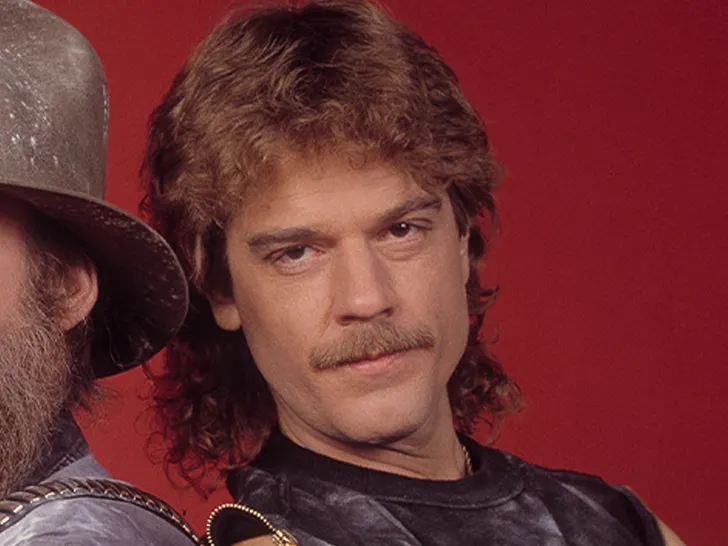
ZZ Top Drummer Frank Beard D!es at 77 After More Than Five Decades Behind the Band’s Legendary Sound

Frank Beard, the longtime drummer whose unmistakable rhythm helped power ZZ Top for more than half a century, has died.
He was 77.
Beard died on August 17, 2026, while receiving hospice care at his ranch in Richmond, Texas, according to an announcement from ZZ Top. His family was by his side.
No cause of death was publicly disclosed.
For generations of rock fans, Beard was the man behind the beat of one of America’s most distinctive bands.
Standing—or more accurately, sitting—behind guitarist Billy Gibbons and bassist Dusty Hill, he helped create a sound that could be recognized within seconds.
Blues.
Boogie.
Rock and roll.
Texas attitude.
And underneath it all, Beard’s groove.
His death closes another major chapter in ZZ Top’s extraordinary history, five years after the death of Dusty Hill in 2021.
ZZ Top Confirmed the News
The band announced Beard’s death on August 18, one day after he passed away.
According to the official statement, Beard had been in hospice care at his Richmond, Texas, ranch.
Family members were with him.
Billy Gibbons paid tribute to the drummer as both a musician and a friend, describing Beard as a naturally innovative drummer whose signature backbeat had been essential to ZZ Top’s sound.
Gibbons also indicated that the band intended to continue, as Beard had wished.
It was a fitting tribute to a musician whose work was rarely about drawing attention away from the song.
Beard’s job was to make everything move.
And for more than five decades, he did.
Frank Beard Was Born in Texas in 1949
Frank Lee Beard was born June 11, 1949, in Frankston, Texas.
He grew up in Irving, in the Dallas-Fort Worth area.
Music became important early.
Inspired partly by the explosion of rock music during the 1960s and by the blues musicians he encountered in Texas, Beard began playing drums as a teenager.
Texas proved to be an important environment for his musical development.
The state had a deep blues tradition, and Beard became familiar with musicians and clubs that exposed him to sounds extending far beyond mainstream pop.
Those influences would eventually become part of ZZ Top’s musical DNA.
His History With Dusty Hill Began Before ZZ Top
Before ZZ Top’s classic lineup existed, Beard had already developed an important musical relationship with Dusty Hill.
The two played together in several bands during the 1960s, including American Blues.
That relationship would become crucial when Beard eventually connected with Billy Gibbons in Houston.
Gibbons had previously played with the psychedelic rock group Moving Sidewalks.
When ZZ Top began taking shape in 1969, Beard joined the group on drums.
He then recommended Dusty Hill for bass.
The chemistry worked.
By the end of 1969, the trio that would define ZZ Top for more than 50 years was together:
Billy Gibbons.
Dusty Hill.
Frank Beard.
Three Musicians Built an Unusually Stable Band
Rock history is filled with groups whose membership changed constantly.
ZZ Top was different.
Gibbons, Hill and Beard remained together for more than five decades.
That’s remarkable in any profession.
In rock and roll, it’s extraordinary.
Bands fracture over money.
Creative disagreements.
Personal conflicts.
Addiction.
Touring.
Management.
Changing musical tastes.
ZZ Top survived all of it.
The lineup remained intact until Hill’s death in 2021.
By that point, Gibbons, Hill and Beard had become one of the longest-running unchanged lineups associated with a major rock band.
Beard Was the One Without the Famous Beard
There was always an obvious joke surrounding Frank Beard.
ZZ Top became visually famous for the enormous beards worn by Billy Gibbons and Dusty Hill.
Frank Beard—the man whose actual surname was Beard—usually didn’t wear one.
It became one of rock music’s enduring bits of trivia.
But focusing too heavily on the joke risks overlooking why Beard mattered.
He wasn’t there because of the band’s visual identity.
He helped create its musical identity.
His Drumming Was Central to the ZZ Top Groove
ZZ Top’s music could sound deceptively simple.
A guitar riff.
Bass.
Drums.
A blues structure.
A groove.
But simplicity in music can be extraordinarily difficult to execute well.
Beard understood how to leave space.
He didn’t need to fill every second with complicated drum patterns.
His playing helped songs breathe.
The rhythm could feel relaxed without becoming sloppy.
Heavy without becoming cumbersome.
Precise without losing its swing.
That balance became a crucial component of what listeners often recognize as the Texas shuffle.
Then Came ‘La Grange’
ZZ Top released its debut album in 1971.
But the band’s major breakthrough came with its third studio album, Tres Hombres, in 1973.
The album included one of the group’s most enduring songs:
“La Grange.”
Built around a blues-based riff and irresistible groove, the song became a defining ZZ Top recording.
Beard’s drums are essential to its movement.
Listen beyond the famous guitar.
The track works because the rhythm section keeps everything locked together while still allowing the music to swing.
That became one of Beard’s specialties.
ZZ Top Continued Building Momentum
The success of Tres Hombres wasn’t an isolated moment.
More albums followed.
Fandango!
Tejas.
Degüello.
El Loco.
Across the 1970s and early 1980s, ZZ Top developed an increasingly recognizable identity.
They were deeply connected to blues but weren’t interested in becoming a museum piece.
The band could be traditional and playful at the same time.
Then the 1980s arrived.
Instead of being left behind by changing musical trends, ZZ Top transformed itself.
‘Eliminator’ Changed Everything
In 1983, ZZ Top released Eliminator.
It became one of the defining albums of the band’s career.
The group incorporated contemporary production techniques, synthesizers and electronic elements without completely abandoning the blues-rock foundation that had built its reputation.
The result was enormous.
Songs such as:
“Gimme All Your Lovin’.”
“Sharp Dressed Man.”
“Legs.”
became major rock hits.
But music was only part of the story.
MTV Introduced ZZ Top to Another Generation
The band’s music videos became fixtures of early MTV.
The visual formula was unforgettable.
The Eliminator car.
Attractive women.
Transformation fantasies.
Gibbons and Hill appearing with their sunglasses, guitars and enormous beards.
ZZ Top suddenly had one of the strongest visual identities in popular music.
For younger viewers discovering the band through television rather than blues clubs or record collections, those videos became the introduction.
And behind the spectacle, Beard remained where he had always been.
At the drums.
Keeping the songs moving.
He Wasn’t the Flashiest Member—and That Was the Point
Drummers can dominate a performance.
Some are famous for enormous solos.
Others build their reputations around technical complexity.
Beard’s importance to ZZ Top was different.
He served the groove.
That may sound simple.
It isn’t.
A drummer in a three-piece band has nowhere to hide.
With only guitar, bass and drums providing the instrumental foundation, every rhythmic decision matters.
Push too hard and the groove becomes rigid.
Hold back too much and the song loses energy.
Beard found the pocket ZZ Top needed.
Again.
And again.
And again.
For decades.
Success Brought Personal Struggles
Beard’s story wasn’t without difficult periods.
During the 1970s, as ZZ Top became increasingly successful, he struggled with drug addiction.
He later spoke openly about heroin and cocaine use and the enormous financial and personal toll addiction took on him.
At one point, despite earning substantial money through touring, much of it was disappearing into drugs.
The band eventually took an extended break.
For Beard, that period offered an opportunity to confront where his life was heading.
He entered rehabilitation.
He recovered.
And he returned.
The Comeback Was Bigger Than Anyone Expected
ZZ Top’s resurgence in the 1980s made the story even more remarkable.
Many successful 1970s rock bands struggled when musical tastes changed.
Punk arrived.
New wave arrived.
Synthesizers changed pop.
MTV changed how artists were marketed.
ZZ Top adapted.
Rather than pretending the world hadn’t changed, the band incorporated new sounds and new technology into its established style.
Beard was part of that transition.
The same drummer who had helped power gritty early-’70s blues rock was now part of one of the most commercially successful rock acts of the MTV era.
They Sold Tens of Millions of Records
Over the course of their career, ZZ Top sold more than 50 million records.
Multiple albums reached the upper levels of the Billboard charts.
Their catalog crossed generations.
A fan who discovered them through Tres Hombres in the 1970s could stand next to someone who discovered “Sharp Dressed Man” through MTV.
Years later, another generation encountered the songs through movies, television, streaming services and classic-rock radio.
That’s how a band becomes more than successful.
It becomes part of the culture.
The Rock & Roll Hall of Fame Came Calling
In 2004, ZZ Top was inducted into the Rock & Roll Hall of Fame.
By then, there was little question about the band’s historical importance.
The trio had survived changing musical eras while maintaining a recognizable identity.
Beard’s role in that achievement was fundamental.
Rock audiences often focus naturally on the person standing at the microphone or playing the famous guitar riff.
But a band like ZZ Top couldn’t function without the rhythm beneath it.
Beard supplied that foundation.
Dusty Hill’s Death Changed the Band in 2021
The classic trio finally ended in July 2021 when Dusty Hill died at age 72.
His death could easily have marked the end of ZZ Top.
But Hill had expressed his wish that the band continue with longtime guitar technician Elwood Francis stepping into the bass role.
Gibbons and Beard honored that wish.
They kept touring.
The familiar trio had changed, but ZZ Top continued.
For Beard, that meant playing the songs without a musician who had been beside him since before ZZ Top even existed.
Beard Continued Performing Into His 70s
Retirement wasn’t immediate.
Beard remained part of the band’s touring life well into his 70s.
That meant night after night of playing songs he’d first recorded when he was a young man.
Think about the span of time involved.
When ZZ Top’s debut album appeared, Richard Nixon was president.
There was no MTV.
No compact disc.
No streaming.
No smartphones.
Rock itself was still relatively young.
More than five decades later, Beard was still associated with the same band.
Very few musicians experience that kind of continuity.
Health Problems Eventually Took Him Off the Road
In 2026, health concerns began affecting Beard’s ability to perform.
He stepped away from tour dates.
Shows were affected, including scheduled performances in California.
Then came the announcement no fan wanted to hear.
Beard had entered hospice care.
On August 17, he died at his ranch in Richmond, Texas.
His family was with him.
He was 77.
The band publicly announced his death the following day.
No Cause of Death Has Been Announced
That detail is important.
Beard had experienced health problems serious enough to require hospice care, but neither the band’s official announcement nor reliable reporting immediately established a specific cause of death.
That means speculation isn’t appropriate.
When a family or representative doesn’t disclose a cause, the responsible approach is simply to report what has been confirmed.
Frank Beard died while receiving hospice care.
His family was beside him.
Anything more specific requires reliable confirmation.
Billy Gibbons Lost Another Lifelong Collaborator
Gibbons had already experienced the death of Dusty Hill.
Now Beard was gone too.
In his public tribute, Gibbons described Beard as a great friend and collaborator and praised the distinctive backbeat that had helped define ZZ Top.
Those words point toward something larger than professional respect.
These weren’t musicians assembled for a temporary project.
They spent decades together.
Albums.
Tours.
Hotels.
Buses.
Studios.
Interviews.
Triumphs.
Arguments.
Changes in music.
Changes in technology.
Changes in their own lives.
A 50-plus-year musical partnership inevitably becomes part of a person’s life story.
The Band Says It Will Continue
ZZ Top’s official announcement also addressed the band’s future.
According to Gibbons, Beard wanted the group to continue.
The band planned to honor that wish.
That parallels what happened after Dusty Hill’s death.
For fans, continuing without two-thirds of the classic lineup will inevitably feel different.
It has to.
No replacement can reproduce decades of personal and musical chemistry.
But continuation doesn’t necessarily mean pretending nothing changed.
It can also mean keeping the music alive while acknowledging the people who built it.
Frank Beard’s Legacy Is Already Playing Somewhere
Some musicians leave behind a catalog that requires explanation.
Beard doesn’t.
Turn on “La Grange.”
Listen to “Sharp Dressed Man.”
Play “Gimme All Your Lovin’.”
Put on “Cheap Sunglasses.”
The explanation is already there.
The drums don’t need to announce themselves.
They simply make the songs move.
That’s the paradox of a great rhythm-section musician.
When the playing works perfectly, listeners may focus on everything else.
The guitar sounds better.
The bass feels heavier.
The vocal sits correctly.
The entire song seems effortless.
Remove the right drummer, however, and suddenly everyone notices what’s missing.
He Helped Make Simplicity Powerful
Technical ability in music isn’t always about demonstrating how much you can play.
Sometimes it’s knowing exactly how much not to play.
Beard’s drumming was especially effective because it understood the music around it.
ZZ Top didn’t need constant complexity.
It needed swagger.
Space.
Timing.
Weight.
Swing.
The beat had to feel natural enough that listeners didn’t think about the mechanics.
They simply moved with it.
That was Beard’s territory.
The Joke About His Name Will Always Be Part of ZZ Top Lore
Of course, fans will continue telling the joke.
The two guys with enormous beards weren’t named Beard.
The guy named Beard didn’t have one.
It’s irresistible.
And Beard himself was well aware of the humor.
But after more than half a century, the joke is only a tiny piece of his legacy.
His real identity within ZZ Top was musical.
He was the drummer who helped three musicians sound much larger than three people.
From Texas Clubs to Rock History
When Beard began playing drums as a teenager, he couldn’t have known where the instrument would take him.
From Texas clubs to international tours.
From blues influences to MTV superstardom.
From small stages to arenas.
From vinyl records to streaming.
He lived through enormous changes in popular music without abandoning the rhythmic instincts that made his playing recognizable.
And through nearly all of it, ZZ Top remained home.
Three Men Created Something That Outlasted an Era
Billy Gibbons, Dusty Hill and Frank Beard weren’t merely successful musicians who happened to work together.
They created an identity.
You could see it.
You could hear it.
Within a few notes of certain songs, you knew who was playing.
That’s rare.
The band’s sound wasn’t simply blues.
It wasn’t simply hard rock.
It wasn’t simply boogie.
It was ZZ Top.
Beard’s drums were one-third of the chemistry that made that identity possible.
Final Thoughts
Frank Beard died on August 17, 2026, at age 77 while receiving hospice care at his ranch in Richmond, Texas, with members of his family beside him.
The cause of his death has not been publicly disclosed.
What has been established over more than five decades is the scale of the musical legacy he leaves behind.
Beard joined ZZ Top in 1969.
Dusty Hill soon followed.
Together with Billy Gibbons, they created one of rock music’s most enduring lineups.
Beard played on the recordings that took the band from Texas blues-rock favorites to international stars.
His drums helped drive “La Grange,” “Sharp Dressed Man,” “Gimme All Your Lovin’,” “Legs” and countless other performances.
He survived the excesses of the 1970s.
He experienced the band’s enormous MTV-era resurgence.
He entered the Rock & Roll Hall of Fame with ZZ Top.
And he continued performing into his 70s.
Billy Gibbons described Beard’s signature backbeat as essential to keeping ZZ Top on top.
For anyone who has spent decades listening to those records, the evidence is easy to hear.
Frank Beard didn’t need to stand at the front of the stage.
His place in rock history was established from behind the drum kit.
And every time that familiar Texas groove starts playing again, part of him will still be keeping time.
Editor’s note: Frank Beard’s death was officially announced by ZZ Top on August 18, 2026. The band stated that he died on August 17 while in hospice care at his ranch in Richmond, Texas, with family members present. No cause of death was disclosed in the official announcement.