My son-in-law slid a piece of lined paper across the kitchen table. There was just a single number on it, circled twice.

My son-in-law slid a piece of lined paper across the kitchen table. There was just a single number on it, circled twice.
$800.
“That covers rent, utilities, and your share of the food,” my daughter stated. She had both hands wrapped around a coffee mug that had turned cold quite a while ago. “Plus four days a week watching the kids. So you would be earning your keep, Mom. It would not be charity.”
Earning my keep.
It was a Saturday, shortly past noon, during the first week of October. The kitchen window was cracked open, letting in the hum of the dryer fans running down at the grain elevator, the way you can hear them all over Holdrege during harvest season. A low, steady roar, resembling a river that never goes anywhere.
I glanced down at the paper. It had been ripped out of a spiral notebook, with the little ragged edge still clinging to it. Todd’s handwriting. He forms his eights like two circles stacked directly on top of each other, just the way they teach children in second grade.
“Eight hundred,” I remarked.
“A one-bedroom at the apartment complex by the highway goes for seven seventy-five,” Todd said. He directed his words toward the salt shaker, refusing to meet my gaze. “We checked. So it is fair. Right at the going rate.”
“And you would have family around,” Michelle added. “You wouldn’t be by yourself out there anymore.”
I am sixty-seven years old. My Social Security check, which I collect now as Dale’s widow, amounts to $1,640 a month. Having kept the books at the lumber yard for twenty-two years, I did not require a pencil to calculate this. Subtracting eight hundred from sixteen forty left me with eight hundred and forty dollars. For my auto insurance. My Medicare supplement. My gasoline. My medications. My tithe. And Christmas gifts for two grandchildren.
And in exchange for that, I would serve as the hired help in my own daughter’s home, four days out of seven.
I want to be fair to her, because I have had time now to view things objectively. She did not say it out of malice. That was almost the most difficult part. She spoke in the manner one might use to read off the terms of a used automobile purchase. Cheerful and a bit rushed, as though she had rehearsed it in front of the bathroom mirror and hoped to get through it before losing her nerve.
“May I look at it again?” I inquired. “The basement.”
“Certainly, Mom. Of course.”
We headed downstairs. Todd remained seated at the table.
They had done what they could with the space. I will give them that credit. A strip of tan carpet had been laid over the concrete foundation. A double bed complete with a frame. A lamp brought over from Michelle’s old bedroom. A dehumidifier hummed away in the corner, equipped with a drain hose running directly into the floor drain.
The lone window was positioned high up near the ceiling, roughly the dimensions of a baking pan. All one could see through it was the lower edge of the neighbor’s fence.
It carried the scent of damp cardboard and laundry detergent.
“Todd is planning to put up a wall right here,” Michelle explained, gesturing with her hand. “So you would have your own private room. Your own space. And the bathroom is just upstairs.”
“Upstairs,” I repeated.
“It is only thirteen steps.”
I counted them myself on the way back up. She was correct. Thirteen.
Sadie had tagged along behind us. She is four years old. At one o’clock in the afternoon, she was wearing a single sock along with a princess nightgown. She stood on the bottom step with her thumb positioned near her mouth—not inside it, but close. She is trying to break the habit.
“Grandma,” she asked, “are you going to live in the under?”
“We will see, sweet pea.”
“There is a spider down in the under. Eli named him Kevin.”
“Well,” I replied, “then I suppose I would have company.”
Now, I understand what some of you might be thinking. My friend Brenda from church voiced it straight to my face later on.
Why did you not simply tell her no? Why did you not say, Michelle, I am your mother, and I will not be charged admission?
I could have done so. The words were sitting right there behind my teeth.
Yet a refusal at your daughter’s kitchen table inevitably breeds an argument. And an argument gives rise to remarks that can never be swept back up off the floor. I have only one child. I had already buried my husband. I was not about to risk the sole other person on this planet who remembers the sound of Dale’s voice over a scrap of notebook paper.
So I answered, “Thank you, honey. That is a genuine offer, and I can tell the two of you put thought into it. Let me ponder it.”
Michelle exhaled a heavy breath. “All right. But, Mom, you have to be moved out of the farmhouse by the first. So.”
“I am well aware of when I need to be out.”
I folded Todd’s paper in half, then folded it once more, and slipped it into my purse—right into the compartment where I keep my checkbook.
Todd watched me do it. He remained silent. A fleeting expression crossed his features that I could not decipher at the time. I will explain later what it truly meant.
Following that, I walked out to my Buick and sat behind the wheel for a minute with both hands resting on the steering ring.
I ought to fill you in regarding the farmhouse, so you might comprehend why I could not simply remain where I was.
Dale worked as a hired man, a fact I state with my chin held high. He labored for Jim Olson south of town for thirty-one consecutive years. Throughout those thirty-one years, we resided in the hired man’s cottage on the Olson property—a square, white, two-story dwelling plagued by a harsh northern breeze and boasting the finest garden soil I ever drove a spade into.
The housing accompanied the position. We never paid rent for it, nor did we own a single board of its structure. That was the agreement. It was a fair arrangement, and the exact way a good many folks around here managed to raise a family.
Dale passed away two years ago in March. He was busy greasing the planter out in the machinery shed, and he sat down on an overturned bucket to catch his breath. That was the entirety of it.
Jim discovered him.
Jim Olson shed more tears at that funeral than I did, largely because I had not yet begun crying.
The residence was tied to Dale’s job. Therefore, by rights, I should have vacated it the very spring he died. Instead, the Olsons permitted me to stay on. Two years and seven months went by without them ever bringing the matter up once. Jim’s wife sent over fresh sweet corn every August, and Jim plowed my driveway every single winter without waiting to be asked.
However, their grown son was returning to farm the land. He and his wife had one baby with another on the way, having previously rented a place in Kearney. The hired man’s house represented the only available dwelling on the farm to accommodate them.
Jim knocked on my door back in August clutching his cap in his hands, taking a solid ten minutes simply to get the words out.
“You take until November, Judy. Take longer if you happen to need it.”
“I will not require extra time,” I assured him. “That house was always yours, Jim. You have treated me far better than anyone could reasonably ask.”
Thus, the situation was settled. Nobody played the role of the villain here. A young family required a home, and I happened to be a widow living entirely alone across five rooms belonging to someone else.
That is how I ended up sitting inside my vehicle parked in front of my daughter’s split-level home, carrying a strip of notebook paper inside my purse declaring my keep to be valued at eight hundred dollars a month.
I turned the ignition key. I fully intended to drive straight back home, harboring every resolution to do so.
White siding. A green shingle roof. A front porch just deep enough to accommodate a swing, which happened to be hanging right there from steel chains, featuring a seat someone had freshly painted not too long ago.
A single step led up from the walkway.
Just one.
“Mother could not manage stairs,” Mr. Brandt remarked, noticing me studying the entryway.
He unlocked the door and let me step inside.
The front room doubled as the kitchen area. A sink rested beneath a generous window. A gas stove featured four active burners. A refrigerator hummed softly against the wall, leaving ample floor space for a dining table, a couch, and a heating stove tucked neatly in the corner.
Through an inner door lay the bedroom complete with a closet, and adjacent to that was a bathroom featuring a tub equipped with a sturdy grab bar bolted firmly into the wall studs.
That constituted the entirety of the house. You could stand right in the middle of the main room and survey every square corner you possessed.
The window positioned above the sink looked directly out toward the elevator, the scale platform, and the passing grain trucks.
“It gets rather noisy during harvest,” he noted. “The drying fans operate all night long, and the freight train rolls through right around two in the morning, then once more near five. Mother mentioned she stopped noticing the sound after the first month.”
“I have grown accustomed to listening to a silent house for two years, Mr. Brandt. I believe I can handle a bit of noise.”
He rubbed the back of his neck nervously. “There is corn dust coating everything from now right up until Thanksgiving. I will not mislead you about that.”
“What is your asking price?”
“Five fifty. You cover your own electricity and gas utilities. I maintain the roof and furnace structure, and I handle the mowing when I mow around the store.”
Subtracting five fifty from sixteen forty left me with a total of one thousand and ninety dollars. I calculated that figure without needing a pencil either.
“It is not much to look at,” he repeated.
“It features a functioning door,” I replied. “I will take it.”
He blinked at me in surprise.
“Would you prefer to think it over? Perhaps consult with Michelle first?”
“I have been pondering it for the past three weeks—every single time I purchased bird seed.”
I wrote out the check right then and there resting against the hood of my Buick, wanting to avoid walking back toward the store and giving myself an opportunity to become sensible.
He attempted to wave off taking a security deposit, mentioning he had no need for a deposit from Dale’s widow. I filled it out for the first month anyway, instructing him to apply it toward a trust fund instead.
He detached two keys from his heavy keyring and placed them onto a smaller ring of their own.
“Front and back,” he explained.
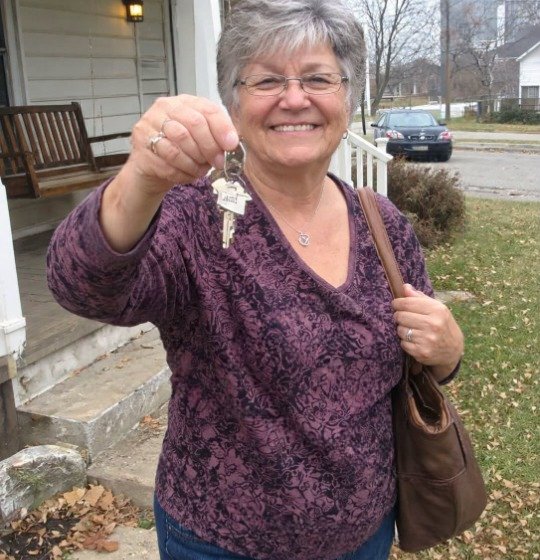
I cupped them in the palm of my hand—two brass keys still holding the warmth of his pocket.
I had transitioned straight from my father’s household into the hired man’s cottage at the age of nineteen. I had served as somebody’s daughter beneath one roof, and somebody’s wife beneath a husband’s employer’s roof, feeling genuinely grateful for both experiences.
Yet I was sixty-seven years old before anyone finally handed me the keys to a dwelling I had selected entirely on my own.
I am not ashamed to admit I had to look away toward the elevator for a brief moment so Mr. Brandt would not catch the expression on my face.
Now comes the part I take zero pride in.
I neglected to inform Michelle.
Not that day, nor throughout that entire week. She placed a call on Monday to inquire whether I had given the matter any thought, to which I replied that I was still considering it—a lie of that particular variety which is not quite a lie, seeing as I was indeed thinking. I was simply thinking about where best to position the sofa.
Jim Olson and his son assisted with my move on a Wednesday. They backed a flatbed trailer right up to the farmhouse porch and stubbornly refused to let me lift anything heavier than a table lamp.
I brought along my bed, the sofa, the kitchen table Dale and I originally purchased together at a farm auction back in 1981, alongside four chairs, my sewing machine, Dale’s favorite recliner, and nine cardboard boxes.
Thirty-one years spent inside a single home, and it ultimately boiled down to one flatbed load plus whatever happened to fit inside the trunk of a Buick.
The remainder of the household goods I gifted to the wife of Olson’s son, who wept over the empty canning jars.
Jim stood inside my brand-new front room with his cap removed, pivoting in a slow circle.
“Well, Judy. It is quite snug.”
“It certainly is.”
“Dale would have had that porch step shimmed level long before I ever managed to get this truck unloaded.”
“He surely would have,” I agreed.
We both shared a brief laugh, followed by absolute silence.
I hung up my window curtains, positioned Dale’s recliner right beside the heating stove facing the window, and arranged my African violets along the sill above the sink where they could keep an eye on the trucks.
On that very first night, the fans roared continuously, and the two o’clock freight train rumbled past, causing the water inside the glass beside my bed to tremble. I lay there wide awake thinking, what on earth have you gone and done, Judith?
By the second night, I slept straight through until five o’clock.
It was Todd who eventually uncovered the truth.
He drives directly past the elevator each morning on his way to report for the plant’s first shift. On the ninth morning—a Monday—he spotted my Buick parked neatly in front of the Brandt residence at a quarter to six, with a light glowing inside the window and a woman dressed in a housecoat watering her violets.
Michelle phoned that evening right at seven o’clock.
I instantly recognized from the way she pronounced “Mom” that the secret was out.
“You went and rented a house.”
“I did.”
“From Mr. Brandt. Down by the elevator. Todd happened to spot your car.”
“That is correct.”
“You have been living barely four blocks away from me for over an entire week, all the while letting me keep asking whether you had reached a decision.”