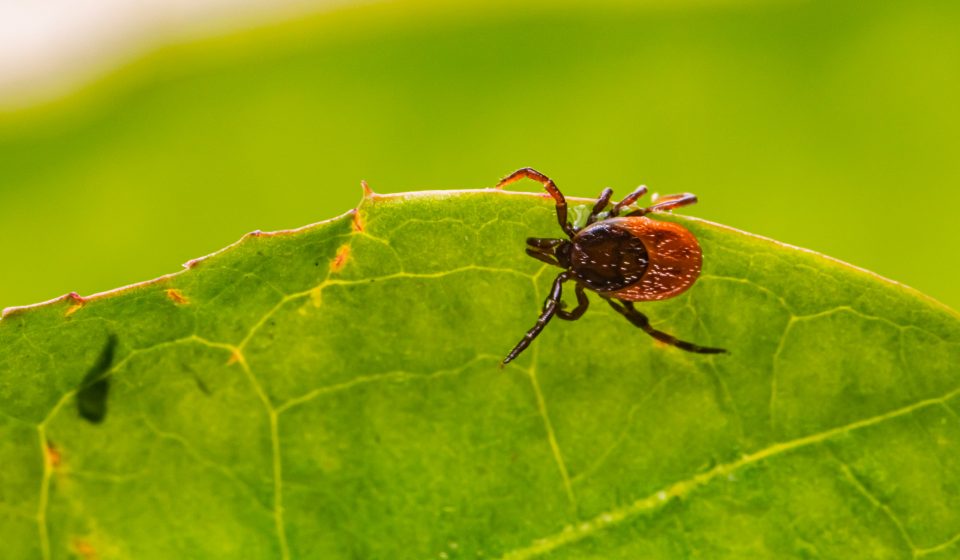

Finding a strange bug crawling on—or attached to—your child after a day outdoors can be alarming.
Then you look closer.
It resembles a tick.
And there appears to be a noticeable white spot on its back.
For many parents, the questions come immediately:
What is it?
Is it dangerous?
Could it carry a disease?
Should I call the doctor?
The first thing to know is that a white marking by itself does not tell you whether a tick is carrying an infection.
One tick species in particular, the lone star tick, is known for a distinctive pale or silvery-white spot on the back of adult females.
But identification from appearance alone isn’t always reliable, especially when the tick is tiny or you’re working from a photograph.
What matters most is knowing what to do next.
That White Spot May Offer an Important Clue
The lone star tick is one of the more recognizable ticks because the adult female typically has a single light-colored spot on the upper surface of her body.
That marking is part of the tick’s normal appearance.
It doesn’t mean the tick is “infected.”
It doesn’t mean the bite will make someone sick.
And it doesn’t automatically mean that every tick with something white on its back is a lone star tick.
Lighting can be misleading.
So can reflections.
The size and developmental stage of the tick matter too.
If you’ve found a tick-like insect on your child, the safest approach is to focus first on whether it’s attached and how to remove it properly.
First Question: Is It Crawling or Attached?
Look carefully without squeezing the insect.
If it’s simply crawling on the skin, remove it carefully and dispose of or contain it.
Then perform a thorough tick check.
Look through your child’s hair.
Check the scalp.
Look behind the ears.
Check beneath clothing.
Ticks can be surprisingly easy to miss.
If the tick has attached itself to the skin, however, you’ll want to remove it promptly and correctly.
How to Remove an Attached Tick
Use clean, fine-tipped tweezers.
Grasp the tick as close to the skin’s surface as you can.
Then pull upward using steady, even pressure.
Avoid aggressively twisting or jerking it.
After removal, clean the bite area and your hands.
Soap and water can be used, and rubbing alcohol is another option for cleaning.
The goal is simple:
Remove the tick promptly without unnecessarily squeezing or manipulating it.
Don’t Try to “Make” the Tick Let Go
Home remedies for tick removal have circulated for generations.
Petroleum jelly.
Nail polish.
Heat.
Other substances intended to suffocate or irritate the tick.
These aren’t recommended approaches.
You don’t need to wait for the tick to release itself.
Mechanical removal with appropriate tweezers is generally the preferred approach.
What If Part of the Tick Appears to Remain?
Don’t start aggressively digging into your child’s skin.
If you’re unsure whether the tick was completely removed, contact your child’s healthcare professional for guidance.
Repeatedly poking or cutting at the area can cause additional skin injury.
The important priorities are appropriate removal, cleaning the area and monitoring your child afterward.
Consider Taking a Photograph
Before disposing of the tick, a clear photograph may be useful.
If practical, you can also keep the removed tick in a secure container for possible identification.
Note when the tick was discovered and where your child had recently been outdoors.
That information may be more useful to a healthcare professional than simply saying:
“It had a white spot.”
But don’t delay needed medical attention while trying to identify the exact species yourself.
Does a White Spot Mean It’s a Lone Star Tick?
Not necessarily.
An adult female lone star tick is well known for its single pale spot.
But identifying ticks can be difficult without examining additional characteristics.
A photograph may help.
Geography also matters because tick species aren’t distributed equally everywhere.
That’s why a confident species identification shouldn’t be based solely on one marking when other information is unavailable.
Can Lone Star Ticks Make People Sick?
Lone star ticks are medically important because they can be associated with certain illnesses.
But there’s an important distinction:
Finding one does not mean your child has become infected with anything.
Not every tick carries disease-causing organisms.
Not every bite results in illness.
And the potential risks differ depending on the tick species and geographic region.
That’s why symptom monitoring and appropriate medical guidance are more useful than panic.
What About Lyme Disease?
Parents often associate every tick with Lyme disease.
But tick-borne disease risk is more complicated than that.
Different tick species are associated with different pathogens.
The presence of a tick does not automatically mean Lyme disease.
If you’re concerned about Lyme disease or another tick-borne illness, tell the healthcare professional where the exposure occurred and, if possible, what the tick looked like.
Geography and species identification can matter when assessing risk.
Lone Star Ticks and Alpha-Gal Syndrome
There’s another reason lone star ticks receive attention.
In the United States, lone star tick bites have been associated with alpha-gal syndrome, an allergy involving a sugar molecule called alpha-gal.
People with alpha-gal syndrome can experience allergic reactions after exposure to certain products containing alpha-gal, particularly meat from mammals such as beef, pork or lamb.
The reactions can sometimes occur hours after eating.
But this point needs to be interpreted carefully.
A lone star tick bite does not mean your child will develop alpha-gal syndrome.
Most importantly, don’t remove foods from a child’s diet or attempt to diagnose an allergy solely because you found a tick.
If concerning allergic symptoms develop or you have questions about a suspected reaction, seek appropriate medical care.
Watch Your Child After a Tick Bite
After removing an attached tick, pay attention to how your child feels over the following days and weeks.
Symptoms worth discussing with a healthcare professional can include:
- Fever or chills
- A new or spreading rash
- Headache
- Unusual fatigue
- Muscle aches
- Joint pain
- Other unexplained symptoms following the exposure
These symptoms aren’t unique to tick-borne illnesses.
A fever can have countless causes.
So can headache and fatigue.
The important information is the combination:
“My child had a possible tick bite, and now these symptoms have appeared.”
That helps the healthcare professional evaluate the situation in context.
Don’t Wait for a Rash Before Paying Attention
People sometimes assume that every tick-borne illness produces an obvious rash.
That’s not a safe assumption.
Different illnesses can present differently, and not everyone develops the same symptoms.
If your child becomes ill after a known tick exposure, mention the bite even if there is no dramatic skin change.
Similarly, the absence of symptoms immediately after removing a tick doesn’t guarantee that nothing will develop later.
Monitoring matters.
Some Symptoms Need More Urgent Attention
If your child develops severe symptoms—such as significant difficulty breathing, fainting, confusion or marked weakness—seek urgent medical attention.
A serious allergic reaction or severe illness isn’t something to monitor casually at home while waiting to see what happens.
For milder concerns, your child’s healthcare professional can advise you based on the specific circumstances.
Check the Rest of Your Child’s Body
Finding one tick should prompt a more complete inspection.
Ticks can attach in places parents don’t immediately notice.
Check carefully:
The scalp and hairline
Ticks can disappear beneath thick hair.
Behind the ears
This area is easy to overlook.
Around the neck and shoulders
Especially near clothing edges.
Under the arms
Warm, protected areas can conceal small ticks.
Around the waist
Pay attention to places where clothing sits against the skin.
Behind the knees
Another easily missed location.
Around the groin
Check appropriately while respecting your child’s privacy.
Around the ankles and sock lines
Ticks encountered in vegetation may begin low on the body before moving elsewhere.
Check Clothing Too
A tick doesn’t necessarily attach immediately.
One may be crawling on a shirt, pants, socks or shoes.
Backpacks and outdoor gear can also be worth inspecting after time in tick habitat.
Pets deserve attention as well.
A dog that has been running through vegetation can encounter ticks and potentially carry them into areas where family members spend time.
Use veterinarian-recommended tick prevention for pets when appropriate.
Where Are Ticks Commonly Encountered?
Ticks are often associated with environments containing vegetation and potential animal hosts.
Depending on the region, exposure can occur around:
Wooded areas.
Tall grass.
Brush.
Leaf litter.
Edges of trails.
Overgrown vegetation.
And sometimes yards.
You don’t necessarily have to be deep in a forest to encounter one.
Prevention Begins Before Going Outside
Children shouldn’t have to avoid nature because ticks exist.
Instead, families can reduce risk with practical habits.
When appropriate for the activity, clothing that covers more skin can provide additional protection.
Light-colored clothing can make crawling ticks easier to spot.
Use an insect repellent suitable for your child’s age and follow the product label carefully.
Don’t assume that a product appropriate for an adult is automatically appropriate for a young child.
Do a Tick Check After Outdoor Activities
This is one of the simplest habits families can adopt.
When children return from areas where ticks may be present:
Check their clothing.
Inspect exposed skin.
Look through their hair.
Check less visible areas.
Changing clothing and showering after outdoor activity can also provide an opportunity to inspect the body carefully.
Finding a tick early makes it easier to respond promptly.
Don’t Judge the Risk by Size or Color Alone
A dramatic-looking tick isn’t necessarily infected.
A tiny, ordinary-looking tick isn’t necessarily harmless.
Appearance can help with identification, but it can’t tell you everything that matters medically.
You can’t reliably look at a tick and determine whether it carries a pathogen.
That’s why photographs and species identification can be useful—but symptoms, location, exposure history and professional assessment remain important.
Should Every Tick Bite Receive Antibiotics?
No.
Parents should not automatically give antibiotics or leftover medication after discovering a tick.
Whether any preventive treatment is appropriate depends on the circumstances, including the type of tick, location, timing and other clinical considerations.
That decision belongs with a qualified healthcare professional.
Using antibiotics unnecessarily can create its own problems.
When Should You Call Your Child’s Doctor?
Consider contacting your child’s healthcare professional if the tick was attached and you’re concerned about the exposure, if you’re uncertain whether it was removed appropriately, or if you aren’t sure what kind of tick it was.
You should also seek medical advice if your child develops concerning symptoms afterward.
When calling, provide useful details:
When you found the tick.
Where your child had been.
Whether it was attached.
Approximately how long it may have been attached, if known.
What the tick looked like.
Whether your child has developed symptoms.
If you have a photograph, mention that too.
What Parents Shouldn’t Do
Don’t panic because you see a white dot.
Don’t assume the child has an infection.
Don’t diagnose Lyme disease based solely on finding a tick.
Don’t assume a lone star tick bite means alpha-gal syndrome.
Don’t start medication without medical guidance.
And don’t ignore significant symptoms because the bite looked minor.
The goal is informed attention—not fear.
The White Spot Is a Clue, Not a Diagnosis
That’s probably the most important takeaway.
If the tick truly has one distinctive pale spot and is an adult female, a lone star tick may be one possibility, particularly in areas where that species occurs.
But the marking tells you something about appearance.
It does not tell you whether the tick carries a pathogen.
It does not tell you whether transmission occurred.
And it does not tell you whether your child will become ill.
Those are separate questions.
Outdoor Play Still Matters
It’s easy for parents to become anxious after finding a tick.
Suddenly every patch of grass looks threatening.
But outdoor activity provides children with opportunities to move, explore and play.
The objective isn’t to eliminate every possible encounter with nature.
It’s to manage preventable risks sensibly.
Appropriate clothing.
Repellent when suitable.
Tick checks.
Prompt removal.
Symptom awareness.
Those habits can coexist with enjoying the outdoors.
The Bottom Line
Finding a tick-like insect with a white spot on your child can be frightening, but don’t let the marking alone determine your reaction.
An adult female lone star tick is known for a distinctive pale spot on its back, but visual identification isn’t always certain.
More importantly, you cannot determine whether a tick is carrying an infection simply by looking at it.
If the tick is attached, remove it promptly with fine-tipped tweezers by grasping close to the skin and pulling upward with steady pressure.
Clean the area afterward.
Consider taking a clear photograph or safely retaining the tick for identification.
Then monitor your child.
If fever, rash, headache, unusual fatigue, muscle or joint aches, or other concerning symptoms develop after a possible tick exposure, contact a healthcare professional and mention the bite.
Seek urgent medical care for severe symptoms such as difficulty breathing, fainting, confusion or significant weakness.
Finding a tick is a reason to pay attention.
It isn’t automatically a reason to panic.
Knowing how to remove it, what symptoms to watch for and when to seek professional help gives parents something much more useful than fear:
A clear plan.
Disclaimer: This article provides general educational information and is not a substitute for individualized medical advice, diagnosis or treatment. Tick species and infection status cannot be confirmed from a written description or a single physical characteristic. If you have concerns about a tick bite or your child’s symptoms, consult an appropriate healthcare professional.