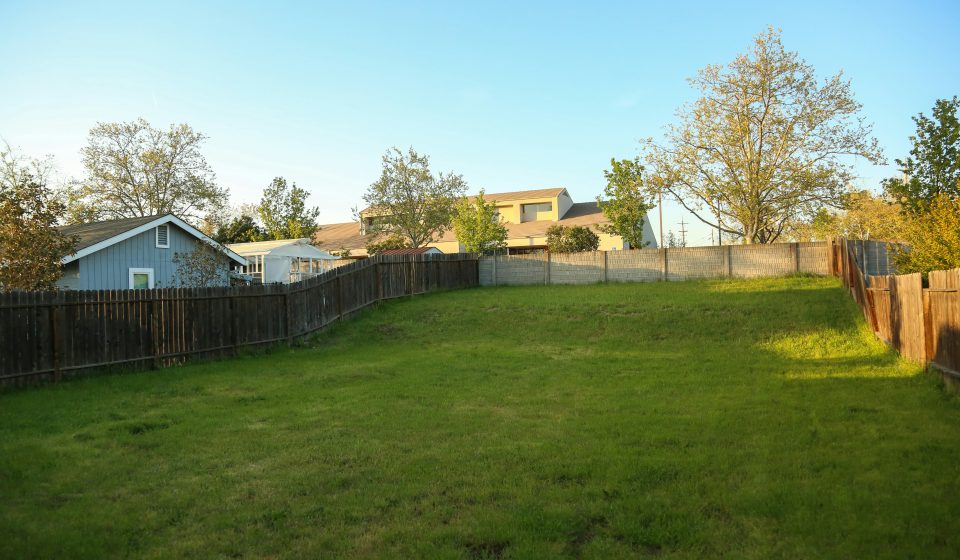
My Neighbors Removed My Backyard Fence Because They Wanted a “Shared” Yard—So I Had the Property Line Verified

When I first moved into the neighborhood, I thought I’d gotten lucky.
The street was quiet.
The homes were well kept.
People waved when they passed each other.
And my next-door neighbors, Ethan and Mara Carter, seemed perfectly pleasant.
We weren’t close friends, but we were friendly.
We exchanged greetings.
Stopped occasionally for short conversations.
Enjoyed the kind of comfortable distance that makes a neighborhood peaceful.
Then one afternoon, I walked into my backyard and stopped.
Part of my fence was gone.
At first, I assumed there had been some kind of mistake.
Maybe storm damage.
Maybe maintenance.
Maybe someone had removed a section temporarily and forgotten to tell me.
Then I learned the truth.
My neighbors had taken it down because they thought the space between our homes should be more “open” and shared.
There was just one problem.
It wasn’t their fence to remove.
I Thought There Had to Be an Explanation
I didn’t immediately storm next door.
I looked around first.
The missing section was obvious.
Something had happened.
So I asked.
That’s when I learned Ethan and Mara believed the fence made the properties feel unnecessarily divided.
They liked the idea of a neighborhood where outdoor areas flowed together more naturally.
More communal.
Less separated.
I could understand the philosophy.
What I couldn’t understand was why they believed that gave them the right to alter my property without speaking to me.
“We Thought It Would Feel More Open”
That was essentially their reasoning.
I didn’t yell.
I explained that the fence had been there when I purchased the property and that I wanted the boundary restored.
A friendly neighborhood didn’t require everyone to erase the lines between their homes.
You can wave to your neighbor over a fence.
You can invite them over.
You can have dinner together.
You can help each other.
None of that requires pretending two privately owned yards are one shared space.
Ethan and Mara seemed disappointed.
But I thought we’d reached an understanding.
I was wrong.
Then They Started Using the Space
A few days later, Ethan mentioned the area again.
By then, I had noticed outdoor items appearing beyond what I understood to be their side.
The Carters were beginning to treat part of the area as though it belonged to both households.
That changed the situation for me.
We weren’t debating aesthetics anymore.
This wasn’t simply:
“Fence or no fence?”
We now disagreed about where their usable space ended and mine began.
I realized another conversation wouldn’t solve that.
We needed facts.
I Didn’t Want a Neighborhood Argument
Property disputes can become ugly surprisingly quickly.
One person believes a tree belongs to them.
Another disagrees about a driveway.
Someone moves a fence.
Someone parks a vehicle six inches too far over.
Before long, two families who used to wave at each other are barely speaking.
I didn’t want that.
I also didn’t want to surrender part of my yard simply because confronting the situation felt uncomfortable.
So instead of arguing about where I believed the boundary was, I decided to establish it properly.
I Checked the Property Information
I reviewed the relevant property documents and contacted the appropriate professionals to have the boundary confirmed.
That was important.
Memory isn’t a survey.
A fence isn’t necessarily proof of a legal boundary.
A neighbor saying, “I’m pretty sure the line is here,” isn’t proof either.
I wanted the actual property limits established before doing anything permanent.
Once that was done, the situation became much simpler.
There was a line.
One side belonged to me.
The other belonged to the Carters.
Then I Installed a New Fence
This time, I wanted no ambiguity.
I arranged for a replacement fence to be installed according to the confirmed property information.
It wasn’t designed to punish Ethan.
It wasn’t intended to humiliate Mara.
It wasn’t some elaborate act of revenge.
It was a boundary.
Literally.
The workers arrived and began the installation.
Ethan watched from his yard.
At first, he looked confused.
Then frustrated.
I didn’t walk over to argue.
There was nothing useful left to debate.
The Fence Wasn’t Making a Claim—It Was Reflecting One
That distinction mattered to me.
I wasn’t placing a fence somewhere because I wanted extra land.
I had first taken steps to confirm where the property line actually stood.
Only then did I move forward.
If the verified information had shown that my assumptions were wrong, I would have needed to accept that too.
That’s the advantage of replacing arguments with evidence.
The answer doesn’t depend on who speaks louder.
Naturally, the Neighborhood Noticed
It’s almost impossible to install a new fence during a property disagreement without attracting attention.
People walking past slowed down.
A few neighbors asked questions.
Others watched from their porches.
I knew conversations were happening.
I stayed out of them.
Neighborhood gossip wasn’t going to improve anything.
I didn’t need everyone on the street to declare that I was right.
I needed the property boundary respected.
Those were different things.
Daisy Seemed Happier Too
My dog, Daisy, had noticed the disruption.
Dogs become accustomed to their surroundings.
Their favorite corner.
The usual sounds.
The familiar physical limits of a yard.
Once the fence was back, she gradually returned to her normal routine.
She settled into her favorite spot again.
Watching her relax reminded me that the backyard wasn’t an abstract property dispute.
It was part of my home.
A place I used every day.
Then Mara Came Over
A few days after the fence went up, I saw her approaching.
She stopped near the edge of my property.
“I’m not here to argue,” she said.
I nodded.
And waited.
Mara explained that when she and Ethan moved into the neighborhood, they’d imagined something more communal.
They liked neighbors interacting.
Sharing outdoor spaces.
Feeling connected rather than separated.
Then she said something that finally made sense of the entire disagreement.
“I think we assumed everyone wanted the same thing.”
There it was.
They Had Confused Their Preference With Everyone Else’s
I understood what she meant.
Their idea wasn’t necessarily malicious.
Some people genuinely love communal spaces.
Shared gardens.
Open yards.
Neighbors coming and going.
Other people value privacy.
Defined spaces.
Fences.
Neither preference automatically makes someone unfriendly.
The problem was assumption.
A shared space is only shared when everyone involved agrees that it is.
Otherwise, one person’s idea of community can become another person’s loss of privacy.
“You Should Have Talked to Me First”
Mara nodded.
“We should have.”
“Yes,” I said. “That would have made a big difference.”
And it would have.
Perhaps we’d still have disagreed.
I probably would still have wanted the fence.
They probably would still have preferred an open yard.
But disagreement isn’t necessarily disrespect.
Removing the fence without asking was.
That was the part that damaged trust.
We Agreed We Could Still Be Neighbors
I wasn’t asking Mara to become my best friend.
I wasn’t interested in carrying a feud for the next decade either.
“We can still be neighbors,” I told her. “We just need to respect each other’s property.”
She gave me a small smile.
“I understand.”
The conversation ended peacefully.
For the first time in weeks, I thought the problem might actually be over.
Then I saw the tire tracks.
Fresh Tracks Crossed Near the Corner of My Yard
One morning, something caught my attention.
Tire marks.
They appeared to cross the property line near the corner of my yard.
From their direction, they seemed to have come from the area of the Carters’ driveway.
My first reaction was frustration.
We had just discussed this.
The line had been established.
The fence had been installed.
Mara had acknowledged that they should have spoken to me first.
But I didn’t march next door.
I took photographs.
I Wanted to Be Certain Before Accusing Anyone
That mattered.
Seeing tire tracks isn’t the same as knowing exactly how they got there.
Maybe I was interpreting them incorrectly.
Maybe there was an explanation I hadn’t considered.
So I documented what I saw and reviewed the boundary information again.
I wanted facts before confrontation.
It’s easy to accuse someone.
It’s much harder to undo the damage when the accusation turns out to be wrong.
Only after I felt confident about what I was seeing did I address the issue.
The Second Conversation Was Different
This time, there wasn’t much to debate.
The boundary had already been established.
Everyone knew where it was.
I explained that entering or using my property without permission wasn’t acceptable.
There was no shouting.
No dramatic scene.
No need to turn the disagreement into a neighborhood spectacle.
The Carters understood.
And that was what I wanted.
Not revenge.
Consistency.
A Boundary That Exists Only When Convenient Isn’t Much of a Boundary
This was the larger issue.
People sometimes think setting a boundary is the difficult part.
Often, maintaining it is harder.
The first time someone crosses it, you explain.
The second time, you’re tempted to ignore it because you don’t want another uncomfortable conversation.
But inconsistency creates confusion.
If something genuinely matters, it needs to matter after the awkwardness has passed too.
That doesn’t mean escalating every minor mistake.
It means calmly reinforcing what has already been established.
Being a Good Neighbor Doesn’t Mean Saying Yes to Everything
This experience changed the way I thought about neighborliness.
I’d always associated a good neighbor with generosity.
Helping.
Sharing.
Being flexible.
Those things matter.
But so does respect.
If someone doesn’t want their backyard treated as communal space, respecting that preference is also part of being a good neighbor.
Friendliness doesn’t create automatic permission.
“Shared” Requires Consent
This applies far beyond fences.
A shared driveway.
Shared garden.
Shared tools.
Shared parking.
Shared childcare.
Shared expenses.
Shared anything.
The word only works when the people involved have agreed to the arrangement.
You can’t declare someone else’s property communal because you prefer the concept.
Community isn’t created by eliminating boundaries without permission.
It’s created when people voluntarily cooperate across them.
Property Lines Can Become Emotional
On paper, a boundary can look simple.
A line.
Coordinates.
Measurements.
Markers.
But in real life, that line can represent much more.
Privacy.
Security.
Control.
Responsibility.
Maintenance.
A place for children to play.
A place for a dog to roam.
A garden someone has spent years developing.
That’s why small property disagreements can become emotionally intense.
They’re rarely just about inches of land.
Facts Help Reduce the Emotion
One of the best decisions I made was refusing to rely only on my own assumption.
I checked.
I documented.
I had the boundary confirmed.
That changed the conversation.
Instead of:
“I think this is mine.”
versus:
“We think this is shared.”
there was objective information to work from.
Whenever property rights genuinely matter, proper documentation and qualified local professionals are far more useful than neighborhood folklore.
Laws and Rules Can Differ
Property-boundary issues aren’t identical everywhere.
Local laws, recorded deeds, easements, surveys, homeowner-association rules and other circumstances can affect what a property owner is allowed to do.
Even fence requirements can vary.
That means someone facing a real dispute shouldn’t assume that what worked in another person’s story automatically applies to their own situation.
Verify first.
Then act.
That’s essentially what I did.
I Didn’t Need to Win the Neighborhood
There was another lesson in this.
When conflict happens, people often start recruiting supporters.
You tell Neighbor A.
They tell Neighbor B.
Someone posts online.
Soon everyone has a version of the story.
I didn’t want that.
I didn’t need Ethan and Mara socially defeated.
I needed a fence.
Once I understood that, the situation became much easier to manage.
Peace Doesn’t Always Mean Closeness
The Carters and I aren’t as friendly as we were when I first arrived.
That’s reality.
But we aren’t enemies either.
We can see each other outside.
Wave.
Exchange a polite greeting.
Then continue with our lives.
There was a time when I might have considered that a disappointing outcome.
Now I don’t.
Not every neighbor has to become a friend.
Sometimes respectful distance is a perfectly successful relationship.
Daisy Got Her Backyard Back
In the end, the person who seemed least interested in the entire controversy was Daisy.
Once things settled down, she returned to her routines.
She had her familiar yard.
Her favorite spot.
Her space.
And I could sit outside without wondering whether another section of the property was slowly becoming “shared” without my agreement.
The fence eventually stopped looking new.
It became part of the landscape.
Exactly as fences usually do.
What Seemed Dramatic Eventually Became Ordinary
That’s another useful thing to remember during conflicts.
In the middle of them, everything feels permanent.
Every conversation seems important.
Every look from a neighbor feels loaded.
Then time passes.
The workers leave.
The gossip moves to something else.
The grass grows.
The fence weathers.
Life continues.
What remains is whatever boundary you established—and the way you handled yourself while establishing it.
Calm Doesn’t Mean Passive
Some people mistake calmness for weakness.
They assume that if you’re not shouting, you’re surrendering.
I learned the opposite.
I didn’t need to yell at Ethan.
I didn’t need to insult Mara.
I didn’t need to retaliate.
I could remain calm and still say:
No.
This is my property.
Please respect it.
Then I could take appropriate steps to make that boundary clear.
That’s not passivity.
It’s firmness without unnecessary hostility.
Understanding Someone’s Intent Doesn’t Require Accepting Their Behavior
I eventually understood the Carters better.
They genuinely liked the idea of a communal neighborhood.
Mara’s explanation helped me see that.
But good intentions don’t automatically make an action acceptable.
They should have asked.
Understanding why they removed the fence didn’t mean I had to accept the removal.
Just as understanding their preference for open space didn’t mean I had to surrender mine for privacy.
Two perspectives can be understandable while one action still crosses a boundary.
Final Thoughts
When I moved into the neighborhood, I never imagined a fence would teach me so much about boundaries.
Ethan and Mara wanted openness.
I wanted control over my own property.
The conflict began because they assumed their vision of community was shared by everyone around them.
It wasn’t.
Once the fence disappeared and part of my yard began being treated as communal space, I stopped relying on informal conversations.
I checked the documents.
Had the property line confirmed.
Documented what happened.
And installed a new fence based on that information.
Later, when tire tracks raised another concern, I followed the same principle.
Don’t immediately accuse.
Document.
Verify.
Then communicate.
Eventually, the disagreement settled.
The Carters and I aren’t close.
But we’re civil.
Daisy has her familiar backyard.
And the fence is now simply a fence.
Looking back, I don’t think the fence created distance between my neighbors and me.
It clarified where the distance already needed to be.
Being neighborly doesn’t require surrendering your boundaries.
Protecting your boundaries doesn’t require becoming hostile.
Sometimes peaceful coexistence comes from something much simpler:
Know where the line is, communicate it clearly, and respect it on both sides.
Editor’s note: This story should be treated as a fictionalized or unverified neighborhood narrative, not as legal advice or a documented property dispute. Property boundaries, easements, fence requirements and owners’ rights vary by jurisdiction. Anyone facing a real boundary dispute should review the applicable property records and obtain advice from appropriately qualified local professionals before altering fences or taking other permanent action.