She Walked Into an Auto Parts Store Asking for a ‘710 Cap’—Then Someone Turned the Drawing Around

It sounded like a perfectly ordinary request.
A woman walked into an auto parts store looking for a replacement cap for her Buick.
There was only one problem.
Nobody behind the counter had ever heard of the part she was asking for.
“I need a 710 cap,” she explained.
The employee paused.
A what?
He knew oil filters.
Radiator caps.
Fuel caps.
Belts.
Hoses.
Spark plugs.
Hundreds of parts that most drivers would never know by name.
But a “710 cap”?
That was new.
And what began as a routine trip to an auto parts store quickly became a puzzle involving several confused employees, a piece of paper and one very important change in perspective.
The Mysterious “710 Cap”
The employee initially assumed the woman was using an unfamiliar name for a legitimate automotive component.
Maybe “710” was a part number.
Maybe it referred to a particular engine.
Maybe Buick used some specialized cap the employee hadn’t encountered before.
So he asked for more information.
What did it look like?
Where was it located?
How large was it?
The woman explained that it was a cap on the engine and estimated that it was several inches across.
That narrowed things down.
But not enough.
The employee still couldn’t identify anything officially called a “710 cap.”
Soon, Other Employees Joined the Search
At this point, the conversation became interesting enough to attract attention.
Another employee tried to make sense of the description.
Someone considered checking catalogs.
Maybe it was an obscure component.
Maybe the customer had misheard the name from a mechanic.
Maybe the number was stamped somewhere on the cap.
Still, nothing seemed to fit.
Finally, someone suggested the simplest solution.
“Could you draw it?”
Absolutely.
She Drew Exactly What She Remembered
The employee handed her a piece of paper.
She drew a circle.
Then, carefully, she wrote inside it:
710
She pushed the drawing across the counter.
“There,” she explained.
“That.”
The employees stared at it.
A circle.
For a moment, the drawing didn’t solve anything.
Then someone looked at it from the opposite direction.
And suddenly the mystery was over.
Turn “710” Upside Down
It wasn’t 710.
It was:
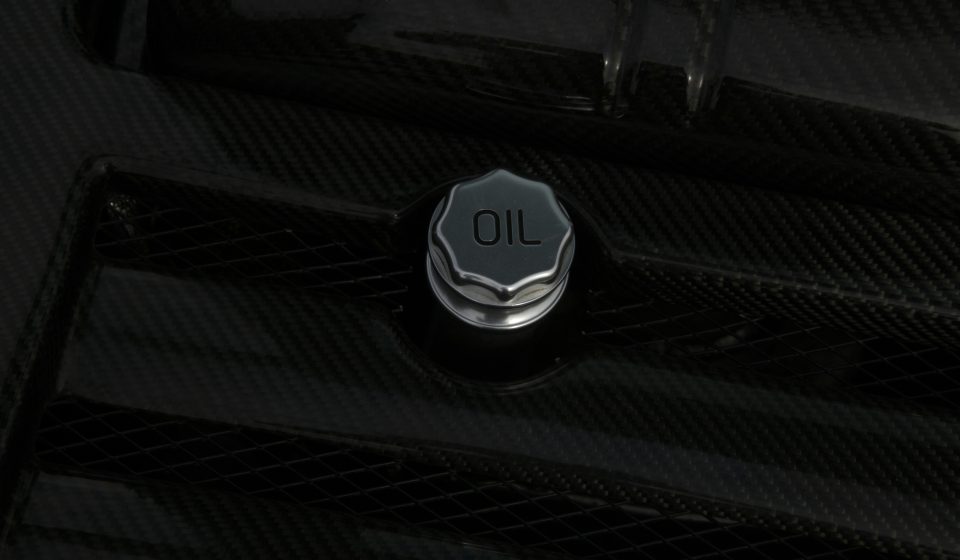
OIL.
Viewed from the direction the woman had apparently seen it, the letters had resembled the numbers 7-1-0.
The mysterious automotive component wasn’t mysterious at all.
She needed an oil filler cap.
The entire puzzle had been created by looking at three familiar letters from the wrong direction.
Sometimes Perspective Really Is Everything
That’s what makes this old joke work.
The customer isn’t requesting some absurd imaginary machine part.
She has actually seen something written on the engine.
She remembers its shape.
She remembers the characters.
She even reproduces them accurately.
The mistake is perspective.
Rotate the same information and suddenly the answer becomes obvious.
It’s a perfect example of how confidently the human brain can interpret something incorrectly when we’re missing one small piece of context.
And automobiles have provided plenty of material for jokes built around exactly that kind of misunderstanding.
The Body That’s Starting to Sound Like an Old Car
Consider the older driver who complains that age is making his body resemble an aging automobile.
There are unexplained noises in the morning.
A few leaks.
Parts don’t move as smoothly as they once did.
And after the wrong dinner, there may even be some “backfiring.”
Anyone who has owned an old car understands the comparison.
You hear a noise.
You ignore it.
The noise becomes louder.
Eventually, you start wondering whether the repair is going to cost more than the entire vehicle is worth.
Growing older can sometimes inspire a similar style of humor.
The joke isn’t really about cars.
It’s about finding a familiar mechanical vocabulary for the strange little inconveniences of getting older.
Then There’s the Snail With a Sports Car
Wordplay doesn’t get much simpler than this one.
Imagine a snail that somehow owns a Datsun 240Z.
Already, the image is ridiculous.
A creature famous for moving incredibly slowly is driving a sports car.
But the snail wants the vehicle personalized.
So he has a giant letter S painted on the side.
Then he races past someone.
The observer watches the personalized sports car disappear down the road and shouts:
“Look at that S-car go!”
Say it aloud.
S-car go.
Escargot.
That’s the joke.
Why the Snail Joke Works
It combines three completely unrelated ideas.
A snail.
A sports car.
A French word associated with snails.
None is particularly funny alone.
Put them together and the ridiculous mental image does most of the work.
There’s also something inherently amusing about giving the slowest character in the story the fastest personality.
The snail doesn’t want a sensible little vehicle.
He wants a sports car.
And apparently a custom paint job.
Cinderella’s Wish Doesn’t Go According to Plan
Fairy tales are another perfect environment for jokes because we’re already expecting magic to solve problems.
Cinderella gets a wish.
Instead of asking for a carriage, dress or palace, imagine that she asks for her beloved cat to become a handsome man.
Magic happens.
The cat transforms.
Cinderella looks at the handsome young man and believes she’s received exactly what she wanted.
Then he reminds her of one awkward detail from his previous life:
“You remember having me neutered, right?”
Suddenly the fairy-tale transformation has encountered a complication the magic didn’t address.
The humor comes from applying an ordinary pet-owner decision to an absurd fantasy scenario.
Apparently, even magic has fine print.
Be Careful What You Wish For
That’s the broader structure behind many classic jokes.
Someone gets exactly what they requested.
Unfortunately, they didn’t think through the consequences.
The genie technically follows the instructions.
The magic works.
The machine does precisely what the person told it to do.
And the result is completely different from what they expected.
The Cinderella joke follows that tradition perfectly.
The wish worked.
That was the problem.
The Rancher With Only One Dollar Left
Another classic misunderstanding involves a rancher who finds an opportunity to purchase a bull.
The bull costs $599.
The rancher has $600.
After buying it, there’s only one dollar left.
Now comes the communication problem.
The rancher needs to send a message explaining that the bull has been purchased and that someone should come collect it.
But when every word costs money, the message has to be extremely short.
So the rancher attempts to compress the entire instruction into a single word.
The resulting message creates the joke.
“Comfortable”
At first glance, it makes no sense.
Why would someone buy a bull and then send a telegram saying:
“Comfortable”?
Break the word apart according to the joke:
Come-for-ta-bull.
“Come for the bull.”
Comfortable.
It’s ridiculous.
It’s also exactly the sort of wordplay that older one-liners and joke books loved.
One ordinary word becomes an entire sentence if you’re willing to abuse pronunciation just enough.
Communication Is Often Where Comedy Begins
Notice how similar these jokes actually are.
The 710 cap depends on reading.
The snail depends on sound.
The rancher depends on pronunciation.
Cinderella depends on an unexpected interpretation of a wish.
The joke isn’t necessarily that someone lacks intelligence.
It’s that language and perception are surprisingly easy to twist.
We recognize one pattern.
Then the punchline reveals another.
Even Abbreviations Can Create Trouble
One old joke takes this idea into the doctor’s office.
A baby has an earache.
The parents receive ear drops.
The instructions indicate the R ear—meaning the right ear.
But someone reads the abbreviation as:
rear.
You can probably guess where the joke goes from there.
The medicine doesn’t appear to be helping the ear because it isn’t being put anywhere near the ear.
It’s an intentionally absurd misunderstanding.
In Real Life, Medication Instructions Aren’t a Joke
The story is wordplay, but the real-world lesson is straightforward.
If medication directions are unclear, don’t guess.
Ask a pharmacist, physician or other qualified healthcare professional to explain them.
Medication labels can contain abbreviations, dosing instructions and warnings that matter.
A comedy routine can survive a ridiculous misunderstanding.
A patient shouldn’t have to.
Why Do Misunderstanding Jokes Last So Long?
Some jokes survive for decades because they don’t require much context.
You don’t need to understand politics.
You don’t need to know a celebrity.
You don’t need to follow current events.
All you need is the setup.
Someone sees something.
They interpret it incorrectly.
The audience understands the mistake before the character does.
Punchline.
That structure works across generations.
The 710 Joke Is a Perfect Example
Even people who know almost nothing about engines can understand it.
Imagine looking at an oil cap from the wrong direction.
OIL
Rotate it.
The shapes can resemble:
710
Once you’ve seen the trick, it’s almost impossible not to understand how the misunderstanding happened.
That’s why the drawing is such an important part of the joke.
Without it, “710 cap” sounds random.
With it, everything clicks.
Cars Are Especially Good for This Kind of Humor
Automotive terminology can sound like another language to anyone unfamiliar with it.
Timing belt.
Head gasket.
Differential.
Catalytic converter.
Control arm.
Serpentine belt.
Mass airflow sensor.
Ask someone who doesn’t work on cars to identify every component under the hood and confusion is almost guaranteed.
That makes the auto parts counter an ideal comedy setting.
The employee knows the terminology.
The customer knows what they’ve seen.
Neither initially understands what the other person means.
Then somebody rotates a piece of paper.
Problem solved.
Experts Can Misunderstand Beginners Too
There’s another side to these jokes that’s easy to overlook.
When someone knows a subject extremely well, they can forget what it feels like not to know the vocabulary.
A mechanic may immediately recognize an oil filler cap.
A first-time vehicle owner might simply recognize “the round thing on top of the engine.”
Both people can be describing the same object accurately from their own perspective.
The communication problem happens because they don’t share terminology.
That’s true far beyond automobiles.
Computers.
Medicine.
Finance.
Home repairs.
Legal documents.
Every specialized field develops language that can sound obvious to experts and completely foreign to everyone else.
Asking Someone to Draw It Was Actually Smart
The funniest part of the 710 story may also contain the best problem-solving technique.
When words failed, they changed the format.
“Show me.”
Draw it.
Point to it.
Describe where it goes.
Take a photograph.
Sometimes communication becomes dramatically easier when we stop repeating the same confusing words.
The employee could have spent another hour searching for a nonexistent “710 cap.”
One drawing solved the problem.
Confidence Doesn’t Guarantee Accuracy
The customer in the joke is confident.
That’s important.
If she’d walked into the store saying, “I have absolutely no idea what this is,” there wouldn’t be much of a punchline.
Instead, she knows exactly what she needs.
A 710 cap.
Except she doesn’t.
We’ve all experienced smaller versions of that.
Misheard lyrics.
Mispronounced names.
Instructions we read too quickly.
Symbols we interpret incorrectly.
Words we’ve used for years before discovering they mean something else.
Confidence is a feeling.
Accuracy requires checking.
Sometimes You Literally Need to Look at Something Differently
That’s why the original joke has an unusually satisfying ending.
Nobody needs a technical manual.
Nobody needs to call Buick headquarters.
Nobody needs to search a giant database.
The answer is already sitting on the counter.
They just need to rotate it.
The information never changes.
Only the viewpoint does.
And That’s Why Simple Jokes Can Be So Effective
Comedy doesn’t always require an elaborate story.
Sometimes all you need is:
A customer.
A confused employee.
A circle.
Three characters.
And someone standing on the other side of the counter.
The setup creates a mystery.
The drawing creates anticipation.
The rotation creates the reveal.
710.
OIL.
Mystery solved.
Final Thoughts
The woman who walked into the auto parts store wasn’t really searching for some rare “710 cap.”
She needed an ordinary oil filler cap.
But because she’d seen the lettering from the wrong direction, a simple automotive part became an entire store’s puzzle.
The other jokes follow the same basic formula.
A snail turns “S-car go” into escargot.
A rancher’s one-word message turns “come for the bull” into “comfortable.”
A fairy-tale wish works a little too literally.
And a medical abbreviation becomes an intentionally ridiculous misunderstanding.
They’re simple jokes.
That’s precisely why they work.
Sometimes comedy doesn’t need an elaborate explanation.
It only needs someone to see something familiar from exactly the wrong angle.
And if you ever walk into an auto parts store asking for a “710 cap,” don’t be surprised if someone quietly turns your drawing upside down.
Which one of these old-fashioned wordplay jokes made you laugh first?
Editor’s note: The stories in this article are jokes and humorous anecdotes rather than reported events. The medication example is fictional wordplay; real medication directions should be followed exactly, and unclear instructions should be checked with a pharmacist or healthcare professional.